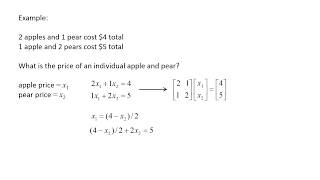
Numerical Modeling
Learn to solve linear and nonlinear algebraic equations using various numerical methods and MATLAB, including Gaussian elimination, Newton-Raphson, and secant methods for practical engineering applications.
Vector Statics
Comprehensive exploration of vector statics, covering forces, equilibrium, moments, trusses, friction, and more. Ideal for engineering students seeking in-depth understanding of static force systems.
Intermediate Dynamics
Comprehensive exploration of advanced dynamics concepts, covering vector algebra, kinematics, particle dynamics, orbital mechanics, rigid body analysis, and more for in-depth understanding.
Signals and Systems II
Comprehensive exploration of advanced signal processing concepts, including probability theory, random variables, stochastic processes, and spectral analysis for electrical engineering applications.

Geometry I - Prof. Dr. Cem Tezer
Comprehensive exploration of fundamental geometric concepts, covering various topics over 16 weeks. Ideal for students seeking in-depth understanding of geometry principles and applications.

Statistical Mechanics - Prof. Dr. Mehmet Tomak
Comprehensive exploration of statistical mechanics principles through 36 lectures, covering fundamental concepts and advanced topics over 12 weeks.
Computational Geometry
Explore fundamental concepts and advanced techniques in computational geometry through comprehensive lectures, covering various algorithms and applications in spatial data analysis.
Mechanics I
Comprehensive introduction to mechanics principles, covering fundamental concepts and applications over 15 weeks of in-depth lectures by Prof. Dr. Altuğ Özpineci.

Inverters and Fourier Series in Power Electronics - Lecture 17
Explore Fourier Series, waveform characteristics, and single-phase full-bridge inverters in power electronics. Learn techniques to control AC output in DC-to-AC conversion.

Power Electronics: State Space Averaging and Linearization - Lecture 25
Explore state space averaging for modeling switching converters and linearization of nonlinear averaged models to realize control-to-output transfer functions in power electronics.
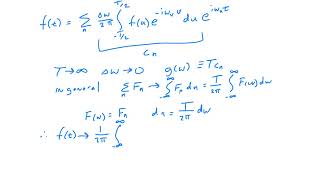
Integral Transforms
Explore integral transforms, including uncertainty principle, delta function, symmetry, and various transform types, enhancing mathematical understanding for physics applications.
Spacecraft Charging - Hazard Causes, Hazard Effects, Hazard Controls
Explore spacecraft charging hazards, effects, and controls in various space environments. Learn about ISS charging measurements, modeling, and management strategies applicable to future human spaceflight beyond LEO.
How Is the Landscape Upon Which Life Evolves Selected - Spontaneous Emergence of Modularity
Explore the emergence of modularity in biology, its impact on evolution, and connections to environmental variability through advanced physics concepts and experimental insights.
Numerical Analysis of Simplified Relic-Birefringent Gravitational Waves
Explore numerical solutions for birefringent gravitational waves, their power spectrum, and implications for cosmological structure, with applications to current and future observatories.
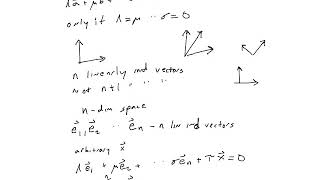
Linear Algebra
Explore fundamental concepts of linear algebra, including vector spaces, linear transformations, and group theory, enhancing mathematical problem-solving skills.
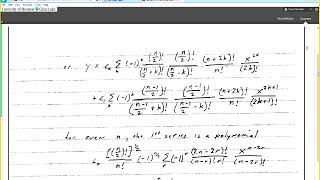
Special Functions
Explore special functions in physics, including spiritual harmonics, addition theorems, and Bessel functions, enhancing mathematical understanding for advanced applications.
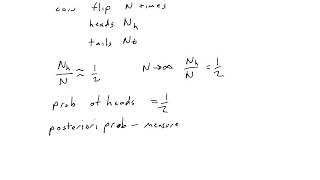
Probability
Explore probability concepts, from basic principles to advanced topics like mutually exclusive events and binomial coefficients, enhancing your statistical analysis skills.
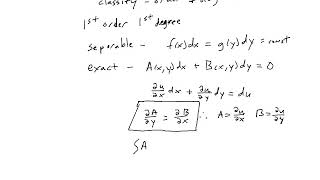
PHYS 5531 - Midterm Review
Comprehensive review covering integration techniques, series analysis, and Fourier transforms, preparing students for advanced physics concepts and problem-solving.
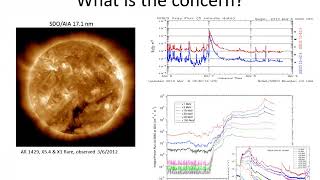
Dealing with Rare and Extreme Space Weather Events
Explore rare space weather phenomena, their impacts, and analysis methods with NASA expert Dan Fry. Learn about solar dips, radiation effects, and statistical approaches to extreme events.
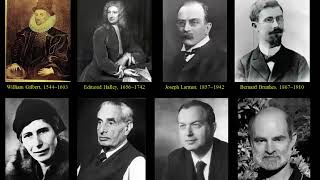
Planetary Dynamos
Explore planetary magnetic fields, their generation through internal dynamos, and the mathematical models used to study these phenomena in various celestial bodies.
Lit Calculus
Explore calculus fundamentals, from limits and continuity to derivatives and optimization, with practical examples and in-depth explanations of key concepts and techniques.