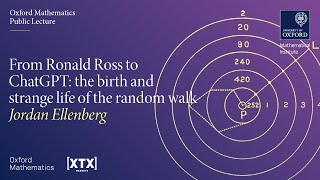
From Ronald Ross to ChatGPT: The Birth and Strange Life of the Random Walk
Explore the fascinating history of random walks in mathematics, from mosquito control to AI, and their impact on various fields including physics, finance, and theology.
Analysis III: Basic Properties of Riemann Integration - Lecture 1
Explore the fundamental properties of Riemann integration in this first-year Oxford Mathematics student lecture. Delve into the intricacies of proving familiar concepts, such as how the integral of a sum of two functions equals the sum of their individua…
Advanced Topics in Probability and Random Processes
Explore advanced probability concepts, from random variables to Markov chains and martingale processes, enhancing your understanding of stochastic systems and their applications.
Digital Signal Processing and Its Applications
Explore digital signal processing fundamentals, including sampling, Fourier transforms, discrete systems, filters, and various transform techniques. Gain practical skills in filter design and implementation.
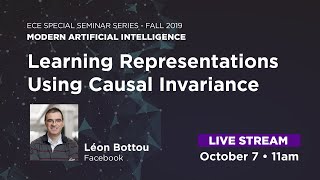
Learning Representations Using Causal Invariance
Explore causal invariance in AI with Leon Bottou, delving into proxy problems, correlations, and environments to enhance prediction and address real-world challenges like hiring biases.
When to Sell an Asset? A Distribution Builder Approach
Explore optimal asset selling strategies using distribution builder approach, analyzing utility functions, investor behavior, and market dynamics in this mathematical finance lecture.
Optimal Execution with Quadratic Variation Inventories - BQE Lecture Series
Explore optimal execution strategies in financial markets, focusing on quadratic variation inventories and automated trading, with insights from Princeton researcher Laura Leal.
Dependent Stopping Times and Application to Credit Risk Theory - BQE Lecture Series
Explore dependent stopping times in credit risk theory, covering Cox construction, instantaneous default, and systemic risk measures in financial markets.
Equilibrium Existence in a Limited Participation Economy - BQE Lecture Series
Explore equilibrium existence in limited participation economies with Kim Weston. Learn about logarithmic preferences, exponential investors, and key assumptions in this advanced mathematical finance lecture.
Turbulence in Finance - BQE Lecture Series
Explore financial turbulence with Mike Lipkin, covering topics like order drop, rough paths, and hedging strategies in this insightful lecture on advanced quantitative finance concepts.

Brooklyn Quant Experience - In Pursuit of Samuelson: Studies of Commodity Volatilities and Correlations
Explore commodity volatilities, correlations, and the Samuelson Effect in financial markets. Gain insights into seasonal commodities and modeling techniques for market dynamics.

Basic Statistical Mechanics
The present course will address the basic postulates of Statistical Mechanics and then will show how starting from the basic postulates one builds a formidable framework that can be used to explain phenomena mentioned above.
Social Sequence Analysis: An Introduction and Overview
Introduction to social sequence analysis: history, research applications, data sources, capabilities, limitations, and software options for analyzing event and state sequences.
Engineering Econometrics
This course will be exclusively quantitative and an application to business/management-related problems. It is connected with problem sets and real-life cases to know the relevance of a particular problem and the decision-making thereof.
Applied Linear Algebra
Explore vector spaces, linear maps, eigenvalues, and applications in systems, algorithms, and optimization. Gain practical skills in linear algebra for various fields.
Introduction to Algebraic Geometry and Commutative Algebra
Explore algebraic geometry and commutative algebra, covering topics from affine algebraic sets to integral extensions. Gain insights into key theorems and principles in this advanced mathematics course.
Statistics 200 Video Lectures
Comprehensive video lectures covering fundamental statistical concepts, methods, and applications for beginners through advanced learners.
Statistics
Learn advanced statistical techniques including regression analysis, ANOVA, and model selection. Master key concepts like variance inflation, F-tests, and information criteria for robust data analysis.
Statistics
Explore advanced statistical design techniques including Latin squares, Plackett-Burman designs, and factorial experiments. Learn to analyze complex data using GLM, ANOVA, and regression methods.
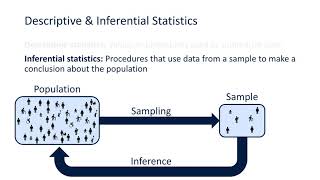
Statistics Lectures - OER
Comprehensive introduction to statistical concepts and methods, covering fundamental principles and practical applications in data analysis and interpretation.
Applied Statistics and Econometrics
Gain practical skills in statistical analysis and econometric modeling, enhancing your ability to interpret data and make informed economic decisions.