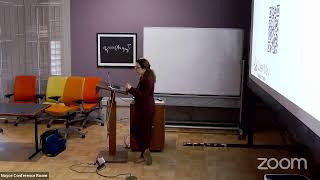
Topology Shapes Dynamics of Higher-order Networks
Exploring how higher-order network interactions influence non-linear dynamics, synchronization, and percolation in complex systems like brain networks and climate patterns.

Making Sense of Chaos - A Better Economics for a Better World
Explore how complexity economics can revolutionize our understanding of global economic challenges and lead to better predictions and solutions for a more sustainable future.
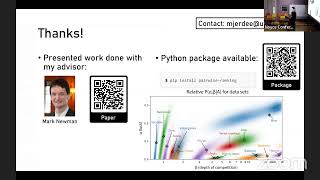
Luck, Skill, and Inequality in Games and Social Hierarchies
Explore the interplay of luck, skill, and inequality in games and societal structures, examining their impact on hierarchies and outcomes.

Microeconomics - Theory and Applications
Comprehensive exploration of microeconomic principles, covering consumer theory, production, market structures, and analytical tools like calculus and linear programming.

Process Control - Analysis, Design and Assessment
Comprehensive exploration of process control fundamentals, advanced techniques, and practical applications using MATLAB, covering modeling, analysis, design, and assessment of control systems.

Probability and Statistics
Comprehensive exploration of probability and statistics concepts, covering fundamental principles, algebraic structures, and advanced topics through 79 detailed lectures.
Computational Fluid Dynamics for Incompressible Flows
Explore incompressible flow dynamics through finite difference and volume methods. Master equations, boundary conditions, and numerical techniques for solving fluid dynamics problems.

Astrophysics & Cosmology
Explore the wonders of the universe through comprehensive lectures on celestial bodies, cosmic phenomena, and the origins and evolution of our cosmos.
Introduction to Statistical Mechanics
This is an introductory course in classical and quantum statistical mechanics which deals with the principle of ensembles, Classical, Fermi and Bose ideal gases, Pauli paramagnestim, Debye and Einstein’s theory of specific heat and the 1D Ising model.
Linear Algebra
Comprehensive exploration of linear algebra concepts, from basic operations to advanced topics like eigenvalues, with practical applications and problem-solving techniques.
Linear System Theory
We will cover time invariant, time varying, continuous and discrete time systems. This course will cover concepts of stability, controllability, observability, and design and serve as a necessary foundation for further study in the area of systems and co…

Financial Derivatives and Risk Management
Comprehensive exploration of financial derivatives, risk management, and option pricing, covering forwards, futures, hedging strategies, portfolio theory, interest rates, and stochastic processes.
Stochastic Structural Dynamics
Comprehensive exploration of probability, random variables, processes, and vibrations in structural dynamics, covering theory and applications in earthquake engineering and system failure analysis.

Essentials of Data Science With R Software - Probability and Statistical Inference
The main objective of statistics is to work on a small sample of data but provide conclusions for the whole population. Such results cannot be obtained without learning the concepts and tools of theory of probability and statistical inference.

An Introduction to Smooth Manifolds
The course will start with a brief outline of the prerequisites from topology and multi-variable calculus. After that a large class of examples, including Lie groups, will be presented. The course will culminate with proof of Stokes' theorem on manifolds.
Manufacturing Systems Technology Part II
Explore quality engineering, design experiments, and statistical tools for manufacturing. Learn robust design, control charts, and probability distributions to enhance product quality and process efficiency.
Differential Calculus in Several Variables
This is part of a standard course contents in Several Variable Calculus. The idea of the course is to provide students with different backgrounds a common platform to take up further topics in Mathematics, Physics and Engineering.
Linear Algebra
The main purpose of this course is the study of linear operators on finite dimensional vector spaces. The idea is to emphasize the simple geometric notions common to many parts of mathematics and its applications.

Linear Algebra
Comprehensive exploration of linear algebra fundamentals, covering matrices, linear systems, vector spaces, transformations, and inner product spaces, with a focus on theoretical concepts and practical applications.
Algebra 1
Foundational PG level course in Algebra, suitable for M.Sc and first-year Ph.D. students in Mathematics. Learn Permutations. Group Axioms. Order and Conjugacy. Subgroups. Problem solving. Group Actions. Cosets. Group Homomorphisms. Normal subgroups. Quti…
Advanced Probability Theory
The course introduces the concept of probability through Kolmogorov’s Axioms. It develops the concept of probability density function, cumulative distribution function, and introduces the concept of a random variable.