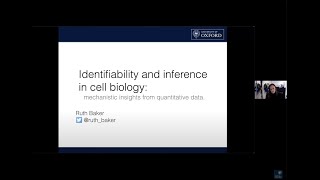
Research Seminar - Identifiability and Inference in Cell Biology
Explores mathematical modeling in cell biology, focusing on identifiability and inference. Discusses challenges in developing realistic models for interpreting quantitative data and showcases applications in biological mechanisms.
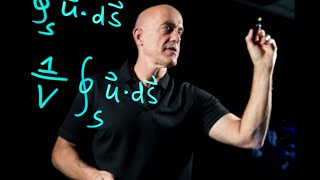
Vector Calculus for Engineers
Master vector calculus concepts and applications in engineering, covering vectors, coordinate systems, fields, integrals, and theorems with practical examples and electromagnetic applications.

Structural Dynamics
The objective of the course is to understand the behavior of structures especially building to various dynamic loads: such as wind, earthquake, machine vibration and ambient vibration.
Basic Electronics
The course is about basic electronic circuits, both analog and digital. In the analog part, diode circuits, BJT amplifiers, Op-Amp circuits will be covered. In the digital part, combinatorial and sequential circuits will be covered.
Biostatistics and Design of Experiments
The course encompasses topics such as distribution of data, sample size, tests of significance, data reduction, regression analysis, comparison of performance of drugs in clinical trials, design of experiments, screening and second order designs.

Matlab Tutorial
Learn MATLAB basics for data analysis, control systems, and signal processing. Covers variables, operations, scripts, functions, and linear algebra in a beginner-friendly tutorial.
Abstract Algebra
Explore fundamental concepts of abstract algebra, including sets, relations, operations, groups, and advanced topics like homomorphisms, cosets, and group actions.

The Ultimate Guide to Propositional Logic for Discrete Mathematics
Comprehensive guide to propositional logic in discrete mathematics, covering key concepts, truth tables, logical equivalence, and practical applications with exercises for reinforced learning.

Singular Value Decomposition
Comprehensive exploration of Singular Value Decomposition, covering mathematical foundations, applications in data processing, and implementation in MATLAB and Python for various real-world scenarios.
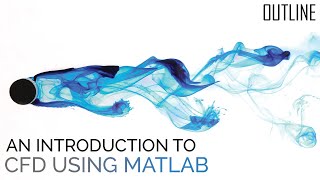
An Introduction to CFD Using MATLAB
Learn how to solve fundamental problems in fluid dynamics using Matlab.
Computational Fluid Dynamics and Heat Transfer
Explore advanced techniques in fluid dynamics and heat transfer simulation, enhancing engineering skills for complex system analysis and design optimization.
Computational Systems Biology
Explore computational approaches to model and analyze biological systems, from network biology to dynamic modeling, with hands-on labs using MATLAB and other tools.
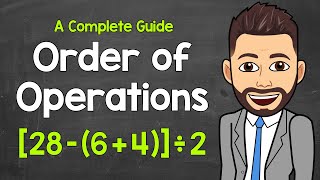
Order of Operations Explained - A Complete Guide - PEMDAS - Math with Mr. J
Comprehensive guide to PEMDAS, covering various scenarios from basic to complex. Includes explanations and examples for parentheses, exponents, fractions, and integers in mathematical operations.

Kalman Filter for Beginners - Recursive Filters & MATLAB Examples
Explore recursive filters, including average, moving average, and low-pass filters, with practical MATLAB examples. Learn the foundations of Kalman filtering for enhanced estimation and data analysis skills.

MIT - A 2020 Vision of Linear Algebra, Spring 2020
Professor Strang presents a fresh approach to linear algebra, focusing on matrices. This concise series covers key concepts like column space, orthogonality, eigenvalues, and solving linear systems.
Why Brain Science Needs an Edit - Mu-ming Poo - Radcliffe Institute
Explore gene editing in neuroscience, focusing on macaque monkey models for studying self-consciousness. Delve into ethical considerations of primate research and potential applications in brain disease treatments.

IT and Computer Science
Comprehensive exploration of computer science fundamentals, including binary, number systems, operating systems, and cybersecurity, with practical applications and hands-on tutorials.
Three.js Tutorial for Beginners
Learn to create stunning 3D graphics and effects for web using Three.js, from basic concepts to advanced techniques like lighting, particle systems, and postprocessing.
Working with SPSS
Learn to use SPSS for data analysis: from data entry and import to advanced statistical techniques like ANOVA, regression, and correlation. Master creating charts and formatting outputs.
Probability and Random Variables
Comprehensive exploration of probability theory and random variables, covering axioms, distributions, expectations, and advanced concepts for a solid foundation in statistical analysis.

Set Theory
Comprehensive exploration of set theory fundamentals, covering key concepts and principles through structured lectures. Ideal for mathematics students seeking a deep understanding of this foundational topic.