
Principles of Signals and Systems
This course introduces the fundamental principles of signals and system analysis. These concepts form the building blocks of modern digital signal processing, communication and control systems. Hence, a sound understanding of these principles is necessar…
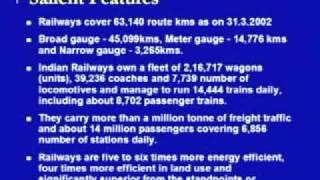
Transportation Engineering II
Comprehensive exploration of railway engineering and airport design, covering track components, geometric design, signaling systems, aircraft characteristics, runway planning, and terminal facilities.

Neural Networks
This playlist has everything you need to know about Neural Networks, from the basics, all the way to image classification with Convolutional Neural Networks.

Dynamics of Physical System
This course covers lessons on newton's method and constraints, derivation of the Lagrangian equation, bond graph approach, vector field around equilibrium points, high dimensional linear systems, and dynamics of nonlinear systems.

Digital Circuits
Comprehensive exploration of digital circuits, covering number systems, Boolean algebra, logic gates, arithmetic circuits, sequential circuits, finite state machines, data converters, memory, FPGA, VHDL, and microprocessors.
Probability Foundation for Electrical Engineers
Comprehensive exploration of probability theory for electrical engineers, covering fundamental concepts, random variables, expectation, and limit theorems with rigorous mathematical foundations.
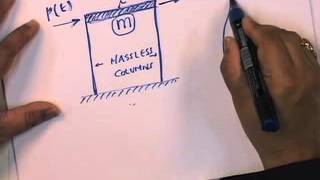
Structural Dynamics
Comprehensive exploration of structural dynamics, covering single and multi-degree freedom systems, vibration analysis, and earthquake response for various structures.
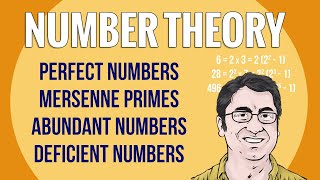
Number Theory
Explore fundamental concepts in number theory, including perfect numbers, prime theorems, and Diophantine equations, to deepen your understanding of mathematical relationships.
Probability and Random Variables - Processes for Wireless Communications
Explore probability and random processes in wireless communications, covering axioms, conditional probability, random variables, and applications in fading channels and array processing.
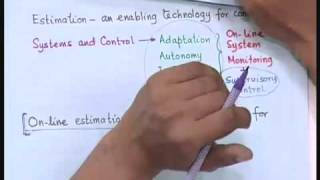
Estimation of Signals and Systems
This course covers lessons on probability theory, random variables, mean and variance, linear signal models, z-transform, Kalman filter, variants of least squares estimation, and estimation problems in instrumentation and control.
Dynamics of Ocean Structures
Explore ocean structure dynamics, from types and environmental forces to vibration analysis and stochastic dynamics. Learn about platforms, fluid-structure interaction, and response control methods.
Coding Theory
This course provides an introduction to traditional and modern coding theory. Topics covered include linear block codes, cyclic codes (BCH and RS codes), convolutional codes, turbo codes and low-density parity-check (LDPC) codes.
Introduction to Probability and Statistics
This course is aimed at being a pre-term or a preparatory course for probability and statistics. It is very basic and introduces the students to the understanding of data and measuring associations. It also introduces the concepts of probability and dist…

Computational Fluid Dynamics
Comprehensive exploration of computational fluid dynamics, covering mathematical foundations, discretization methods, and numerical techniques for solving fluid flow problems.
Pattern Recognition
Comprehensive exploration of statistical pattern recognition, covering Bayes classifiers, density estimation, linear discriminants, neural networks, SVMs, and advanced learning techniques.
Calculus of One Real Variable
This course intends to develop a thorough understanding of the fundamental aspects of calculus of a single variable which is a fundamental tool in Sciences, Engineering and Economics.

Power System Dynamics and Control
This course first introduces a student to power stability problems and the basic concepts of modeling and analysis of dynamical systems. Modeling of power system components - generators, transmission lines, excitation and prime mover controllers - is cov…
Probability and Stochastics for Finance
This course provides the minimum mathematical requirements to study mathematical finance or more precisely the pricing of financial derivatives.
Optimal Control
Comprehensive exploration of optimization techniques, from unconstrained problems to dynamic optimization, covering linear and non-linear programming, optimal control, and robust stability analysis.

Engineering Mechanics
In this course, we would be studying mechanical interaction between different bodies when they interact through the forces applied on each other. This would consist of 2 parts: statics and dynamics.
Engineering Mechanics
In this course, we would be studying mechanical interaction between different bodies when they interact through the forces applied on each other. This would consist of 2 parts: statics and dynamics.