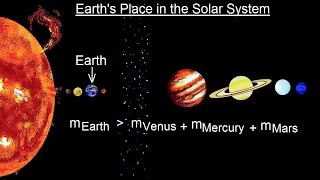
Astronomy - Earth as a Planet
Explore Earth's unique features, interior structure, plate tectonics, atmosphere, and place in the solar system through comprehensive lectures on planetary science and geology.
Philippine Fishing Ground
Explore Philippine fishing grounds, including major seas, gulfs, and passages. Learn about territorial boundaries, pelagic zones, and fish distribution in this comprehensive overview.
Aquatic Environment
Explore water cycles, aquatic environments, and wetlands in this comprehensive overview of freshwater habitats and ecosystems, from lotic to lentic systems and their diverse life forms.
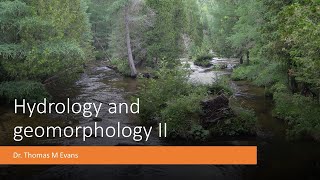
Hydrology and Geomorphology II
Explore stream ecology through hydrology and geomorphology, covering flow dynamics, fluid mechanics, and field sampling techniques for a comprehensive understanding of riverine systems.
Hydrology and Geomorphology I
Explore hydrology and geomorphology fundamentals, focusing on Chesapeake region streams. Learn about riverscapes, discharge measurements, and key physical features of waterways.
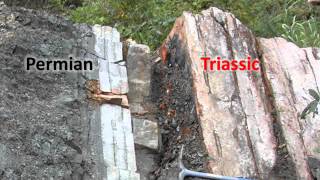
The Great Dying: Permian-Triassic Extinction Event and Its Impact on Dinosaur Evolution
Explore the Permian-Triassic extinction event, its causes, and its crucial role in dinosaur evolution. Uncover the rapid demise of vertebrate life and its far-reaching consequences.
Why Ecologists Should Avoid Putting Things Into Groups
Explore ecological diversity's complexity, challenging traditional grouping methods and proposing innovative approaches for more accurate ecosystem understanding and analysis.
Bringing the Science Back Into Water- A New Paradigm for 21st Century India by Mihir Shah
Exploring India's water crisis, its causes, and proposing a new paradigm for water management based on scientific principles and multidisciplinary approaches for sustainable solutions.
Endless Forms Most Beautiful by Shannon Olsson
Explore the evolution of species through the story of a fly, from Darwin's time to modern virtual reality experiments, revealing how small brain changes lead to new species formation.
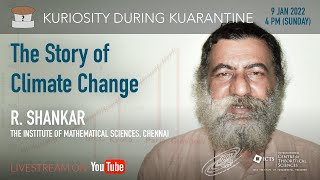
The Story of Climate Change
Explore the history of climate science, from early discoveries to modern models, and understand the current global climate crisis and its ethical implications.
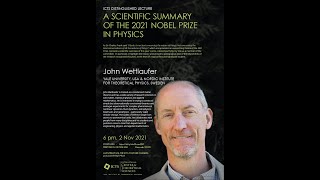
A Scientific Summary of the 2021 Nobel Prize in Physics
Explore complex systems, climate modeling, and statistical mechanics with insights from a Nobel Prize committee member. Gain a graduate-level understanding of interconnected physical phenomena.

Numerical Homogenization Based Fast Solver for Multiscale PDEs
Explore numerical homogenization for multiscale PDEs, covering Bayesian approaches, exponential decaying bases, and efficient solvers. Learn about applications in geophysics, materials science, and biology.
The Life History of a Raindrop by Rama Govindarajan
Explore the fascinating journey of raindrops, from formation to interaction with turbulence in clouds. Discover fluid dynamics, monsoon patterns, and the intricate processes behind precipitation.
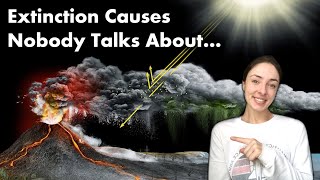
Mass Extinction Causes Nobody Talks About - GEO GIRL
Explore lesser-known mass extinction causes, from SO2-induced cooling to gamma ray bursts. Learn how various factors trigger devastating events and impact Earth's biodiversity throughout history.
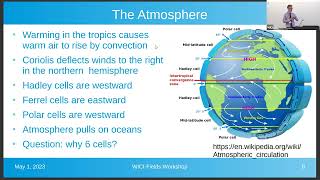
Understanding Cross-Scale Systems and Feedbacks
Explore cross-scale systems and feedbacks in climate science, examining interconnected processes across different spatial and temporal scales to enhance climate modeling and predictions.
What the Numbers Say - Calculating Climate Change
Explore mathematical modeling for climate change adaptation, from city planning to risk assessment. Experts discuss how climate science informs decision-making and action planning for a changing world.
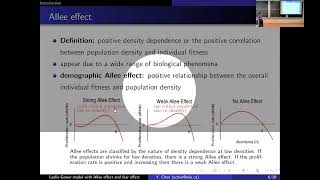
Dynamic Behaviors of a Leslie-Gower Model With Strong Allee Effect and Fear Effect in Prey
Explore dynamic behaviors in a Leslie-Gower model, examining strong Allee effect and fear effect in prey populations. Gain insights into ecological modeling and population dynamics.
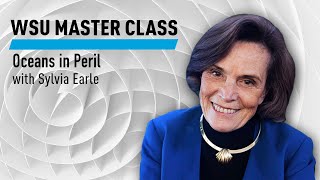
Oceans in Peril - Challenges and Solutions for Marine Conservation
Renowned oceanographer Sylvia Earle explores urgent threats to marine ecosystems and offers solutions to protect our vital oceans, emphasizing the critical role of conservation in sustaining global biodiversity.
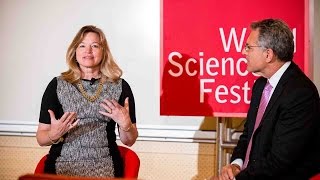
Pioneers in Science - Ellen Stofan, NASA Chief Scientist and Planetary Geologist
Engage with NASA chief scientist Ellen Stofan as she discusses her career, inspirations, and NASA's science programs, offering insights into planetary geology and space exploration.

Medicine and Health in Extreme Environments - From Space to Everest
Astronaut and mountaineer Scott Parazynski explores medicine and health in extreme environments, drawing insights from space and Everest expeditions.

Medical Emergencies on Mount Everest - Treating Patients in Extreme Conditions
Microsurgeon recounts harrowing experiences treating patients during a deadly storm on Mount Everest, exploring extreme medicine and human resilience in challenging conditions.