
Theoretical and Practical Perspectives in Geophysical Fluid Dynamics - Afternoon Session
Explore geophysical fluid dynamics through lectures, talks, and tutorials on eddies, waves, turbulence, and climate modeling. Gain insights from theory, models, and observations in this interdisciplinary meeting.
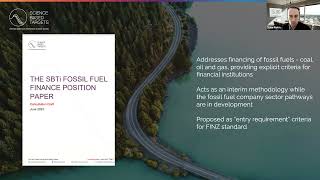
SBTi Fossil Fuel Finance Position Paper - Public Consultation Deep Dive
Explore SBTi's draft fossil fuel finance criteria and provide feedback on updated guidance for financial institutions setting science-based climate targets.
Leveraging Deep Learning and Rare Event Sampling to Study Climate Extremes Impacting the Power System
Explore deep learning and rare event sampling techniques for analyzing climate extremes' impact on power systems.
Is the World Smooth or Non-smooth? Mathematical Models in Dynamic Systems
Explore mathematical modeling approaches examining smooth vs non-smooth dynamics across climate, energy transfer, and neural systems, revealing insights into complex real-world phenomena.
Sequential Design Based on Mutual Information for Computer Experiments - Joakim Beck, KAUST
Explore uncertainty quantification using Gaussian Process emulators for complex systems. Learn about sequential design methods, mutual information criteria, and applications in climate, tsunami, and earthquake modeling.
Known Boundary Emulation of Complex Computer Models - Ian Vernon, Cambridge
Explore efficient methods for emulating complex computer models using Known Boundary Emulation, focusing on uncertainty quantification and applications in climate, tsunami, and earthquake problems.
Pragmatically Ambitious Multiscale Global Temperature Reconstruction - Finn Lindgren, Edinburgh
Explore pragmatic approaches to global temperature reconstruction using multiscale models, data sources, and statistical techniques for uncertainty quantification and bias correction.
Chance and Chaos - How to Predict the Unpredictable by Jens Marklof
Explore chaos theory, unpredictability, and mathematical tools for analyzing chaotic systems. Discover applications in weather forecasting, statistical physics, and everyday phenomena like coin tosses and bread kneading.
Causal Inference for Earth System Sciences - Jakob Runge
Exploring causal inference techniques for Earth system sciences, focusing on advanced methods to uncover complex relationships in climate data and improve understanding of multi-scale processes.
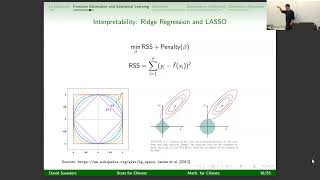
Statistics for Complex Climate Problems
Explore statistical approaches for addressing complex climate issues, focusing on advanced techniques and their applications in environmental research and policy-making.
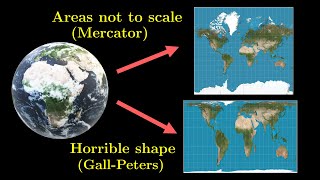
Why All Maps Are Wrong - Theorema Egregium
Explore Theorema Egregium's geometric proof, revealing why no world map can preserve both area and angles. Understand curvature, spherical areas, and the Gauss map in this mathematical journey.
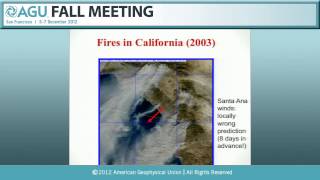
Fighting Chaos: Applications of Breeding - Lorenz Lecture
Explore chaos theory and breeding techniques to predict regime changes in dynamic systems, with applications in atmospheric and oceanic sciences, Mars exploration, and data assimilation.
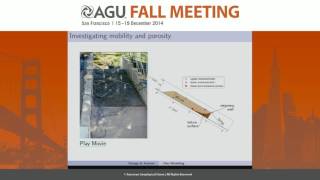
Numerical Modeling of the 2014 Oso, Washington, Landslide
Explore numerical simulations of the 2014 Oso landslide, examining factors behind its devastating runout. Learn how initial sediment conditions can dramatically influence landslide behavior and consequences.
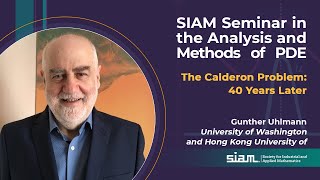
The Calderon Problem: 40 Years Later - Seminar in the Analysis and Methods of PDE
Explore Calderon's inverse problem, its applications in medical imaging and geophysics, recent developments, and open questions with expert Gunther Uhlmann in this insightful seminar.
The Role of Mathematics in Solving the World's Main Challenges
Explore how mathematics and computation contribute to understanding climate, energy, the cosmos, and life itself through TED-style talks by renowned computational scientists.
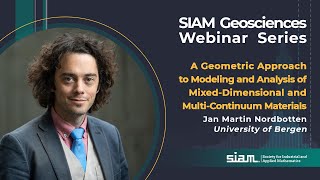
A Geometric Approach to Modeling and Analysis of Mixed-Dimensional and Multi-Continuum Materials
Explore geometric modeling of complex materials, unifying concepts from differential geometry and functional analysis to analyze fractured porous media and multi-continuum models.
Efficient and Effective Calibration of Spatio-Temporal Models - Dan Williamson & James Salter, Exeter
Explore efficient calibration techniques for spatio-temporal models, focusing on uncertainty quantification and Gaussian Process emulation in complex physical systems like climate and natural disasters.
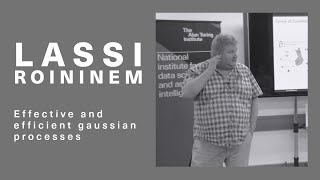
High-Dimensional Hierarchical Models for Large-Scale Geophysical Applications
Explore high-dimensional hierarchical models for geophysical applications, focusing on uncertainty quantification and Gaussian Process emulation in complex physical systems.
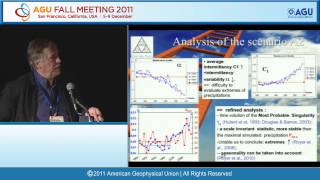
Scaling and Fractals After Mandelbrot - On the Frontiers of the Geosciences - Part 1
Explore scaling and fractals in geosciences, building on Mandelbrot's work. Discover cutting-edge applications and insights at the frontiers of Earth and space sciences.
Fractals and Multifractals in Geophysics - Lorenz Lecture
Explore fractals and their applications in geophysics with renowned mathematician Benoit Mandelbrot in this historic AGU Fall Meeting lecture from 2001.
Bayesian Inference - Lecture 2
Explore Bayesian inference principles, methods, and applications in data assimilation for weather and climate modeling. Gain insights into uncertainty estimation and practical implementation.