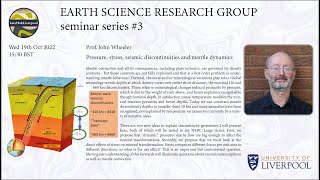
Pressure, Stress, Seismic Discontinuities and Mantle Dynamics
Explore mantle dynamics, seismic discontinuities, and new theories on mineral transformations affecting Earth's interior structure and convection processes.
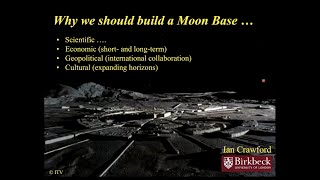
Why We Should Build a Moon Base
Explore the scientific rationale for lunar colonization, covering geology, exploration history, and potential benefits for various research fields.
Geochemical and Geophysical Constraints on Global Mantle Convection Simulations
Explore geodynamic models to understand mantle processes, including Pb isotope cycling, Earth's heat budget, and seismically observed lower mantle features.
Experimental Insights into Volcanic Particle-Ice Interaction
Explore experimental insights into volcanic particle-ice interactions, examining particle properties, configurations, and their effects on ice systems through systematic research approaches.
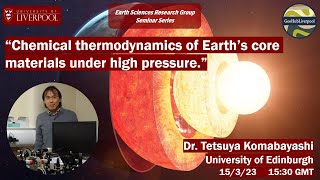
Chemical Thermodynamics of Earth's Core Materials Under High Pressure
Explore chemical thermodynamics of Earth's core materials, examining mixing properties of Fe-X liquids and developing thermodynamic models applicable to core pressure-temperature conditions.
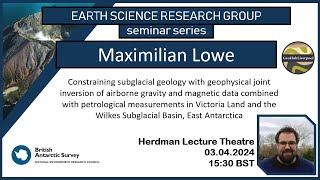
Constraining Subglacial Geology with Geophysical Joint Inversion in Antarctica
Explore geophysical joint inversion techniques to uncover subglacial geology in Antarctica, focusing on airborne gravity and magnetic data analysis in Victoria Land and Wilkes Subglacial Basin.
Experiencing the Moon: Kennedy Space Center's Role in Lunar Exploration - Space Forum
Explore lunar mysteries with Dr. Kirby Runyon. Discover the Moon's active nature, innovative exploration techniques, and the human spirit of adventure. Gain insights into Kennedy Space Center's role in lunar missions.
AI for Nature: From Science to Impact
Explore AI's role in conservation, from computational ecology to wildlife biology. Learn how innovative technologies are advancing biodiversity research and environmental protection efforts globally.
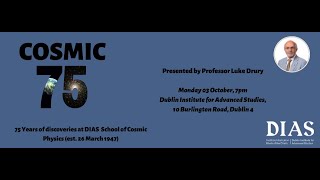
Cosmic 75 - 75 Years of the School of Cosmic Physics at DIAS
Explore 75 years of groundbreaking research in cosmic physics, from Earth's interior to the universe's edge, with DIAS's pioneering discoveries and ongoing contributions to scientific understanding.
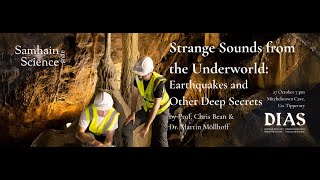
Strange Sounds from the Underworld - Earthquakes and Other Deep Secrets
Explore seismic vibrations and underground sounds with experts in Mitchelstown Cave. Discover how earthquakes, local tremors, and other signals are detected and interpreted in this unique subterranean setting.
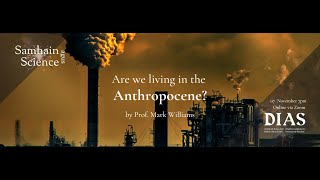
Are We Living in the Anthropocene? - The Geology of Human Impact on Earth
Explore the geological impact of human activity on Earth and climate change markers with Prof. Mark Williams in this DIAS Samhain agus Science lecture.
A Tale of Two Volcanoes: Santorini and Aniakchak - Historical Impacts and Controversies
Explore volcanic eruptions' historical impacts, from Santorini to Aniakchak. Uncover controversies in archaeology, geology, and chronology. Examine effects on ancient civilizations and modern scientific debates.
Waves and Wind-Driven Flows in the Ocean - Lecture 3
Explore ocean dynamics through waves and wind-driven flows, focusing on Kelvin-Stuart vortices, their stability, and applications in fluid mechanics and plasma physics.
Ocean Diffusivity: Stochastic Approaches in Numerical Modeling
Explore stochastic approaches in ocean modeling, including Monte-Carlo methods, perturbed conditions, and stochastic dissipation operators for improved numerical simulations.
Waves and Wind-Driven Flows in the Ocean - Lecture 1
Explore ocean dynamics through waves and wind-driven flows in this comprehensive lecture, focusing on Kelvin-Stuart vortices and their applications in fluid mechanics and plasma physics.
Balance, Jets and Coherent Structures in Geophysical Fluid Dynamics - Lecture 1
Explore geophysical fluid dynamics, focusing on balance, jets, and coherent structures in planetary-scale flows.
Balance, Jets and Coherent Structures in Geophysical Fluid Dynamics - Lecture 2
Explore balance, jets, and coherent structures in geophysical fluid dynamics through an in-depth lecture by David Dritschel.
Development of Modern Ocean Circulation during the Cenozoic
Explore the evolution of ocean circulation patterns throughout the Cenozoic era, focusing on key factors shaping modern oceanic systems.
Novel Geochemical Approaches to Interpreting Past Climate, Oceanographic, and Ecological Signals in Planktic Foraminiferal Records
Explore innovative geochemical methods for decoding climate, ocean, and ecological data from planktic foraminifera records with Dr. Brittany Hupp.
Ancient Bubbles Tell Future Climate Stories
Explore how ancient air bubbles trapped in ice reveal Earth's climate history and inform future climate predictions.
What Can We Learn About Earth's Past, Present, and Future from Rock and Sediment Cores from New Jersey
Explore Earth's history through NJ rock cores, uncovering insights into past climates and future environmental changes.