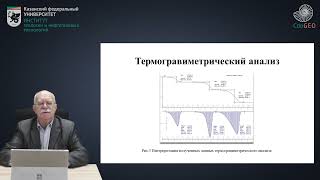
Методы термического анализа в исследовании нефтей и нефтесодержащих пород
Изучите методы термического анализа для исследования нефтей и нефтесодержащих пород. Освойте современные технологии и повысьте эффективность в нефтегазовой отрасли.

Интерпретация дифрактограмм метода рентгеновской дифрактометрии
Изучите применение рентгеновской дифрактометрии для анализа литологического состава пород и интерпретацию дифрактограмм. Углубите знания в области современных литологических исследований.
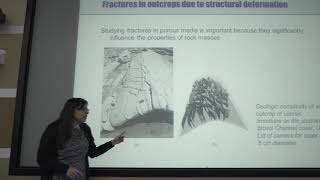
Analysis of Fractures in Outcrops
Aprenda técnicas para analizar fracturas en afloramientos rocosos y comprender su importancia geológica.
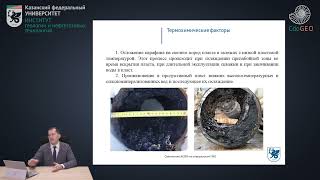
Маннанов Ильдар Ильгизович - Лекция 3
Изучите основы геологии и нефтегазовых технологий в лекции от эксперта Казанского федерального университета. Повысьте свою квалификацию и расширьте профессиональные возможности.
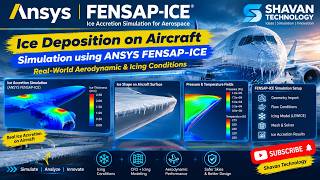
Ice Deposition on Aerodynamic Surfaces Using Ansys Icing - Subcooled Water and Freezing
Explore ice formation on aerodynamic surfaces at high altitudes using Ansys Icing, focusing on flow, water deposition, and freezing processes with subcooled water droplets.
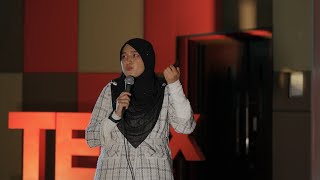
A Tale of the Horseshoe Crab - Importance and Conservation
Explore the fascinating world of horseshoe crabs, their ecological importance, and the urgent need for conservation efforts to protect these ancient creatures for future generations.

Cosmic Map Making - Exploring Similarities Between Cosmic and Everyday Maps
Explore cosmic map making's intricacies and surprising similarities to everyday maps with Prof. Adrian Liu, uncovering the Universe's history and the birth of first-generation stars and galaxies.

The Otters of Singapore and Other Unexpected Wildlife Thriving in Cities
Explore Singapore's urban wildlife coexistence, featuring otters, hornbills, and lizards. Discover how cities can become wildlife refuges and learn about the unexpected biodiversity thriving alongside skyscrapers.
Autocatalytic Chemical Ecosystems in Spatial Settings
Explore autocatalytic chemical ecosystems in spatial settings, gaining insights into complex astrobiology topics and fostering collaboration among early-career scientists.
Pescadero Basin Hydrothermal Vents: A Window into Extremophiles
Explore extremophiles in Pescadero Basin hydrothermal vents and their implications for astrobiology. Gain insights into unique ecosystems and potential extraterrestrial life forms.
Mineralogy of Evaporites and Sediments in Phosphate-Rich Lakes - AbGradCon 2023
Explore mineralogy of evaporites and sediments in phosphate-rich lakes, focusing on hydrated minerals and their implications for astrobiology research.
The Climates of G1514 b - AbGradCon 2023
Explore the climates of exoplanet G1514 b through cutting-edge astrobiology research presented by Héctor Delgado Díaz at AbGradCon 2023, fostering interdisciplinary collaboration in planetary science.
Differences in Climates and Transit Spectra of Habitable Planets
Explore differences in climates and transit spectra of habitable planets, focusing on key factors influencing planetary habitability and detection methods for exoplanets.
A Model of Europa's Ice Shell and Its Effect on Ocean Circulation
Explore Europa's ice shell and its impact on ocean circulation through a cutting-edge model presented by Sara Miller at AbGradCon 2023, advancing our understanding of this intriguing Jovian moon.
Modeling a Subsurface Biosphere on Europa
Explore modeling techniques for Europa's potential subsurface biosphere, examining the possibilities of life in its ocean world environment.
Characterization and Automated Detection of Palimpsest Ripples
Explore automated detection of palimpsest ripples in astrobiology research, enhancing understanding of ancient sedimentary structures and their implications for early life on Earth and beyond.
Long Period Seismology on Titan - AbGradCon 2023
Explore long period seismology on Titan, focusing on NASA's Dragonfly mission, methane clathrates, and seismic wave propagation models to uncover the moon's interior structure.
Microscopy Methods for Life Detection on Icy Ocean Worlds
Explore microscopy techniques for detecting life on icy ocean worlds. Learn cutting-edge methods in astrobiology research and their applications in the search for extraterrestrial life.
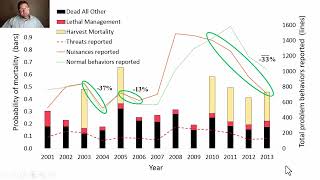
Managing Black Bears in the Anthropocene - Chapter 1, Module 6 Case Study
Explore multistate capture-mark-recapture techniques, vehicle strike impacts, and conflict data to effectively manage black bear populations in human-dominated landscapes.

Mammalian Radiations - Lecture 1.4
Explore mammalian radiations and their evolutionary significance in this concise lecture on diverse adaptations and ecological niches.
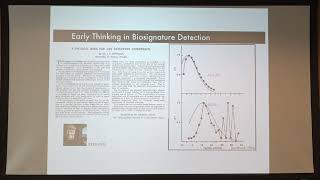
Geochemistry, Biosignature and Life Detection Techniques
Explore geochemistry, biosignatures, and life detection techniques with NASA expert Mary Beth Wilhelm in this insightful talk on ocean world microhabitats.