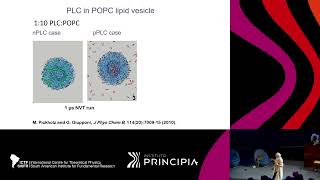
Exploring the Mechanical Properties of Polymerosomes through Molecular Dynamics Simulations
Explore mechanical properties of polymerosomes using molecular dynamics simulations, gaining insights into their behavior and potential applications.
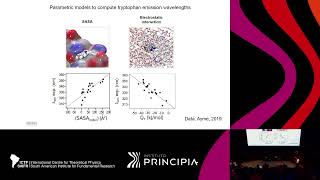
Computational Investigation of Ultrafast Protein-Water Interactions
Explore computational methods for studying ultrafast interactions between proteins and water molecules, uncovering insights into molecular biophysics.
AI-Driven Drug Design: Optimizing Pharmacokinetics and ADME
Explore AI-driven drug design techniques for optimizing pharmacokinetics and ADME with Novartis Principal Scientist Raquel Rodríguez Pérez at the Broad Institute symposium.
Automating Design of Molecules via Retrieval Augmented Generative Language Models - Broad Institute Machine Learning in Drug Discovery Symposium 2023
Explore automated molecule design using retrieval-augmented generative language models in drug discovery, presented by Andrew White from the University of Rochester.
AI in Drug Discovery: What Do We Need for Being Successful?
Explore AI's role in drug discovery with Sanofi-Aventis scientist Christoph Grebner, discussing key success factors and industry insights.
PROTPARDELLE: An All-Atom Protein Generative Model - Broad Institute Machine Learning in Drug Discovery Symposium 2023
Explore PROTPARDELLE, an all-atom protein generative model, presented by Stanford's Possu Huang at the Broad Institute's Machine Learning in Drug Discovery Symposium.
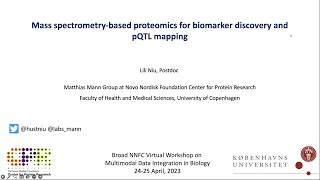
Mass-Spectrometry-Based Proteomics for Biomarker Discovery and pQTL Mapping
Explore mass spectrometry-based proteomics techniques for biomarker discovery and pQTL mapping in this workshop by Lili Niu from the University of Copenhagen.
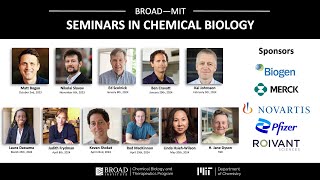
Biological and Technological Frontiers for Single-Cell Proteomics
Explore single-cell proteomics methods for decoding biological functions through protein variation analysis, focusing on mass spectrometry innovations and data interpretation strategies.

Concentration of Solution Formulas
Learn essential formulas for solution concentrations, including mass percent, volume percent, mole fraction, molarity, molality, normality, ppm, and ppb. Master key calculations for chemistry problem-solving.
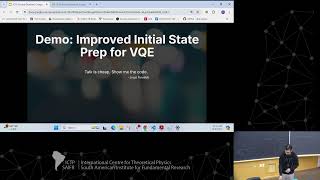
Introduction to Applications of Quantum Computing to Quantum Chemistry - Class 2
Explore quantum computing applications in quantum chemistry, focusing on advanced concepts and practical implementations.
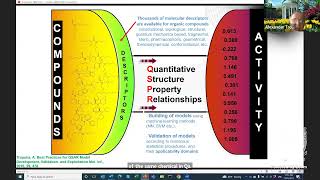
Methods and Models for Chemical Toxicity Prediction - 2022
Explore computational methods for predicting chemical toxicity, integrating structural alerts and QSAR models for comprehensive safety assessment of new compounds.
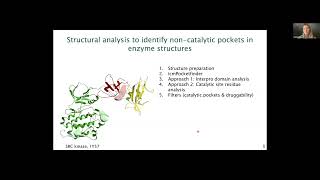
Computational Approaches and Methodologies in Proximity Induced Pharmacology
Explore computational approaches in proximity-induced pharmacology, focusing on PROTACS, structural analysis, and strategies for optimizing PROTAC screening and predicting activity.
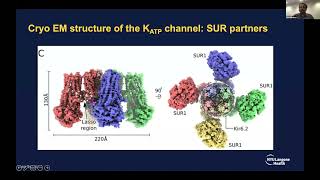
Chemically Probing the Mechanism of KATP Channels
Explore the mechanism of KATP channels through chemical probing, focusing on structure, gating, and the role of palmitoylation in channel opening.
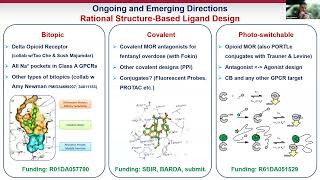
Computer-Driven Discovery of GPCR Ligands with New Chemotypes and Functional Selectivity
Explore computer-driven discovery of GPCR ligands, focusing on new chemotypes and functional selectivity. Learn structure-based techniques for rational ligand design and virtual screening.
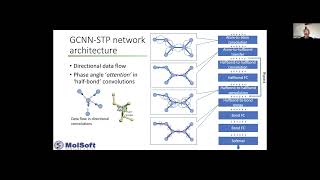
New Technologies in MolSoft ICM: Neural Networks and Beyond
Explore cutting-edge neural networks and advanced technologies in molecular modeling with MolSoft ICM, enhancing your computational chemistry capabilities.
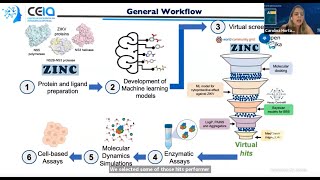
Cheminformatics-Driven Discovery of Hits for Neglected and Emerging Diseases - 2022
Explore AI-driven drug discovery for neglected diseases with Dr. Carolina Horta, focusing on computational methods and QSAR models for identifying new drug candidates.
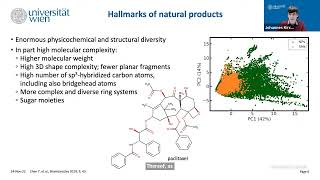
Cheminformatics in Natural Product-Based Drug Discovery - 2022
Explore computational methods for predicting biological activities, metabolic fate, and toxicity of small molecules in natural product-based drug discovery.
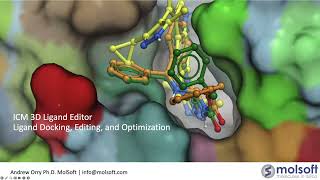
ICM 3D Ligand Editor - Ligand Docking, Editing and Optimization
Explore ICM 3D Ligand Editor for advanced ligand docking, editing, and optimization techniques in molecular modeling and drug discovery.
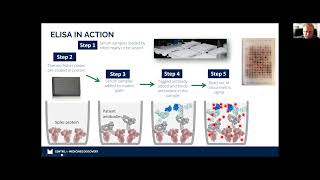
How Molsoft Scarab Helped Fight COVID-19 in the UK
Explore how Molsoft Scarab contributed to COVID-19 research in the UK, presented by Oxford's Dr. Brian Marsden at MolSoft's User Group Meeting.
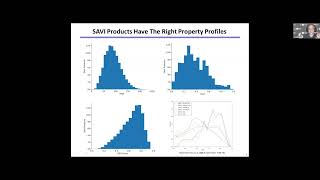
Mining in the Ultra-Large Library SAVI with Molsoft Tools
Explore mining techniques in the ultra-large SAVI library using MolSoft tools, enhancing drug discovery and molecular analysis capabilities.
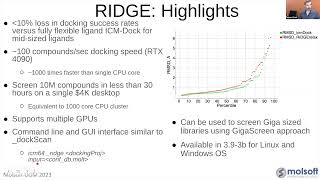
Highlights of Recent ICM Developments: GPU Acceleration, Applications, and More
Explore recent ICM developments, including GPU acceleration and applications. Discover advancements in molecular modeling, docking, and AI tools for computational chemistry.