Force Spectroscopy Sheds Light on the Structure and Dynamics of Nucleosomes
Explore force spectroscopy's insights into nucleosome structure and dynamics, revealing chromatin's complex behavior at the molecular level.

What if String Theory Has a de Sitter Excited State?
Explore the concept of de Sitter space as an excited state in string theory, examining its implications and differences from traditional coherent states.

What if String Theory Has a de Sitter Excited State?
Explore the concept of de Sitter space as an excited state in string theory, examining its implications and differences from traditional coherent states.
Yielding in Colloidal Systems Far-From-Equilibrium: From Gels to Active Matter
Explore yielding in colloidal systems, from depletion gels to active colloids. Discover microscopic mechanisms behind counterintuitive phenomena and altered yielding under extreme conditions.
From Thermal to Athermal Systems: Self-Assembly and Absorbing Phase Transitions
Explore self-assembly and absorbing phase transitions in thermal and athermal systems, bridging physics and biology in non-equilibrium processes.
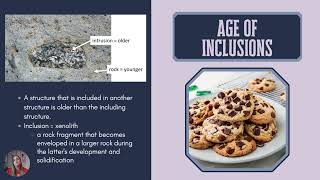
Earth's Past: Geochronology
Explore Earth's history through geochronology, learning dating techniques and geological timescales. Gain insights into our planet's ancient past and evolutionary timeline.
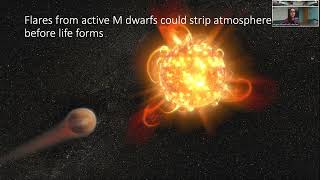
Finding Atmospheres on M Dwarf Terrestrial Planets with JWST
Explore JWST's capabilities in detecting atmospheres on M dwarf terrestrial planets and its implications for the search for habitable exoplanets through secondary eclipse photometry.

The Origin of Mercury's Structure and Chemical Composition and Their Astrobiological Implications
Explore Mercury's unique composition, formation, and implications for astrobiology. Investigate its metal-rich core, volatile elements, and comparisons to chondrites through experimental data and spacecraft observations.
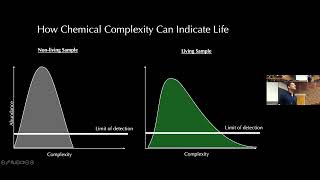
Expanding the Agnostic Biosignature Toolkit: Estimating Molecular Assembly with GC-MS
Explore techniques for detecting extraterrestrial life using molecular assembly theory and gas chromatography/mass spectrometry, focusing on agnostic biosignatures and analytical challenges.
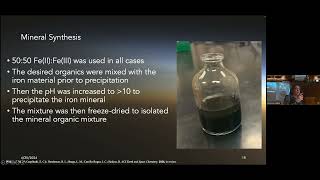
Photochemical Stability and Reactivity of Prebiotic Molecules Under Ceres-Like Conditions
Explore prebiotic organic material stability and reactivity under Ceres-like conditions, with implications for astrobiology and future mission planning.
Expanding the Limits of Chemical Searches Within Ultra-Hot Jupiters
Explore chemical searches in ultra-hot Jupiters, expanding understanding of extreme exoplanet atmospheres and their unique compositions.

Exploring Mercury's Petrologic Evolution Through Experimental and Modeling Approaches
Uncover Mercury's volcanic history through experimental and modeling techniques, exploring mantle structure and magma ocean dynamics to explain surface diversity.

Geometric Algebra Transformers: Revolutionizing Geometric Data
Explore GATr's revolutionary approach to geometric data processing, enhancing computer vision, robotics, chemistry, and physics with efficient 16-dimensional vector space representations and E(3) equivariance.
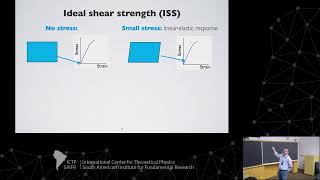
Plastic Deformation of Superionic Water Ices
Explore plastic deformation in superionic water ices, examining unique properties and implications for planetary interiors and materials science.
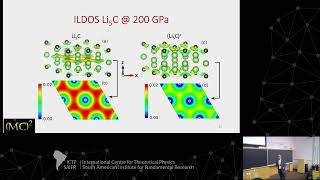
Search for New Electride High Temperature Superconductors
Explore cutting-edge research on electride high-temperature superconductors, focusing on the search for novel materials with potential technological applications.
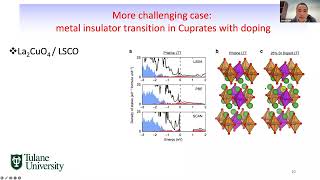
SCAN Functional and DFT Errors for Open-Shell d- and f-Electron Systems
Explore DFT challenges in correlated materials, focusing on SCAN functional's improvements for open-shell d- and f-electron systems. Analyze error sources and symmetry breaking effects.
Solving Complex Quantum Chemistry Problems with Amazon Braket
Explore quantum chemistry problem-solving using Amazon Braket with insights from an applied scientist at QHack 2023.
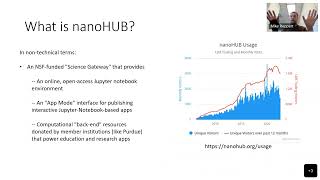
Hands-on Teaching with Jupyter Notebooks on nanoHUB
Explore hands-on teaching using Jupyter Notebooks on nanoHUB for chemistry courses. Learn to create interactive simulations, visualizations, and programming projects for enhanced student engagement and learning.
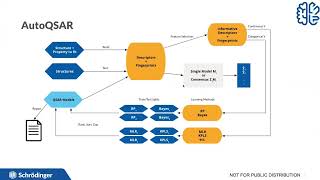
Machine Learning Models for Ionic Conductivity with Schrödinger's AutoQSAR - Hands-On Workshop
Explore machine learning for ionic conductivity prediction using Schrödinger's AutoQSAR tool. Gain hands-on experience with MS Maestro interface to create and implement models for materials science applications.
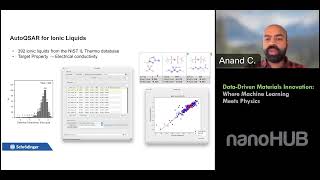
Data-Driven Materials Innovation: Where Machine Learning Meets Physics
Explore how machine learning and physics-based methods synergize to revolutionize materials science, addressing challenges in data-driven design across various technology fields with Schrödinger's innovative tools.
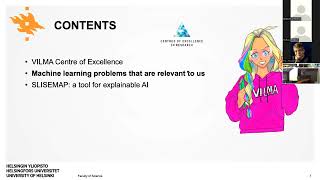
Explainable and Robust AI for VILMA Virtual Laboratory
Explore explainable AI and uncertainty quantification in atmospheric research. Learn about SLISEMAP, a supervised manifold visualization method for local explanations and dimensionality reduction.