Machine Learning of Chemistry and Isotopologues of IRAS 16293-2422B
Explore machine learning applications in chemistry and isotopologue analysis of IRAS 16293-2422B, advancing astrobiology research and fostering interdisciplinary collaboration among early-career scientists.
Proton Irradiation Effects on Stable Chiral Amino Acid Radicals
Explore proton irradiation's impact on stable chiral amino acid radicals in astrobiology research. Gain insights into cutting-edge findings presented at AbGradCon 2023 by early-career scientist Máté Szarka.
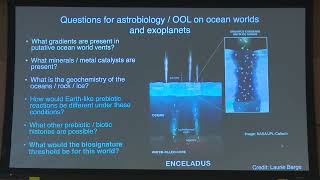
Searching for Life: General Motivation and Approaches
Explore the motivations and methods for searching extraterrestrial life through an expert's perspective from the Jet Propulsion Laboratory.
A Coarse-Grained Molecular Dynamics Study of Damage Localization During the Fracture of Double Polymer Networks
Explore molecular dynamics of damage localization in double polymer networks, focusing on mechanisms behind increased toughness and the interplay between load sharing and damage propagation.
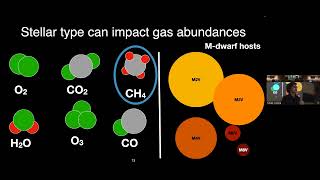
There's More to Life Than O2 - Assessing Biosignatures in Terrestrial Exoplanets
Explore biosignatures beyond oxygen in exoplanet spectroscopy, assessing detectability and environmental context for potential extraterrestrial life.
Foundation Models for Materials Synthesis
Explore foundation models for materials synthesis, focusing on AI-driven approaches to accelerate discovery and innovation in materials science.
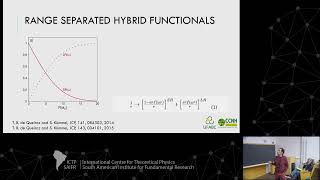
Revealing Mechanisms of Light Harvesting and Charge Separation in Molecular Systems
Explore mechanisms of light harvesting and charge separation in molecular systems, focusing on challenges for time-dependent density functional theory.
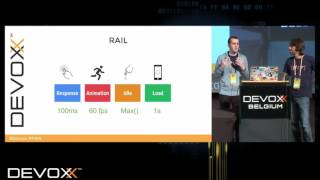
Progressive Web Apps
Explore the potential of Progressive Web Apps as an intermediate solution combining the best of native, hybrid, and web applications for mobile development projects.
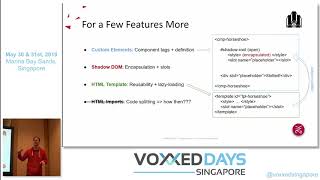
Web Western - The Good, The Bad And The Web Components
Explore the pros and cons of building large-scale applications using web components and utility libraries, discussing development effort, standardization, performance, compatibility, and alternatives.
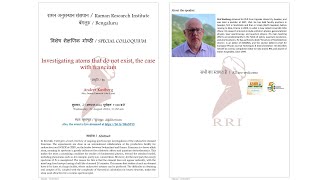
Investigating Atoms That Do Not Exist - The Case with Francium
Delve into the fascinating world of francium - the rarest naturally occurring element - through an exploration of its atomic properties, discovery, and scientific significance.
Structure-Aware Protein Self-Supervised Learning
Explore structure-aware protein self-supervised learning, combining GNN models with protein language models to enhance structural information capture for improved downstream task performance.

New Developments in Wolfram Chemistry
Explore upcoming Wolfram Language chemistry features, including enhanced molecular visualization, crystal structures, and biomolecule representation. Learn about ChemistryFunctions paclet for dynamic manipulation and analysis.
Wavepacket Studies of the Water-Dimer - Insights from Exact Quantum Dynamics
Explore wavepacket quantum dynamics of water-dimer, revisiting infrared spectrum in OH-stretch region and validating theoretical descriptions using accurate simulations on recent potential energy surfaces.
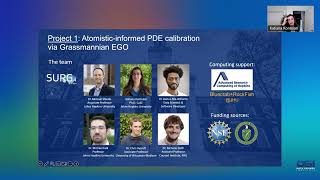
Leveraging Latent Representations for Predictive Physics-Based Modeling
Explore advanced techniques for leveraging latent representations in predictive physics-based modeling, focusing on surrogate models, inverse problems, and transfer learning for complex PDEs.
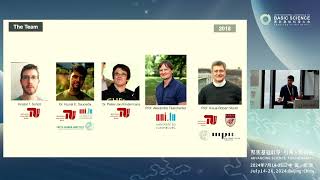
SchNet - A Deep Learning Architecture for Molecules and Materials
Explore SchNet, a deep learning architecture for modeling atomistic systems, and its applications in predicting molecular and material properties across chemical space.
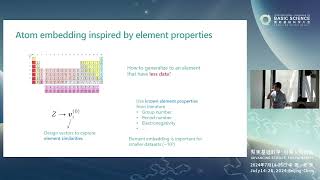
Accelerating Materials Design with Crystal Graph Neural Networks
Explore Crystal Graph Convolutional Neural Networks for predicting material properties and their impact on graph neural networks and transformers in materials design.
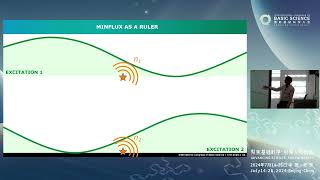
Accessing the Nanoscale with MINFLUX Light Microscopy
Explore MINFLUX, a groundbreaking light microscopy technique achieving nanometer-scale precision in superresolution imaging and single-molecule tracking, revolutionizing cellular observations.
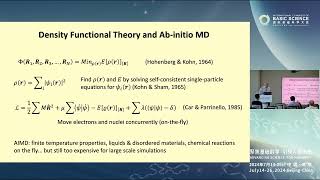
DP-GEN: An Optimal Active Learning Protocol for Constructing Interatomic Potentials - Materials Simulation
Explore DP-GEN, an innovative active learning protocol revolutionizing molecular modeling by constructing accurate interatomic potentials. Learn its three-step iterative process and applications in materials simulation.
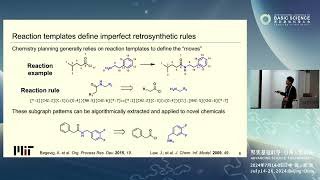
AI-Assisted Automated Chemical Synthesis Planning and Execution
Explore AI-driven chemical synthesis planning integrated with robotic automation, streamlining complex molecule production for drug development and materials science.
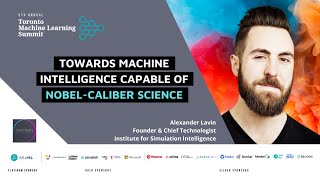
Towards Machine Intelligence Capable of Nobel-Caliber Science
Explore AI-driven scientific discovery, its challenges, and potential for Nobel-caliber breakthroughs. Learn about key AI/ML areas, recent progress, and human-machine collaboration in advancing scientific innovation.
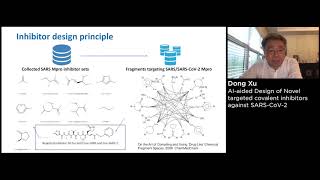
AI-Aided Design of Novel Inhibitors Against SARS-CoV-2
Explore AI-driven drug design for SARS-CoV-2, focusing on 3CLpro inhibitors. Learn about deep Q-learning networks, fragment-based design, and structure-based optimization for developing potential lead compounds.