Advanced Metallurgical Thermodynamics
In this course, you will learn, First, second and third laws of thermodynamics, Maxwell's relations, Clausius-Clapeyron equation, Equilibrium Concepts, Thermodynamics of Phase Transformations etc.

Organic Photochemistry and Pericyclic Reactions
The course will involve a discussion of molecular organic photochemistry and pericyclic reactions. Initially, we will study in brief the fundamental principles of photochemistry. In the following lectures, we will discuss the primary photochemical reacti…
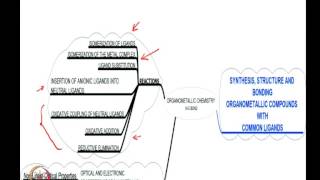
Introduction to Organometallic Chemistry
Explore organometallic chemistry, from metal carbonyls to catalysis. Learn synthesis, bonding, reactions, and applications of metal-organic compounds in this comprehensive program.
Flight Dynamics II - Stability
Explore aircraft stability, dynamics, and control systems. Learn about equilibrium, static and dynamic stability, and various aircraft components' contributions to flight characteristics.
Atomic and Molecular Physics
This course will enlighten the knowledge of atoms and molecules and build up the pre-requisite knowledge for all science and engineering fields. Atom and molecule are the fundamental units for all matters in universe. Matter, whatever the states, is made…
Mechanisms in Organic Chemistry
Explore fundamental principles and advanced concepts in organic chemistry mechanisms through comprehensive lectures, enhancing understanding of molecular interactions and reactions.
Pericyclic Reactions and Organic Photochemistry
Concerted organic reactions and organic photochemistry are important topics in any Chemistry postgraduate curriculum. This course will uncover all the major topics in pericyclic reactions and organic photochemistry.
Chemistry - II
Explore advanced molecular spectroscopy, including vibrational and rotational spectra, microwave spectroscopy, and Raman spectroscopy. Gain insights into molecular structure and dynamics.
Engineering Thermodynamics
The main emphasis in this course is placed on the precise and logical presentation of the basic concepts and principles, which are essential for a better understanding of engineering thermodynamics.
Chemistry - Heterocyclic Chemistry
Explore heterocyclic chemistry through nomenclature, structure determination, reactions, and synthesis methods. Learn about various heterocycles and their properties.

Chemistry I - Introduction to Quantum Chemistry and Molecular Spectroscopy
Explore quantum chemistry and molecular spectroscopy, covering topics from Bohr's atom to polyatomic vibrations, with a focus on mathematical foundations and practical applications.
Thermodynamics & Kinetics
Comprehensive exploration of chemical thermodynamics and kinetics, covering laws, equilibrium, electrochemistry, and reaction dynamics. Ideal for deepening understanding of fundamental chemical principles.
Quantum Chemistry of Atoms and Molecules
The course introduces students to quantum Chemistry. The syllabus is as follows. Black body radiation. Failure of classical mechanics. Marsden experiment and Rutherford theory. Hydrogen atom spectrum. Bohr Sommerfeld theory. etc.

Combustion
Comprehensive exploration of combustion principles, from chemical reactions and kinetics to flame dynamics, diffusion processes, and advanced topics like turbulent combustion and detonations.

How Does Size Shape Our Understanding of and Search for Life? Alien Crash Site with Chris Kempes
Explore how size influences our understanding of life, from microscopic to cosmic scales, and its implications for the search for extraterrestrial life with mathematical biologist Chris Kempes.
Raissa D'Souza - The Collapse of Networks
Explore emergent properties, control theory, and collapse dynamics in complex networks, focusing on renewable energy integration, risk assessment, and social hierarchies.
Mimicking Simple Life Without Biochemistry
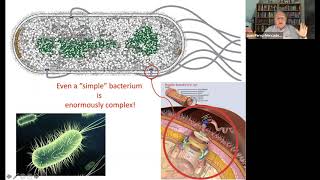
Explore the creation of life-like chemical systems exhibiting growth, replication, and evolution through non-biochemical processes, offering insights into artificial biology and early Earth proto-life formation.
The Laws of Sensitivity for Small Nonequilibrium Systems
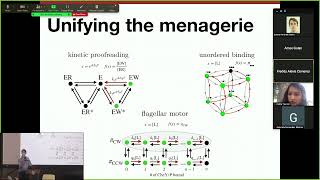
Explore laws constraining sensitivity in small, nonequilibrium systems. Uncover mechanisms behind biochemical switches, sensors, and molecular discrimination, with implications for gene regulation models.

What Makes a Reaction Network "Chemical"?
Explore the fundamental principles of chemical reaction networks, from basic concepts to modern applications, emphasizing reversibility, conservation, and complex systems.
Balance: Philosophical Implications
Explore the philosophical implications of balance, examining its role in various aspects of life, nature, and society through interdisciplinary perspectives.
Death and Resurrection of the Zeroth Principle
Explore the intriguing concept of the Zeroth Principle, its demise, and potential revival in this thought-provoking lecture from the Santa Fe Institute.