Benchmark and Critical Evaluation for ML Force Fields with Molecular Simulations
Explore benchmarking and critical evaluation of machine learning force fields in molecular simulations, focusing on realistic MD trajectories beyond force prediction accuracy.
ProtMD: Incorporating Conformation Flexibility for Drug Binding via Pretraining on MD Simulations
Explore ProtMD, a novel approach incorporating protein flexibility in drug binding predictions using molecular dynamics simulations and self-supervised learning techniques for improved accuracy.

DiffDock: Diffusion Steps, Twists, and Turns for Molecular Docking
Explore DiffDock, a novel diffusion-based approach to molecular docking that outperforms traditional and deep learning methods in predicting ligand-protein binding structures for drug design.
Equivariant 3D-Conditional Diffusion Models for Molecular Linker Design
Explore equivariant 3D-conditional diffusion models for molecular linker design in drug discovery. Learn about DiffLinker's innovative approach to connecting multiple fragments and its applications in real-world scenarios.
QC2: A Modular Open-Source Software for Quantum Chemistry
Explore QC2, a modular open-source software for quantum chemistry, its design principles, workflow, and applications in quantum computing and classical approaches.
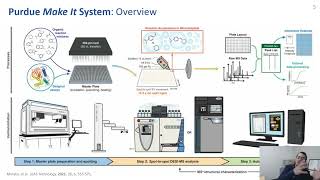
High-throughput Desorption Electrospray Ionization Mass Spectrometry for Reaction Screening, Nano-scale Synthesis and Bioanalysis
Explore high-throughput DESI-MS for drug discovery, including reaction screening, nano-scale synthesis, and bioanalysis. Learn innovative techniques for faster compound library synthesis and bioactivity assessment.
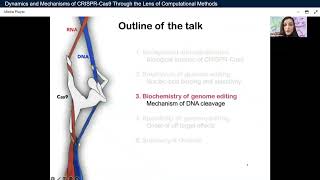
Dynamics and Mechanisms of CRISPR-Cas9 Through the Lens of Computational Methods
Explore computational methods revealing CRISPR-Cas9 dynamics and mechanisms, from RNA binding to large-scale conformational changes, enhancing understanding of this revolutionary genome-editing tool.
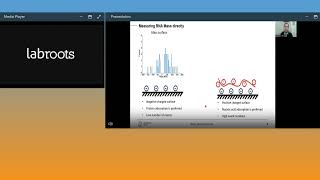
Elucidating the Composition of CRISPR Cas12f1 Complexes Using Mass Photometry
Explore the composition of CRISPR-Cas12f1 complexes through mass photometry, revealing insights into their stoichiometry and interactions with nucleic acids for improved genome editing applications.
Scalable Molecular Simulation of Electrolyte Solutions with Quantum Chemical Accuracy
Explore advanced molecular simulation techniques for electrolyte solutions using neural network potentials and DFT, achieving quantum chemical accuracy and revealing novel insights in solution behavior.

The Future of Chemistry - Self-Driving Laboratories and AI-Driven Discovery
Explore self-driving laboratories revolutionizing scientific discovery through AI and automation. Learn about cutting-edge applications, key elements, and opportunities in chemistry, materials science, and biotechnology.
EquiReact: An Equivariant Neural Network for Chemical Reactions
Explore EquiReact, an equivariant neural network for predicting chemical reaction properties using 3D structures. Learn its advantages in flexibility, extrapolation, and data efficiency.

Stability-Aware Boltzmann Estimator Training of Neural Network Interatomic Potentials
Explore advanced neural network interatomic potentials for molecular dynamics simulations using Stability-Aware Boltzmann Estimator Training to enhance stability and accuracy across various systems and architectures.

MFBind - A Multi-Fidelity Approach for Evaluating Drugs in Generative Modeling
Explore MFBind, a multi-fidelity approach integrating docking and binding free energy simulations for improved drug discovery generative modeling. Learn its advantages over current methods.

Equivariant Scalar Fields for Molecular Docking with Fast Fourier Transforms
Explore machine learning-accelerated molecular docking using equivariant scalar fields and fast Fourier transforms for efficient drug discovery and virtual screening.

What Does Quality Mean to You - Analytical Tools for Defining a Complex Botanical
Explore analytical tools for defining quality in complex botanicals, focusing on Δ8-THC in consumer products and its regulatory challenges in the US hemp industry.
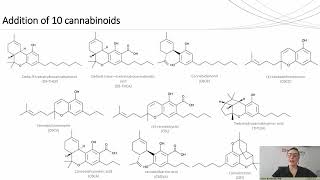
An Analytical Quality by Design (AQbD) Approach to Separating Cannabinoid Stereoisomers
Explore advanced HPLC techniques for separating cannabinoid stereoisomers using Analytical Quality by Design. Learn about the latest developments in cannabis analysis and chromatography methods.
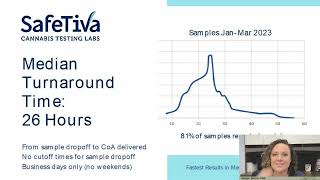
How to Ethically Achieve Very Fast Turnaround Times in Cannabis Testing
Discover ethical strategies for rapid cannabis testing turnaround times. Learn to maintain accuracy while significantly reducing result delivery times, benefiting producers and small businesses in the industry.
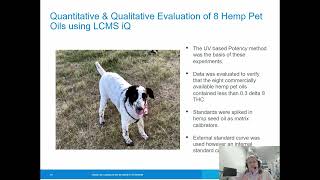
Quantitative and Qualitative Characterization of Cannabinoids in Hemp Pet Products
Explore LC MS analysis of CBD oils in pet hemp products. Learn quantitative and qualitative techniques, compare UV and MSD analysis, and understand LoD/LoQ determination for accurate cannabinoid characterization.
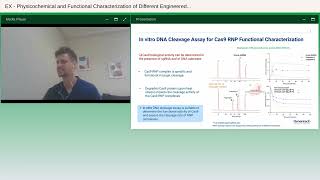
Physicochemical and Functional Characterization of Different Engineered Cas9 Variants and CRISPR-Cas9 Ribonucleoprotein Complexes
Explore advanced gene-editing technology, focusing on CRISPR-Cas9 variants and ribonucleoprotein complexes for therapeutic applications in challenging disease areas.
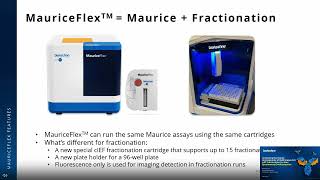
Unraveling the Charge Heterogeneity of Biotherapeutics: icIEF Fractionation for Mass Spectrometry
Explore icIEF fractionation for mass spectrometry in biotherapeutics, focusing on charge heterogeneity profiling and its importance as a critical quality attribute in drug development.
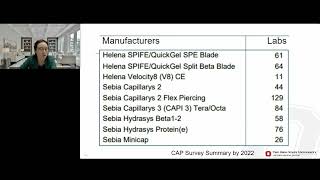
Post-gel Era for Paraproteinemia Analysis
Explore advanced methods for detecting monoclonal proteins, including mass spectrometry-based analysis. Learn to address challenges in paraproteinemia diagnosis and understand therapeutic antibody interference.