A Journey into Atom Probe Tomography
Explore atom probe tomography's evolution, capabilities, and recent applications in materials science, from hydrogen mapping to battery interfaces.

Reading Your DNA: What Can It Tell Us?
Explore DNA sequencing advancements and their impact on life sciences, medicine, and society. Gain insights into rapid, low-cost techniques and future possibilities in genomic research.

The Wonders of Atmospheres Across the Solar System
Explore the fascinating atmospheres of planets and moons in our Solar System, uncovering their unique characteristics and scientific significance.

My Curiosity Was Answered by Chemistry
Explore how excellence and curiosity shape a Black chemist's journey to becoming a pioneering professor in the UK, finding belonging through scientific inquiry.

Measuring Molecules with Electrochemistry
Explore biosensor technology for medical diagnostics, from sepsis detection to neurochemistry, with insights into cutting-edge research and applications.
MRSF-TDDFT - Balancing Dynamic and NonDynamic Electron Correlations
Explore advanced quantum chemistry techniques for balancing dynamic and non-dynamic electron correlations in MRSF-TDDFT calculations.
QM-Rooted Multiscale Simulation - Eyes to See the Unseen, Buried Electric Double Layer
Explore advanced QM-rooted multiscale simulation techniques to visualize and analyze hidden electric double layers in complex systems.
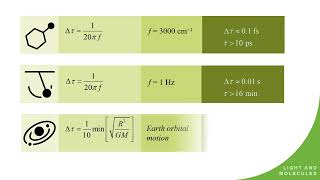
Nonadiabatic Dynamics in the Long Timescale - The Next Challenge in Computational Photochemistry
Explore nonadiabatic dynamics in long timescales and its impact on computational photochemistry. Gain insights into cutting-edge research challenges and potential solutions.
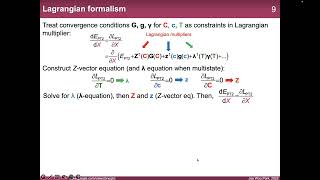
Multireference Quantum Chemistry for Exploring Potential Energy Surfaces
Explore potential energy surfaces using advanced multireference quantum chemistry techniques. Gain insights into complex molecular systems and their behavior.
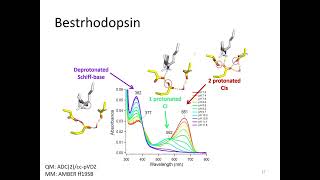
Probing Photochemistry in Protein Environment: QM/MM Study on Rhodopsins
Explore photochemistry in proteins through QM/MM studies on Rhodopsins, uncovering molecular mechanisms and protein-chromophore interactions.
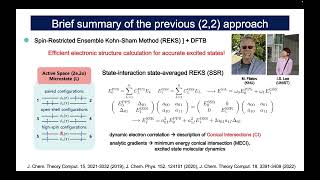
Calculation of Exciton Couplings Based on Density-Functional Tight-Binding Approach with Spin-Restricted Ensemble-Referenced Kohn-Sham Method
Explore density-functional tight-binding and spin-restricted ensemble-referenced Kohn-Sham methods for calculating exciton couplings in quantum chemistry.
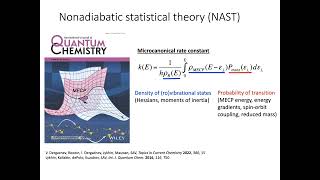
NAST: Nonadiabatic Statistical Theory Package for Predicting Kinetics of Spin-Dependent Processes
Explore nonadiabatic statistical theory for predicting spin-dependent process kinetics, comparing methods and examining real-world applications like ISC and surface reactions.
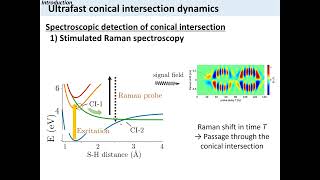
Nonlinear UV Molecular Spectroscopy, X-ray Chiral Dichroism Spectroscopy, and Optical Cavity Manipulation of Conical Intersections
Explore advanced spectroscopy techniques and optical cavity manipulation for molecular analysis, focusing on nonlinear UV, X-ray chiral dichroism, and conical intersections.
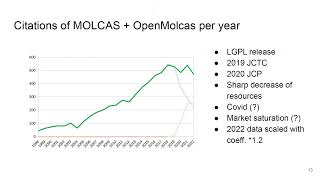
Paragatic Observations Over the Development of Software in Quantum Chemistry
Explore pragmatic insights into quantum chemistry software development, focusing on key trends and practical considerations in this evolving field.
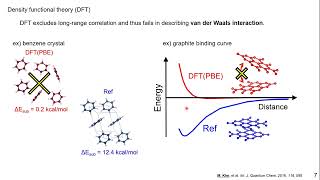
Efficient and Accurate van der Waals Correction for Density Functional Approaches in Material Simulations
Explore efficient van der Waals corrections for density functional approaches in material simulations, enhancing accuracy in computational chemistry.
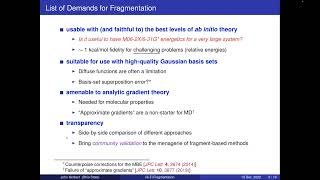
Energy-Screened Fragmentation Approach for Large-Scale Electronic Structure Calculations
Explore an innovative fragmentation approach for large-scale electronic structure calculations, enhancing computational efficiency in quantum chemistry.

Quantum Computing Tools for Quantum Chemistry
Explore quantum computing tools for quantum chemistry applications, focusing on cutting-edge research and practical implementations.
Exploring Potential Energy Surfaces with the Unified Reaction Valley Approach (URVA)
Explore potential energy surfaces using the unified reaction valley approach (URVA) for advanced chemical reaction analysis and understanding.
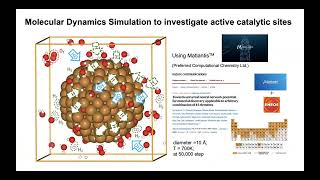
Electronic-Structure Informatics: Concept, Method, Applications, and Plausible Extension
Explore electronic-structure informatics, covering concepts, methods, applications, and potential extensions in computational chemistry and materials science.
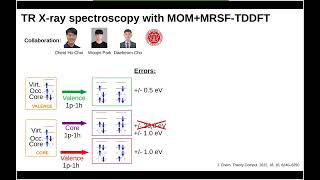
Unraveling the Photochemical Mechanism of Iron Tris-2,2'-Bipyridine via Wavepacket Dynamics
Explore photochemical mechanisms of iron complexes through wavepacket dynamics, uncovering insights into molecular behavior and reactions.
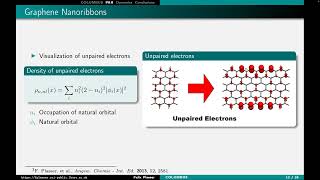
High-Level Multireference Computations Using COLUMBUS - Going Open-Source
Explore advanced multireference computational techniques using COLUMBUS, now open-source. Learn from expert Felix Plasser about cutting-edge quantum chemistry methods.