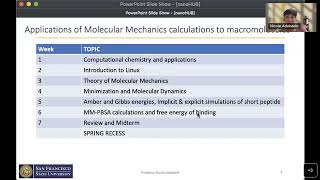
Teaching Electronic Structure Methods in Chemistry Using Simulation Tools in nanoHUB
Explore electronic structure methods in chemistry using nanoHUB simulation tools. Learn to teach computational chemistry concepts and gain hands-on practice with Hartree-Fock and basis sets using ORCA.
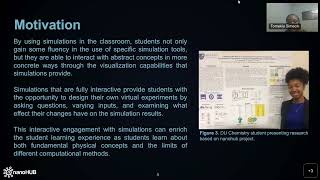
Introduction to Computational Chemistry Using the NUITNS Simulation Toolkit in nanoHUB
Explore computational chemistry using NUITNS toolkit on nanoHUB. Learn to integrate simulations in undergraduate chemistry courses and analyze nanodiamonds through hands-on demonstrations and practical applications.
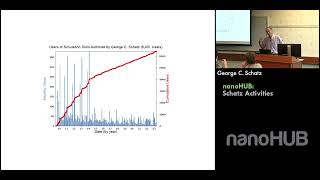
Teaching Chemistry Tools on nanoHUB - Overview by George Schatz
Explore nanoHUB tools for teaching chemistry, including DDSCAT, QC-Lab, and Nanosphere Optics Lab. Learn about applications in optics, spectroscopy, and molecular modeling from Prof. George Schatz.

Black Hole Spectroscopy with Next Generation Gravitational Wave Detectors
Explore cutting-edge techniques for analyzing black hole properties using advanced gravitational wave detectors, unveiling cosmic mysteries and pushing the boundaries of astrophysics.

New Horizons: Testing the Black Hole Paradigm
Explore black hole physics, from singularities to spectroscopy, with insights on testing the Kerr nature, nonlinearities, and bouncing geometries in this advanced astrophysics lecture.
Exercise and Tutor on Quantum Statistical Mechanics - Part II
Explore advanced thermodynamic concepts, including global equilibrium, gradient analysis, and spin density matrices, with expert Francesco Becattini in this in-depth lecture.
Introduction to the Dynamics of Disordered Systems - Equilibrium and Gradient Descent - Part 3
Explore equilibrium dynamics and gradient descent in disordered systems, focusing on theoretical concepts and practical applications in statistical physics and optimization.
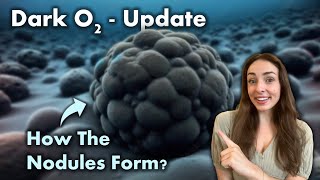
Dark Oxygen Discovery Follow-Up - Addressing Comments and Questions
Explores "dark oxygen" produced by seafloor nodules, addressing formation, recharging, hydrogen fate, synthesis potential, oxygen contribution, and implications for marine life and Earth's evolution.

Molecular Polarity - Understanding Bond and Molecular Polarity
Explore molecular polarity's impact on chemical properties, from bond types to 3D shapes. Learn how polarity affects solubility, boiling points, and intermolecular forces through examples and visualizations.
Calculations Using Avogadro's Number and Molar Mass - Part 1
Learn to use Avogadro's number for converting between atomic mass units and grams, understanding moles, and calculating molar mass in chemistry calculations.
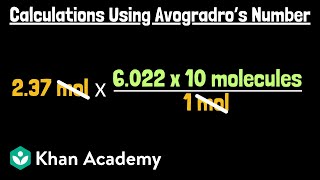
Calculations Using Avogadro's Number - Part 2
Learn to convert between grams, moles, molecules, and atoms using Avogadro's number. Practice with glucose and calcium carbonate examples to bridge microscopic and macroscopic chemistry concepts.
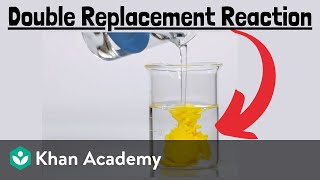
Double Replacement Reactions in Chemistry
Learn about double replacement reactions, their driving forces, and how to predict outcomes using solubility charts. Gain practical skills for understanding and analyzing chemical reactions in solution.
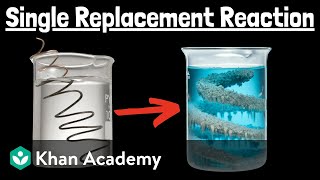
Single Replacement Reactions in Chemistry
Learn about single replacement reactions, including oxidation-reduction processes, the Activity Series, and practical examples to understand element reactivity and predict chemical outcomes.
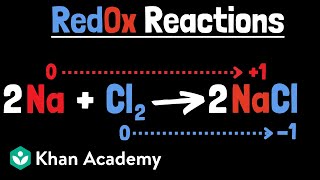
Simple Redox Reactions - Understanding Oxidation and Reduction
Learn about redox reactions, including oxidation, reduction, electron transfer, and practical examples. Understand key concepts and applications in chemistry.
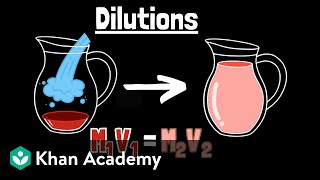
Dilutions - Chemistry Fundamentals and Practice Problems
Learn to calculate and prepare dilutions using the dilution equation, with practical examples and problem-solving practice for precise solution concentrations in chemistry experiments.
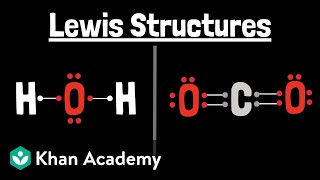
Lewis Diagrams for Molecules - Chemistry
Learn to create Lewis diagrams for molecules, visualizing atomic bonding and valence electron arrangements. Practice with examples like H2, O2, N2, H2O, NH3, and CO2.
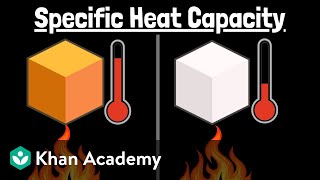
Specific Heat Capacity - Concept and Calculations
Explore specific heat capacity: definition, equation, and practical examples. Learn how different substances respond to heat and why their specific heats vary.
Catalyzing Organic Synthesis - The Inaugural Sir Geoffrey Wilkinson Annual Lecture
Explore catalysts for organic synthesis, from novel coupling processes to functional group introduction, enhancing pharmaceutical development and sustainable chemistry advancements.

Inaugural Lecture: Armourers & Brasiers' Chair in Materials Science and Nanotechnology
Explore nanoscale materials and interfaces with Professor Mary Ryan, focusing on innovative operando approaches and synchrotron science applications in materials science.

Chemistry at Imperial College London - 1985
Explore Imperial College's Chemistry Department in 1985: history, instrumentation, faculty, industry connections, and student life at a prestigious institution.
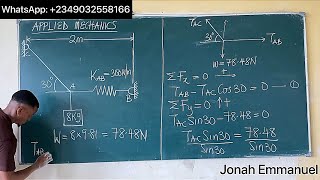
Equilibrium of Forces 3 - Resolving Vectors in 2D Cartesian Coordinates
Master equilibrium of forces by resolving vectors into horizontal and vertical components in 2D Cartesian coordinates. Apply static equilibrium conditions to solve particle equilibrium problems.