Machine Learning and the Hydroxyl Radical for Air Quality and Climate
Explore machine learning applications in predicting hydroxyl radical trends, their impact on air quality and climate, and implications for methane trends and future climate change.
A Data-Driven Future for Atmospheric Chemistry, Wildfires, Climate, and Society
Explore data-driven approaches in atmospheric science, focusing on ML models for global chemistry, air pollution sensor networks, and prescribed fire modeling to address climate change and wildfires.
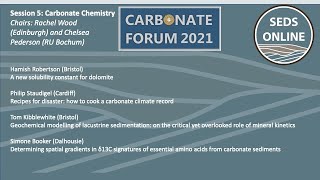
Carbonate Chemistry - Session 5
Explore carbonate chemistry through expert talks on dolomite solubility, climate records in carbonates, lacustrine sedimentation modeling, and amino acid signatures in carbonate sediments.
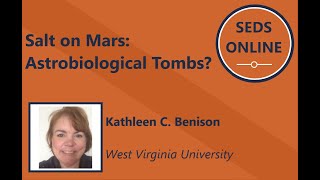
Salt on Mars - Astrobiological Tombs?
Explore the potential of salt minerals on Mars to host microorganisms and organic compounds, and learn about their role in the search for extraterrestrial life during Mars sample return missions.
Early Results from the MAVEN Mission - Fall 2014
Early findings from MAVEN mission exploring Mars' upper atmosphere, including composition changes, solar interactions, and atmospheric loss processes.
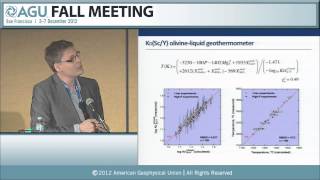
All About Olivine - Crystallography, Hydration, and Geochemistry
Comprehensive exploration of olivine's properties, including crystal orientation, water content, defects, and trace elements. Covers advanced research techniques and implications for mantle dynamics and magma processes.
Dawn's New View of Asteroid Vesta - Geologic Maps and Surface Features
NASA's Dawn mission unveils groundbreaking geologic maps of asteroid Vesta, revealing diverse surface features, north-south dichotomy, and insights into its composition, history, and relationship to meteorites.
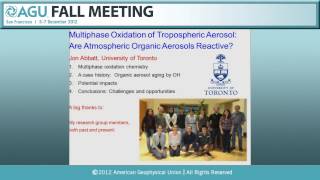
New Atmospheric Sciences Fellows Presentations - Fall Meeting 2012
Presentations by new Atmospheric Sciences Fellows covering topics like cumulus convection modeling, organic nitrates, aerosol oxidation, and extreme convective storms using satellite data.
First Results from the IRIS Mission - Solar Observations and Atmospheric Dynamics
Groundbreaking solar observations from NASA's IRIS mission reveal violent eruptions and new insights into the Sun's atmosphere, chromosphere, and transition region dynamics.
Pluto Revealed - First Results from NASA's New Horizons Fly-By Mission
Explore NASA's groundbreaking New Horizons mission to Pluto, uncovering the first-ever close-up observations and scientific data from this distant dwarf planet and its moons.
Opportunity Rover's Journey to Endeavour Crater on Mars - Orbital Observations Reveal New Insights
Explore Mars with Opportunity rover as it heads to Endeavour Crater, guided by orbital observations revealing clay minerals and potential new discoveries in this ancient Martian landscape.
Toy Chemistry - Three Bonds
Explore a computational model of chemical bonding, examining bond formation probabilities and their impact on molecular structures.
Computational Problems for Intro Physics: Spring Molecule Energies - Matter and Interactions Supplement
Explore energies in spring-bonded atoms through computational problems, supplementing Matter and Interactions physics courses with hands-on coding exercises.
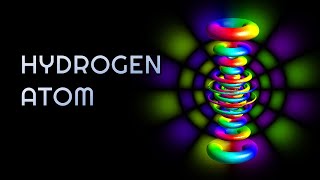
The Hydrogen Atom - A Journey through Modern Physics
Explore quantum mechanics and the hydrogen atom through computational modeling, gaining insights into early 20th-century physics discoveries that revolutionized our understanding of the universe.
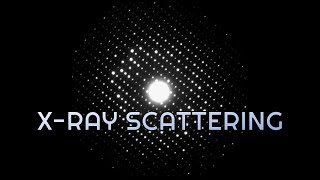
X-Ray Scattering - A Journey through Modern Physics
Explore x-ray diffraction to understand atomic structures in solids. Computational modeling demonstrates this key concept in modern physics, revolutionizing our understanding of materials.
Exoplanets - 25 Years of Discoveries
Nobel laureate Michel Mayor reflects on 25 years of exoplanet discoveries, discussing the impact of high-resolution spectroscopy and future prospects in planetary system exploration.
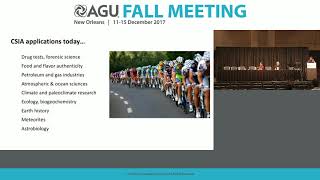
Biomarker Analysis Techniques and Applications in Geochemistry - Reeburgh Lecture
Explores advanced biomarker analysis techniques in geochemistry, including continuous flow, capillary methods, and isotope ratio mass spectrometry, with applications in soil science and Proterozoic studies.
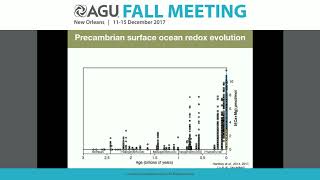
Redox from the Surface to the Core over Earth History II - 2017 Fall Meeting
Explore Earth's redox evolution from surface to core throughout geological history. Experts discuss latest findings on oxidation states, geochemical processes, and their implications for planetary development.
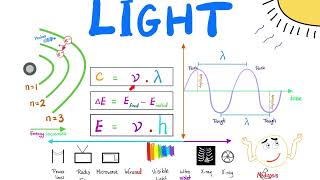
Light Equations - Wavelength, Frequency, Speed, Energy, Planck's Constant - Electromagnetic Waves
Comprehensive exploration of light equations, covering wavelength, frequency, speed, energy, and Planck's constant, with focus on electromagnetic waves and their applications in various scientific fields.
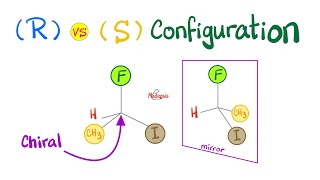
R vs S Configuration, Priority, Chiral, Fischer Projection - Organic Chemistry
Explore key concepts in organic chemistry: (R) and (S) configurations, priority rules, chirality, and Fischer projections. Master essential skills for understanding molecular structures and isomerism.
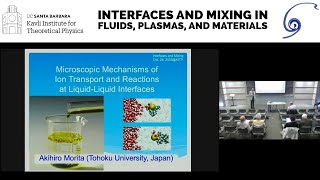
Microscopic Mechanisms of Ion Transport and Reactions at Liquid-Liquid Interface
Explore microscopic mechanisms of ion transport and reactions at liquid-liquid interfaces, focusing on cutting-edge research in fluid dynamics and interfacial chemistry.