
Gibbs Free Energy - Entropy, Enthalpy & Equilibrium Constant K
Comprehensive introduction to Gibbs Free Energy, covering entropy, enthalpy, and equilibrium constants. Learn to calculate and apply these concepts in chemical reactions and thermodynamics.

SN2 SN1 E1 E2 Reaction Mechanisms Made Easy
Comprehensive guide to SN2, SN1, E1, and E2 reaction mechanisms in organic chemistry, featuring examples, practice problems, and a chart for predicting major products.

SN1 Reaction Mechanism
Comprehensive introduction to SN1 reaction mechanism, covering identification, carbocation rearrangements, stereochemistry, solvolysis reactions, substrate reactivity, and leaving group stability.
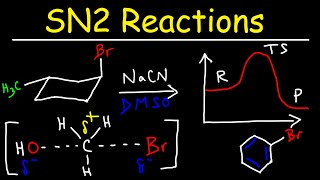
SN2 Reaction Mechanisms
Comprehensive introduction to SN2 reaction mechanisms, covering stereochemistry, substrate reactivity, nucleophilic strength, and practical applications in organic chemistry synthesis.
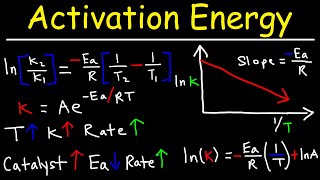
Collision Theory - Arrhenius Equation & Activation Energy - Chemical Kinetics
Explore collision theory, Arrhenius equation, and activation energy in chemical kinetics. Learn to calculate rate constants and understand energy diagrams for chemical reactions.
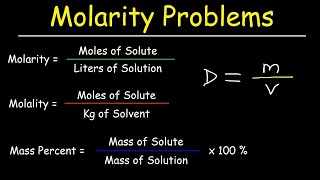
Molarity, Molality, Volume and Mass Percent, Mole Fraction and Density - Solution Concentration Problems
Learn to calculate solution concentrations using various methods, including molarity, molality, volume percent, mass percent, and mole fraction. Practical examples and problem-solving techniques provided.

Acids and Bases - Basic Introduction - Organic Chemistry
Comprehensive introduction to acids and bases in organic chemistry, covering reactions, conjugates, Brønsted-Lowry and Lewis definitions, and equilibrium concepts.

Crystal Field Theory
Introduction to crystal field theory, covering splitting diagrams, ligand fields, and magnetic properties of transition metal complexes. Explains high vs low spin configurations and their implications.
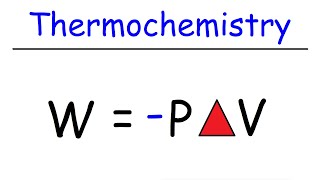
Thermochemistry Equations and Formulas With Practice Problems
Learn essential thermochemistry equations and formulas, and practice solving common problems to strengthen your understanding of this fundamental chemistry topic.
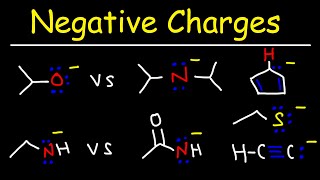
Stability of Negative Charges - Acids and Bases
Explore factors influencing negative charge stability in organic chemistry, including atomic size, electronegativity, resonance, and hybridization. Essential for understanding acids and bases.
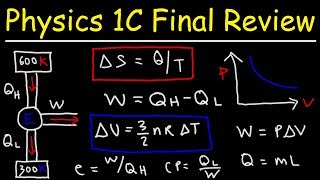
Physics 1C Final Exam Review - Entropy, Thermodynamics, Gas Laws, Specific Heat & Calorimetry
Comprehensive review of advanced physics concepts including thermodynamics, gas laws, heat transfer, and entropy. Covers theoretical principles and practical problem-solving techniques for final exam preparation.

Carbon-13 NMR Spectroscopy
Comprehensive introduction to carbon-13 NMR spectroscopy, covering decoupled and coupled spectra, DEPT, chemical shifts, and functional group analysis for organic compound identification.
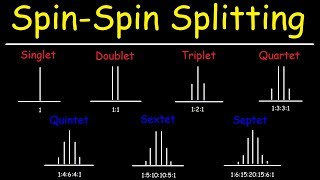
Spin Spin Splitting - N+1 Rule - Multiplicity - Proton NMR Spectroscopy
Comprehensive introduction to spin-spin splitting in proton NMR spectroscopy, covering N+1 rule, multiplicity, signal intensity ratios, and complex splitting patterns using practical examples.

Carbohydrates - Haworth and Fischer Projections With Chair Conformations
Learn to convert Fischer projections of glucose to Haworth projections and chair conformations. Covers monosaccharides, disaccharides, polysaccharides, and key concepts in carbohydrate chemistry.
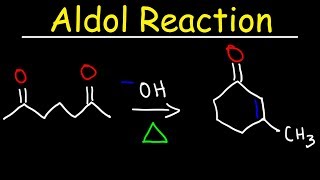
Aldol Addition Reactions, Intramolecular Aldol Condensation Reactions, Retro Aldol and Cross Aldol Reactions
Comprehensive overview of aldol reactions, including addition, condensation, intramolecular, retro, and cross aldol reactions. Covers mechanisms and provides practice problems for better understanding.
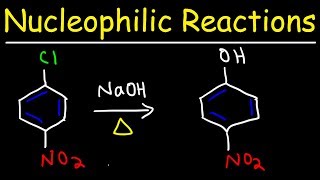
Nucleophilic Aromatic Substitution - Benzyne Intermediate and Meisenheimer Complex
Explore nucleophilic aromatic substitution reactions, including Meisenheimer complex and benzyne intermediate mechanisms, with practice problems and detailed explanations.
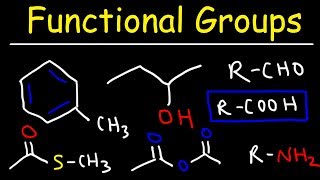
Functional Groups
Comprehensive introduction to organic chemistry functional groups, covering structures from alkanes to carbenes, essential for understanding molecular properties and reactions.
Classical and Generalized Least Squares
Explore advanced least squares techniques for analytical chemistry, including applications in microplastics detection and spectral analysis of biological samples.
The Cage of Covariance
Explore strategies for handling correlated variables in data analysis, including orthogonalization techniques and predictive component methods.

Fusing Calibration Models
Explore techniques for merging multiple calibration models to improve efficiency and robustness in quality control, with a focus on balancing simplicity and prediction accuracy.
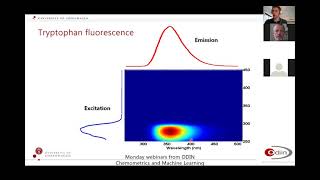
Fluorescence in One Hour
Explore fluorescence spectroscopy's principles, applications, and limitations. Learn about factors affecting signals, measurement techniques, and data analysis methods for sensitive compound detection.