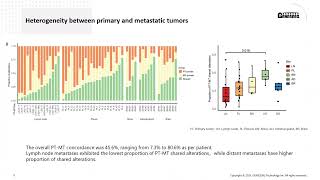
Whole Exome Sequencing Reveals Timing and Origins of Metastasis in Lung Cancer
Explore whole exome sequencing's role in revealing metastasis timing and origins in lung cancer using IDT's xGen Exome Panel.
M2GEN's ORIEN Avatar Program: Accelerating Oncology Research with Custom xGen Exome Research Panel
Accelerate oncology research using M2GEN's ORIEN Avatar program and IDT's xGen Exome Panel. Learn about sequencing metrics and use cases.

The History and Future of Whole Exome Sequencing at the McDonnell Genome Institute
Explore the evolution and impact of whole exome sequencing at MGI, including applications, read depth, CNV detection, and gene fusion identification.

The Future of Personalized Genomics: Advancing Hematology Research with NGS
Explore next-generation sequencing's role in advancing hematology research and personalized genomics for improved patient outcomes.

Comprehensive Methylation Profiling from Low-Input Samples Using the xGen Methyl-Sequencing Workflow
Explore efficient and accurate methylation profiling tools for low-input samples with IDT's xGen™ Methyl-Sequencing Workflow.
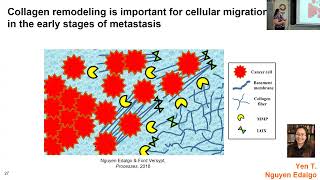
Agent-Based Modeling of Cancer Cell Migration in Response to Tumor Microenvironmental Signals
Explore computational modeling techniques for simulating cancer cell migration and interactions within tumor microenvironments, enhancing understanding of disease progression.

BERTology Meets Biology - Interpreting Attention in Protein Language Models
Explores how BERT models trained on protein sequences learn biological properties, revealing insights into protein structure, binding sites, and biophysical characteristics through attention mechanism analysis.

Overview of Machine Learning Approaches at GSK.ai
Explore machine learning approaches at GSK.ai, focusing on innovative techniques and applications in pharmaceutical research and development.

Deciphering the Mysteries of Human Genomes
Explore the intersection of biology, technology, and medicine in rare genetic disease research. Discover how Python aids in unraveling genomic mysteries and advancing healthcare.
The Leverage of Language, or, How I Realized Information Theory Could Save Information Security
Explore how information theory can revolutionize cybersecurity through language leverage, visualization, and innovative approaches to incident response and threat intelligence.
Uni-alignment: A Parameter-free Framework for Fast and Accurate Sequence Alignment
Discover a parameter-free framework for fast sequence alignment through UniAligner, exploring innovative approaches to computational genomics and bioinformatics analysis.

Psychiatric Phenotyping from EHR - Yes, We Can!
Discover how to leverage Electronic Health Records (EHR) for psychiatric phenotyping, exploring innovative computational methods and applications in mental health research.

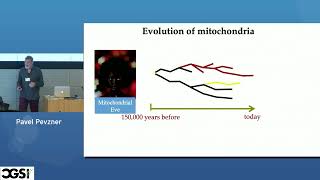
Constraints on Tumor Development
Explore genetic intra-tumor heterogeneity and evolutionary patterns across thousands of cancer genomes, examining key constraints in tumor development and progression.
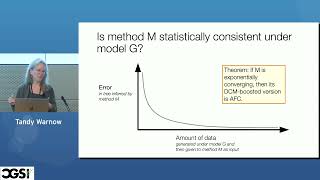
Phylogenomic Tree Estimation Tutorial - CGSI 2024
Discover advanced techniques for phylogenomic tree estimation, including ASTRAL, DISCO, and QR-STAR methodologies for species tree inference and branch length estimation in computational genomics.
Introduction to mRNA Design - CGSI 2024
Discover the fundamentals of mRNA design through computational approaches, exploring optimization algorithms, stability analysis, and practical applications in modern biotechnology and vaccine development.
Spatial Modeling of Single-Cell Data Using Deep Learning
Explore deep learning approaches for spatial modeling of single-cell data, focusing on Hi-C reads imputation and transcriptomic data prediction through graph-based methodologies.
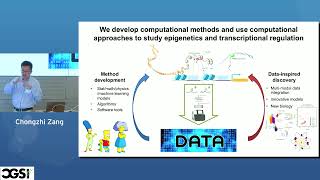
Epigenomics Data Analysis - A Tutorial
Master essential techniques for analyzing epigenomics data, including ChIP-Seq analysis, histone modification clustering, and transcriptome integration methods for genomic research.
Harnessing Computational Genomics for Predicting Viral Evolution
Discover cutting-edge computational methods for predicting viral evolution patterns, focusing on genomic analysis techniques and emerging variant detection through network-based approaches and mutational studies.
Promises and Pitfalls of Scaling in Population Genetic Simulations
Explore the complexities of population genetic simulations, focusing on scaling methodologies, their potential benefits, and inherent limitations in computational genomics research.
Variational Inference for Fun and Profit
Discover the fundamentals of variational inference in statistical analysis, exploring Bayesian techniques, SuSiE PCA methodology, and practical applications in computational genomics and regression modeling.
Introduction to R for Data Analysis - 2024
Gain insights into R programming fundamentals for medical and population genetics data analysis through expert-led discussions of essential concepts and practical applications.