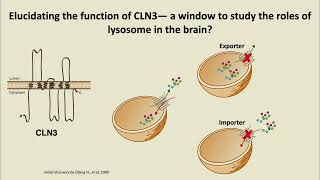
Lysosome Function in Brain Health and Disease - From Tool Development to Novel Biology
Explore lysosome function in brain health, focusing on metabolic processes, choline pathways, and novel discoveries about lysosomal proteins and their role in neurological diseases.
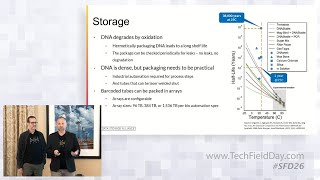
DNA Data Storage: Introduction and Future Storage Solutions
Discover how DNA data storage revolutionizes traditional systems with unparalleled density and efficiency, exploring its processes, standards development, and future potential for petabyte-scale storage solutions.
AI Design of Molecular Machines - Understanding Proteomics and Protein Structure Prediction
Explore how AI systems like AlphaFold2 revolutionize protein folding prediction and molecular machine design, advancing precision medicine and environmental solutions.
Nucleic Acid Memory: DNA-Based Data Storage Technologies
Explore groundbreaking DNA-based data storage technology that achieves 330 Gbit/cm2 density using DNA origami assembly and super-resolution microscopy, offering an innovative solution to future storage demands.
DNAssim: A Full System Simulator for DNA Data Storage
Explore DNA storage simulation through DNAssim, covering encoding/decoding strategies, error handling, and hardware acceleration for synthetic DNA data storage systems.
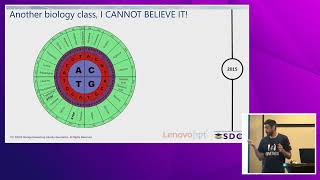
DNA Data Storage: A Decade of Coding and Decoding Progress
Explore the evolution of DNA data storage technology over the past decade, examining coding algorithms, mapping schemes, error correction methods, and key achievements in this revolutionary storage medium.
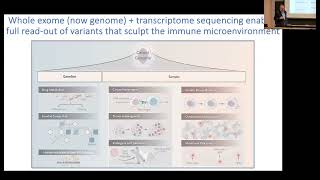
Measuring Cancer and Immune Systems Using Cell-free DNA Sequencing
Discover groundbreaking techniques in cancer detection through cell-free DNA sequencing, exploring how immunotherapy measurements can revolutionize cancer treatment and immune system monitoring.
Structure-Aware Protein Self-Supervised Learning
Explore structure-aware protein self-supervised learning, combining GNN models with protein language models to enhance structural information capture for improved downstream task performance.
Integrating Single-Cell Data with Substantial Batch Effects - Improving cVAE Regularization
Explore advanced techniques for integrating single-cell data with substantial batch effects, focusing on cVAE regularization constraints to improve batch correction while preserving biological information.
Multimodal Language Models for Mapping the Genotype-Phenotype Relationship
Explore multimodal language models for mapping genotype-phenotype relationships. Learn about integrated genetics frameworks and their applications in analyzing cellular heterogeneity and gene polyfunctionality.
The Continuous Language of Protein Structure
Explore a novel approach to protein structure generation using continuous autoregressive language models. Learn about innovative techniques for in silico protein design and their potential applications.

Integrating -omic Data Across Datasets and Layers
Explore techniques for integrating -omic data across datasets and layers, focusing on redundancy, neural networks, and genetic associations in cancer research.
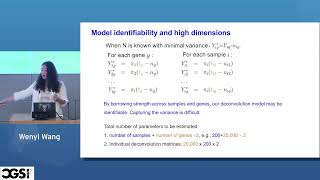
Computational Deconvolution of Cancer Genomes and Transcriptomes - CGSI 2022
Explore computational methods for deconvoluting cancer genomes and transcriptomes. Learn advanced techniques to analyze tumor heterogeneity and uncover molecular phenotypes shaping clinical outcomes in cancer research.
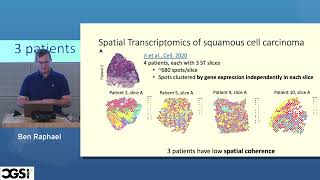
Alignment, Integration, and Modeling of Spatial Transcriptomics Data
Explore alignment, integration, and modeling techniques for spatial transcriptomics data, focusing on innovative approaches to analyze gene expression patterns in tissue samples.
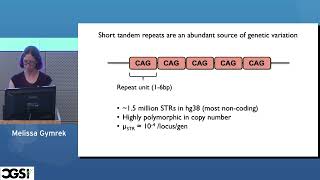
A Practical Guide to Performing Genome-Wide Analyses of Tandem Repeats
Explore genome-wide tandem repeat analysis techniques. Learn practical tools and methods for identifying, profiling, and interpreting repetitive DNA sequences across entire genomes.
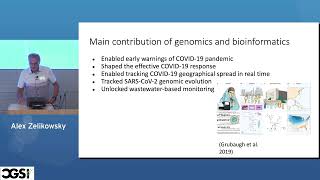
Analysis of SARS-CoV-2 Sequencing Data
Explore advanced techniques for analyzing SARS-CoV-2 sequencing data, including haplotype assembly, phylogeny reconstruction, variant identification, and network representation of genomic information.
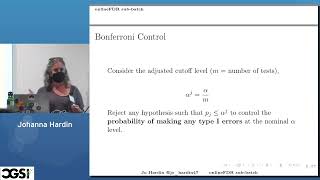
OnlineFDR Control with Applications to RNA-Seq Data
Explore onlineFDR control techniques for RNA-Seq data analysis, focusing on adaptive algorithms and their applications in multiple hypothesis testing scenarios.
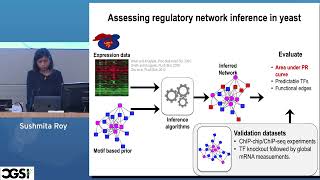
Inference of Gene Regulatory Networks from Bulk and Single Cell Omic Datasets
Explore gene regulatory network inference techniques using bulk and single-cell omic datasets. Learn about integrative approaches, predictive models, and applications in cellular reprogramming and single-cell genomics.
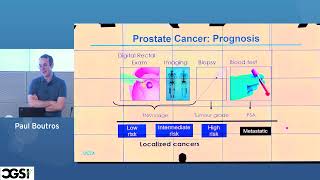
Computational Methods to Quantify Lethal Cancer Evolution
Explore computational methods for quantifying lethal cancer evolution. Gain insights into driver mutations, evolutionary history, and genomic correlates of prostate cancer's epigenetic landscape.
Large Language Models for Computational Biology - A Primer
Explore large language models in computational biology, covering transformers, pretraining, and applications in genomics and single-cell analysis.
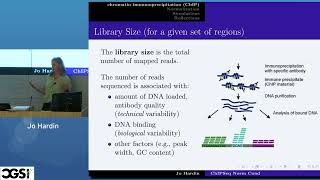
Selecting Between-sample ChIP-Seq Normalization Methods - Assumptions and Implications
Explore ChIP-seq normalization methods, their assumptions, and impact on differential binding analysis. Learn to select appropriate techniques for accurate genomic data interpretation.