The Bioinformatics of Neoantigen Discovery and Vaccine Design
Explore neoantigen identification and vaccine design through bioinformatics. Learn about REAL-neo analytic framework and novel modules for tumor sequencing data analysis in immunotherapy research.
Why Networks Matter: Embracing Biological Complexity
Explore how genetic regulatory networks provide insights into health, disease, and potential therapies through examples from large-scale genomic datasets.
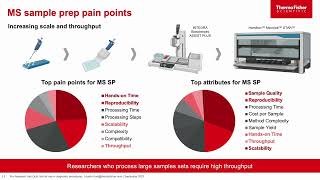
Adapting TMT and EasyPep Sample Preparation Reagents for High-Throughput, Automated Workflows
Explore high-throughput, automated workflows for TMT and EasyPep sample preparation in quantitative proteomics, focusing on efficiency and reproducibility for large-scale experiments.
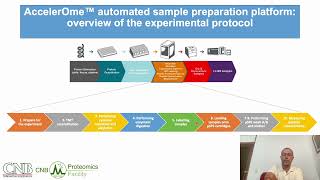
Assessing the Performance of the Automated Sample Preparation Platform AccelerOme
Explore the AccelerOme platform's performance in automating proteomics sample preparation, optimizing extraction, digestion, and labeling processes for improved experimental quality.
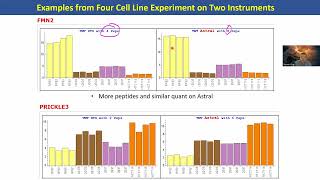
Targeted Pathway Proteomics Using TMT and Real-Time Analytics to Create GoDig Assays
Explore targeted pathway proteomics using TMT and real-time analytics for GoDig assays. Learn innovative techniques for hypothesis-driven research in systems biology.
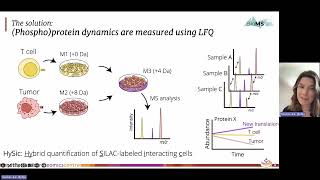
Mapping Communication Dynamics Between Physically Interacting Cells Using Hybrid Quantitative Proteomics
Explore cutting-edge proteomics techniques for mapping cell-to-cell communication in cancer immunology, focusing on immune checkpoints and their potential in immunotherapy.
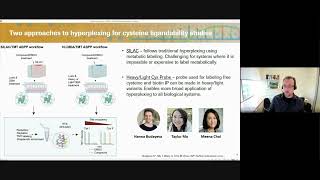
An Intelligent Data Acquisition Approach to Increase the Throughput of Multiplexed Proteome Analyses
Explore an intelligent data acquisition approach for increasing throughput in multiplexed proteome analyses, enhancing efficiency in quantitative proteomics research.
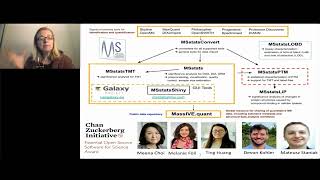
Multilevel Statistical Modeling for Proteomic Experiments With Complex Designs and Isobaric Labeling
Learn advanced statistical modeling techniques for complex proteomic experiments using isobaric labeling, focusing on multilevel designs and time-series data analysis.
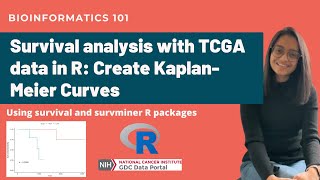
Survival Analysis with TCGA Data in R - Create Kaplan-Meier Curves
Learn survival analysis using TCGA data in R, including Kaplan-Meier curves. Covers key concepts, data preparation, and practical implementation using survival and survminer packages.
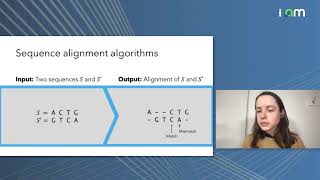
How Much Data Is Sufficient to Learn High-Performing Algorithms?
Explore data-driven algorithm design's impact on performance, focusing on generalization guarantees for combinatorial algorithms with piecewise-structured parameter functions.
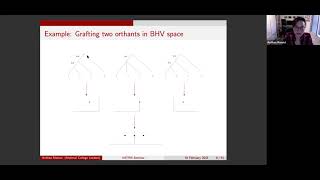
Tropical Geometry of Phylogenetic Tree Spaces
Explore tropical geometry's application to phylogenetic tree spaces, examining BHV space, tropical Grassmannians, and their implications for computational biology and statistics.

Convex Sunflower Theorems and Neural Codes
Explore convex sunflower theorems and neural codes, connecting neuroscience with discrete geometry to understand place cell encoding and cognitive mapping in rat hippocampus.
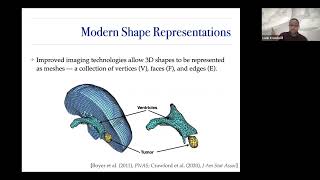
Probabilistic Generative Frameworks for Sampling 3D Complex Shapes and Images
Explore probabilistic frameworks for simulating 2D and 3D shapes, with applications in computational biology. Learn about sub-image selection and shape statistics in cellular imaging and primate mandibular molars.
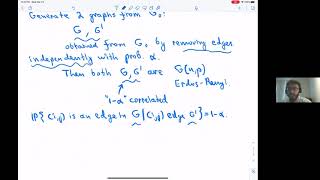
Random Graph Matching with Improved Noise Robustness
Explores a new algorithm for exact matching of correlated Erdos-Renyi graphs, improving noise robustness in graph matching for applications in computer vision and biology.
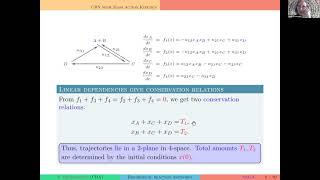
Families of Polynomials in Biochemical Reaction Networks
Exploring polynomial systems in biochemical reaction networks, focusing on computational techniques for analyzing families of polynomials with combinatorial structures derived from reaction digraphs.
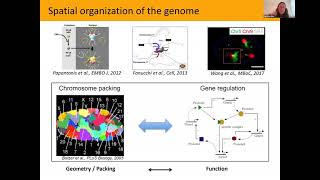
Mathematics of Genome Packing and Regulation
Explore the mathematics of genome organization and its impact on gene expression through geometric packing models and deep learning, with insights on 3D genome reconstruction and autoencoder applications in genomics.

Immunology for Mathematicians
Explore mathematical approaches to immunology, including modeling immune responses and viral dynamics, in this lecture by renowned researcher Alan S. Perelson from Los Alamos National Laboratory.
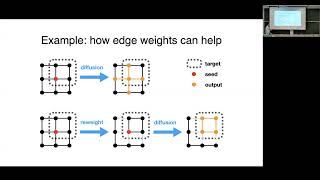
Local Graph Clustering with Noisy Labels
Explore techniques for local graph clustering with noisy labels, focusing on applications in complex networks and data analysis.

Fitting High-dimensional Data and Model Selection - Lecture
Explore techniques for fitting high-dimensional data and selecting appropriate models in biological evolution, focusing on polygenic adaptation and phenotypic variation.
Structural and Stochastic Modeling to Study the Dynamics of Tumor-Immune Interactions
Explore structural and stochastic modeling techniques to analyze tumor-immune interactions, enhancing understanding of cancer dynamics and potential treatment strategies.
Using Mathematical Approaches to Describe and Understand Cancer
Explore mathematical modeling in cancer research, covering population dynamics, systems biology, and machine learning to enhance understanding and treatment of this complex disease.