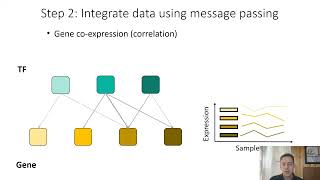
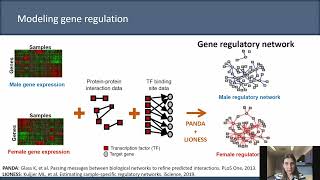
Developing Disease Insights with Genotype-Specific Regulatory Networks
Explore a new method for estimating genetic variant effects on transcription factor regulatory events, integrating diverse omics data to build interpretable regulatory networks for disease insights.
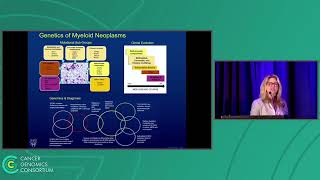
High-Resolution Target-Capture DNA Analysis for Suspect Clonal Hematopoiesis
Explore high-resolution DNA analysis for clonal hematopoiesis. Learn about mutational hierarchy, precision medicine, and clinical applications in cancer and bone marrow failure.
Modeling of Nucleosome Clustering in Euchromatin Resulting from Reader Protein Interactions
Explore nucleosome clustering in euchromatin through modeling interactions between reader proteins. Gain insights into chromosomal organization and dynamics from the Spakowitz lab's research.
NCATS' Biomedical Data Translator - Connecting the Dots
Explore NCATS' Biomedical Data Translator, a system connecting vast biomedical research data into knowledge graphs for generating new hypotheses and improving data sharing standards in the field.
The Power of Attraction - Immunoprecipitation Optimization Techniques with Magnetic Bead Technology
Explore immunoprecipitation optimization using magnetic bead technology. Learn about protein significance, IP techniques, and benefits of Dynabeads for enriching target proteins in biological research.
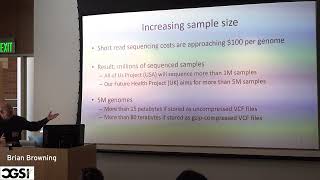
Bref4 Compression: Increasing Analyses Performed on Compressed Sequence Data
Explore Bref4 compression techniques for efficient analysis of compressed sequence data. Learn to enhance genomic research capabilities and optimize data storage.
Hierarchical Models for Deep Mutational Scans - CGSI 2024
Explore hierarchical models for deep mutational scans, focusing on robust analysis frameworks, drug transporter biophysics, and variant effect prediction in genomics research.
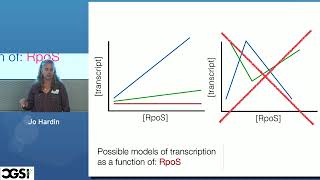
Fitting Time-Dependent Models Using Sicegar: Applications to RpoS-Dependent Gene Transcription in E. coli - CGSI 2024
Explore time-dependent modeling using sicegar for analyzing RpoS-dependent gene transcription timing in E. coli, with applications to multiple stress responses.
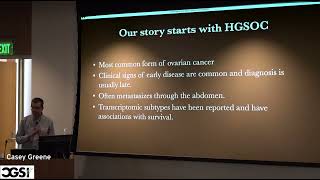
Issues with Deconvolution Using Single-Cell Profiles - CGSI 2024
Explore challenges in deconvolution using single-cell profiles, examining key issues and potential solutions in computational genomics.
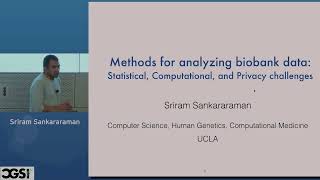
Methods for Analyzing Biobank Data: Statistical, Computational, and Privacy Challenges
Explore statistical, computational, and privacy challenges in analyzing biobank data. Learn scalable methods for estimating SNP heritability, variance components, and gene-environment interactions in complex traits.
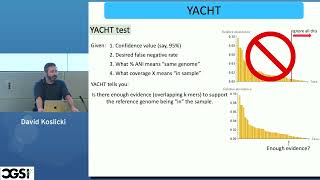
YACHT: An ANI-Based Statistical Test to Detect Microbial Presence or Absence in Metagenomes
Explore YACHT, an ANI-based statistical test for detecting microbial presence in metagenomes. Learn about its applications and implications for microbiome research.
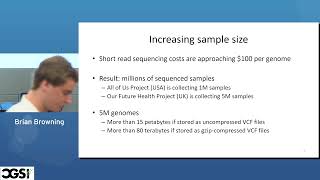
Compression of Phased Sequence Data - CGSI 2024
Explore advanced techniques for compressing phased genomic sequence data, enhancing storage efficiency and analysis capabilities in computational genomics.
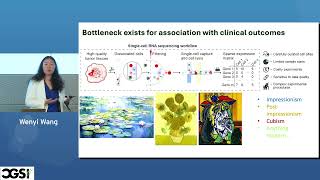
A Guide to Perform Transcriptomic Deconvolution in Cancer
Explore transcriptomic deconvolution techniques for cancer research, focusing on tumor cell mRNA expression estimation and improved analysis of cell-type ratios in complex tissue samples.
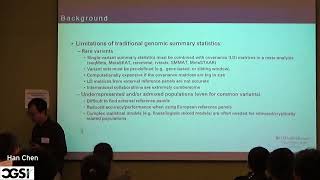
StocSum: A Reference Panel Free Summary Statistics Framework for Diverse Populations
Explore StocSum, a novel framework for analyzing summary statistics in diverse populations without reference panels. Learn its applications in genomics research and meta-analysis.
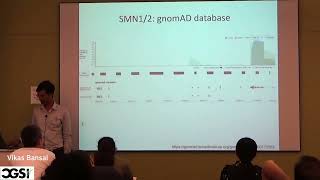
Detection of Genetic Variation in Highly Homologous Genes Using Short Read Sequencing
Explore techniques for detecting genetic variations in highly homologous genes using short read sequencing, focusing on challenges and innovative approaches in computational genomics.
Acceleration of Bioinformatics Workloads Through Hardware-Algorithm Co-Design and Processing-in-Memory Technologies
Explore hardware-algorithm co-design and processing-in-memory technologies for accelerating bioinformatics workloads, focusing on genomic sequence analysis and mapping techniques.
Coarse-grained Simulations of Nucleosomes
Explore coarse-grained simulations of nucleosomes to understand chromatin organization and gene regulation through interdisciplinary computational modeling techniques.
Getting to the Heart of the Matter: Novel Analytical Technologies Provide a New Perspective on a Complex Organ
Explore novel analytical technologies providing new insights into the molecular landscape of the human heart, focusing on cell surface proteins and their role in cardiac physiology.
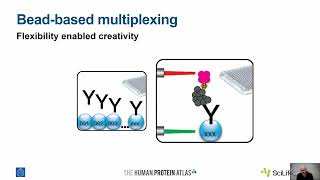
Multiplexed Mapping of the GPCR-RAMP Interactome
Explore G protein-coupled receptors and receptor activity-modifying proteins interactions through multiplexed mapping, uncovering potential therapeutic targets for various human diseases.
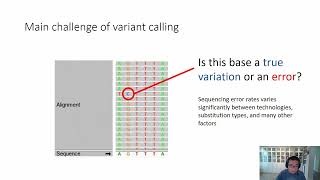
Rescuing Low Frequency Variants Within Intra-Host Viral Populations from Oxford Nanopore Sequencing Data
Explore techniques for identifying low-frequency viral variants from Oxford Nanopore sequencing data, enhancing understanding of intra-host viral populations and mutation patterns.
Scalable Pharmacogenetic Screening of the Complex CYP2D6 Locus Using SMRT Long-read Amplicon Sequencing
Explore scalable pharmacogenetic screening of CYP2D6 using SMRT long-read amplicon sequencing. Learn computational pipeline development for large sequencing datasets analysis.