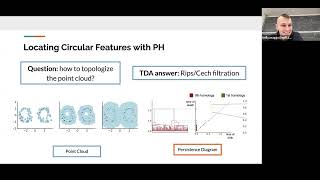
Cohomology Classes in the RNA Transcriptome
Explore how cohomology classes in single-cell sequencing data can model transient biological processes, using persistent cohomology and differential forms to infer gene expression dynamics.
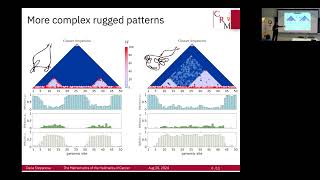
Modelling the Erosion of Epigenetic Landscapes in Cancer and Ageing
Explore mathematical models of epigenetic landscapes in cancer and aging, focusing on erosion processes and their implications for disease progression and cellular behavior.
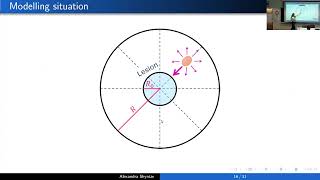
Mathematical Modelling of Microtube-Driven Regrowth of Glioma After Local Resection
Explore mathematical modeling of glioma regrowth post-resection, focusing on microtube-driven mechanisms and their impact on tumor recurrence and treatment strategies.
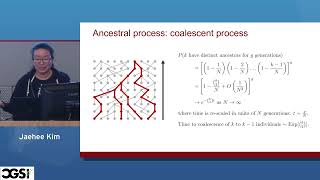
Bayesian Inference of Dependent Population Dynamics in Coalescent Models
Explore Bayesian inference techniques for analyzing dependent population dynamics in coalescent models, focusing on applications in genomics and evolutionary biology.
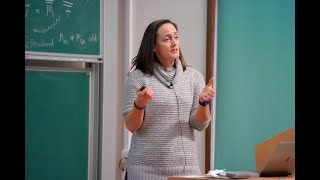
Data-Driven Modelling of Collective Cell Motility - Kirk Lecture
Explore data-driven modeling techniques for collective cell motility with Prof. Ruth Baker. Gain insights into interdisciplinary approaches in animal ecology and cell biology.
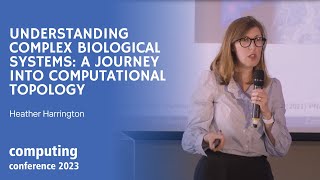
Understanding Complex Biological Systems: A Journey into Computational Topology
Explore computational topology's role in decoding complex biological systems. Learn how algorithms interpret data from molecular biology, genetics, and medicine, offering unique insights into disease progression and protein structures.
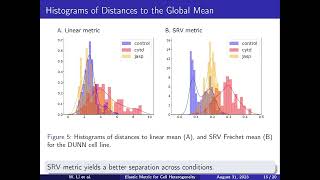
Using a Riemannian Elastic Metric for Statistical Analysis of Tumor Cell Shape Heterogeneity
Analyze tumor cell shape heterogeneity using Riemannian elastic metrics for advanced statistical insights in cancer research.
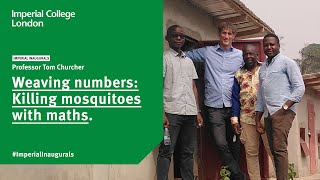
Weaving Numbers: Killing Mosquitoes with Mathematics
Explore how mathematical modeling aids in combating mosquito-borne diseases and informs effective intervention strategies for global health impact.
Mathematical Modelling of Clonal Dynamics of Acute Myeloid Leukemia: Model-Based Approach to Understand Within-Tumour Heterogeneity
Explore mathematical models of acute myeloid leukemia's clonal dynamics to understand tumor heterogeneity using a model-based approach.
Quantitative Modeling of Metastasis: Cancer at the Organism Scale
Explore mathematical models for metastasis development, including spontaneous spread, tumor interactions, and therapy effects. Gain insights into predictive tools for personalized oncology.
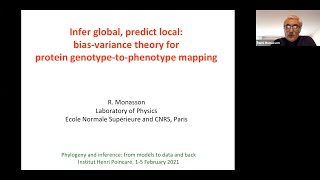
Infer Global, Predict Local - Bias-Variance Theory for Protein Genotype-to-Phenotype Mapping
Explore bias-variance theory in protein genotype-to-phenotype mapping, focusing on global inference and local prediction techniques.
Beauty of Life Seen Through Keyhole of Mathematics - Part 1
Explore the intersection of mathematics and biology, from molecular structures to ecological impact, in this thought-provoking lecture on life's fundamental nature.
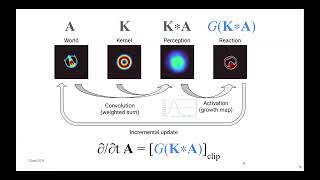
Lenia: A Continuous Model of Virtual Cell Growth Patterns
Explore virtual cell growth patterns through Lenia, a continuous model presented by Dr. Bert Chan in this Mathematical Oncology seminar.
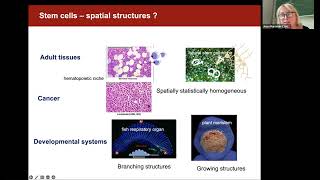
Mathematics of Stem Cells: Mechanistic Mathematical Modelling vs Single Cell Data Analysis
Explore mathematical approaches to stem cell research, comparing mechanistic modeling with single cell data analysis techniques.
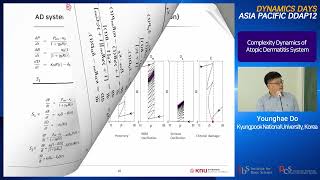
Complexity Dynamics of Atopic Dermatitis System
Explore the complexity of atopic dermatitis through an in silico model, uncovering new oscillating behaviors and multistability patterns to enhance understanding and potential treatment strategies.
DNA Data Storage Rosetta Stone Initiative - Understanding Self-Describing DNA Archives
Explore groundbreaking DNA data storage technology and its potential to revolutionize long-term data archival through the innovative Rosetta Stone initiative for future-proof data preservation and retrieval.
Big Data in Personalized Medicine - Using Pharmacogenomics for Tailored Treatment
Explore how high-throughput DNA sequencing and pharmacogenomics drive personalized medicine, focusing on the development of ePGA-WB for optimized drug therapy in Western Balkan populations.
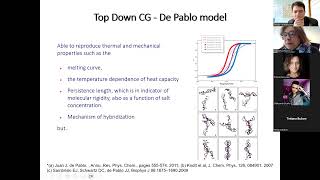
Coarse Graining and Multiscale Modeling of DNA - Part 2
Delve into advanced DNA modeling techniques, exploring coarse graining and multiscale approaches for understanding complex molecular structures and interactions at different computational levels.
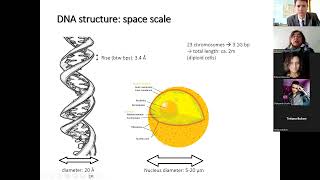
Coarse Graining and Multiscale Modeling of DNA - Part 1
Explore advanced computational techniques for DNA modeling, focusing on coarse-graining methods and multiscale approaches to understand DNA structure and dynamics at different resolutions.
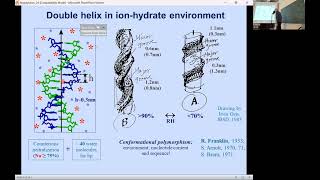
Conformational Mechanics of DNA
Dive into the fundamental principles of DNA conformational mechanics, exploring structural dynamics and molecular interactions through theoretical physics perspectives and computational approaches.
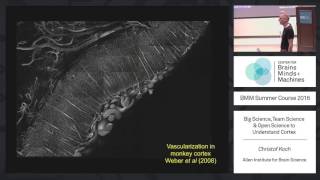
Big Science, Team Science & Open Science to Understand Neocortex
Explore the human brain's complexity through big science, team science, and open science approaches, focusing on neocortex understanding and innovative research methods.