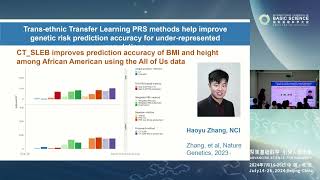
Empowering the Data Science Ecosystem for Whole Genome Sequencing Analysis Using ML Methods and Tools
Explore advanced methods for analyzing whole genome sequencing data using machine learning and ensemble techniques. Learn to leverage biobanks and electronic health records for powerful genetic insights.
scverse: An Introduction to Single-Cell Data Analysis in Python
Explore Python's ecosystem for single-cell data analysis with scverse, a community-driven initiative coordinating omics data work.
Methods for Computational Biology and Drug Discovery
Explore fundamental computational methods in physics and chemistry, presented by their creators, with insights into their development and applications.

AI and Machine Learning in Single Cell Genomics - Day 2
Explore cutting-edge single-cell genomics research, featuring expert talks on spatial transcriptomics, multi-omics, and bioinformatics from leading institutions in Atlanta and across America.

AWSOM24 Conference - AI and Machine Learning in Single Cell Genomics
Explore cutting-edge single-cell genomics research with expert talks on bioinformatics, experimental applications, and translational studies in this comprehensive workshop from leading institutions.
Deep Learning Across Label Confidence Distribution via Transfer Learning
Improve predictive power in noisy data systems using Filtered Transfer Learning (FTL). Learn to handle datasets with varying label confidence through hierarchical fine-tuning and iterative filtering.
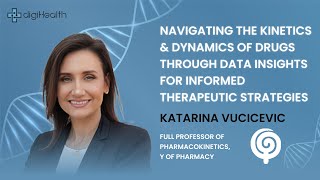
Data-Driven Insights for Drug Kinetics and Dynamics in Therapeutic Strategies
Explore how data-driven approaches and advanced statistical methods optimize drug behavior analysis and therapeutic strategies for personalized healthcare outcomes and improved treatment effectiveness.
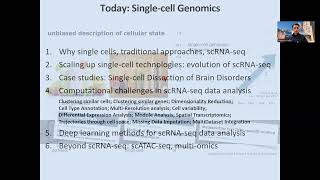
Single Cell Analysis in Computational Biology - Lecture 3
Comprehensive exploration of single-cell RNA sequencing, covering technologies, applications, and analysis techniques. Discusses advantages over bulk sequencing and addresses key biological questions in the field.

Introduction to Machine Learning in Computational Biology - Lecture 1
Comprehensive overview of computational biology, exploring GenAI, representation learning, and their applications in genomics and language models. Insights into future directions and potential impacts.
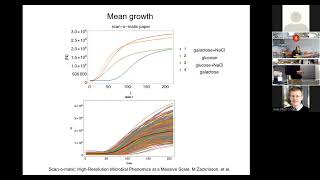
Quantifying Determinants of Microbial Growth
Explore computational approaches for quantifying microbial growth determinants, focusing on genotype-environment interactions and their implications for pathogen control and biotechnology.
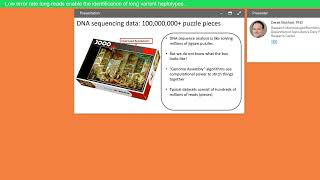
Low Error Rate Long-Reads Enable the Identification of Long Variant Haplotypes in Metagenome Assemblies
Explore how low error rate long-reads improve metagenome assembly, enabling identification of long variant haplotypes in microbial communities. Learn about overcoming challenges in separating closely related organisms.
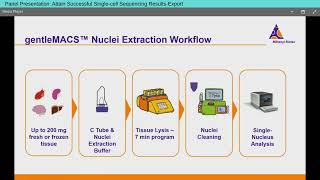
Attain Successful Single-Cell Sequencing Results with Latest Cell and Nuclei Isolation Workflows
Explore cutting-edge single-cell sequencing techniques and workflows for successful whole transcriptome profiling. Learn from experts about revolutionary technologies enabling parallel analysis of thousands of cells.
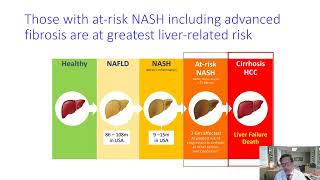
A Proteomics Signature of NASH - Non-Invasive Assessment of Nonalcoholic Fatty Liver Disease
Explore proteomics-based models for non-invasive assessment of nonalcoholic fatty liver disease, including diagnosis, prognosis, and monitoring of NASH progression and treatment efficacy.
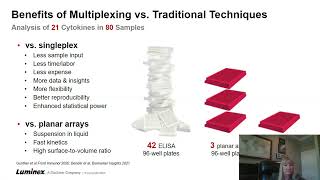
Accelerate Your Research with Luminex's xMAP INTELLIFLEX - The Technology You Trust, with the Versatility You Need
Explore Luminex's xMAP INTELLIFLEX®, enhancing bead-based multiplexing with dual reporter functionality. Learn about its applications in serological analysis and antibody isotyping, offering improved versatility and data output.
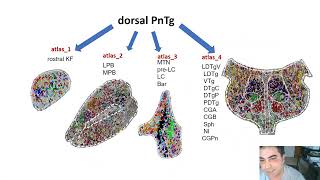
A Spatially-Resolved Transcriptional Atlas of the Murine Dorsal Pontine Tegmentum
Explore a groundbreaking transcriptional atlas of the murine dorsal pontine tegmentum using snRNA-seq and MERFISH, with interactive visualization for real-time data analysis and insights.
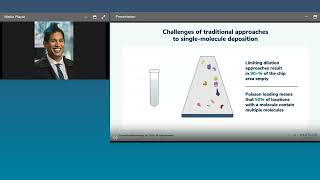
Single-Molecule Proteomics Using Protein Identification by Short-epitope Mapping (PrISM)
Explore single-molecule proteomics using PrISM, a novel method for comprehensive protein analysis with increased sensitivity and reproducibility. Learn about its potential to revolutionize biological research and healthcare.
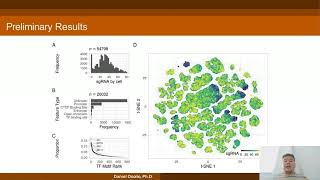
Systematic Characterization of Gene Regulatory Networks Rewiring Patterns Mediated by Non-Coding Regions
Explore gene regulatory network rewiring patterns through innovative experimental methods and computational approaches for characterizing effects of perturbations at single-cell level.
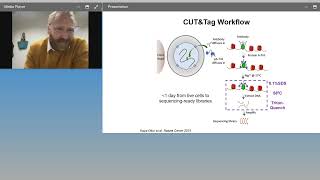
Unveiling Insights: Leveraging Single-Cell Transcriptomics and Epigenomics for Biomarker Discovery
Explore single-cell genomics techniques for identifying biomarkers in cancer research. Learn about transcriptomics, epigenomics, and their applications in understanding biological processes and tumor development.
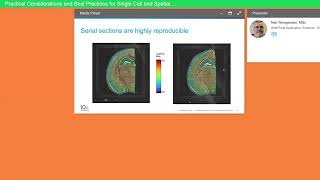
Practical Considerations and Best Practices for Single Cell and Spatial Transcriptomics
Explore best practices for single cell and spatial transcriptomics, uncovering complex biological systems with high-resolution approaches. Gain insights from an expert in genomics and earn PACE credits.
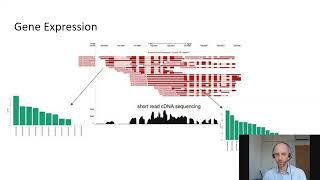
Studying Promoter and Isoform Diversity with Long-Read Transcriptome Sequencing
Explore promoter and isoform diversity in cancer transcriptomes using long-read RNA sequencing. Gain insights into alternative promoters' role in gene regulation and their impact on cancer research.
Supporting Biomarker Discovery One Cell at a Time - Single Cell Analysis Solutions That Drive Results
Explore single-cell gene expression analysis for revealing complex cell populations, uncovering regulatory relationships, and visualizing gene expression differences across cell types.