
Sublinear-Time Algorithms in Learning
Explore cutting-edge sublinear algorithms for efficient machine learning, focusing on extroverted approaches and their applications in large-scale data analysis.
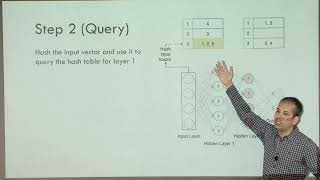
Sub-Linear Algorithms Meets Large Language Models
Explore emerging ideas and successful trends in sub-linear algorithms for future LLMs, addressing compute, memory, and energy challenges in training and inference.

Efficiently Computing Similarities to Private Datasets
Explore advanced techniques for computing similarities to private datasets, focusing on extroverted sublinear algorithms and their applications in data privacy.
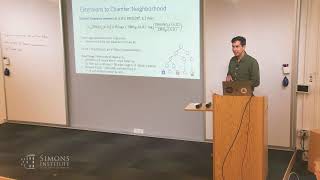
O(log s)-Approximate Nearest Neighbor Search for Earth Mover's Distance
Explore advancements in nearest neighbor search for Earth Mover's Distance, improving approximation to Õ(log s) with sublinear query time using data-dependent LSH functions and tree embedding techniques.
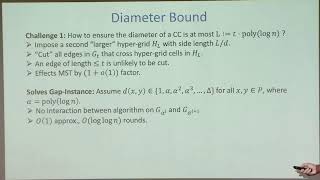
Massively Parallel Algorithms for High-Dimensional Euclidean Minimum Spanning Tree
Efficient distributed algorithms for clustering high-dimensional data using Euclidean Minimum Spanning Tree, achieving constant factor approximation in O~(loglogn) rounds of MPC model.
Shaving Logs by Weighing Coins - Extroverted Sublinear Algorithms
Explore innovative sublinear algorithms for efficient data analysis, focusing on log-shaving techniques and coin-weighing problems in computational complexity.
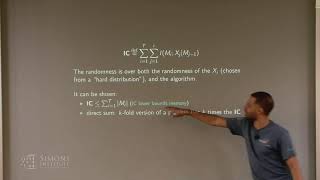
New Upper and Lower Bounds on Approximate Counting
Explores new upper and lower bounds for approximate counting, addressing amortized space complexity and memory optimization in maintaining arrays of approximate counters.

New Directions in Property Testing
Explore recent advancements in property testing algorithms, including new problems and frameworks connected to machine learning theory and high-dimensional data analysis.

Applications of Sub-linear Algorithms in Other Fields
Explore how sub-linear algorithms impact diverse fields, enhancing efficiency and scalability in data analysis and problem-solving across disciplines.

String Solving for Verification - TutorialFest at POPL 2024
Explore string solving techniques for software verification, focusing on theory, implementations, and applications in programming languages and security analysis.

The Joy of Creating Art with Code
Explore generative art using Python, Processing, PyCairo, and webGL. Learn to create aesthetic visuals with algorithms, geometric patterns, and mathematical functions.

Optimizing the Protection of IoT Devices
Optimizing IoT device protection through innovative blacklist creation and evaluation. Proposes the Attacker IP Prioritizer algorithm and a standardized methodology for assessing blacklist effectiveness in resource-constrained environments.

A Gentle Introduction to Recommendation as Counterfactual Policy Learning
Explore cutting-edge recommender systems through counterfactual policy learning. Learn theoretical frameworks, algorithms, and practical applications using RecoGym simulation environment.
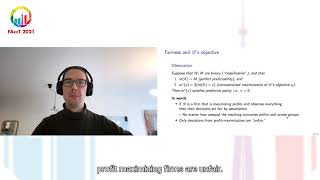
Fairness, Equality, and Power in Algorithmic Decision-Making
Explore the ethical implications of algorithmic decision-making, focusing on fairness, equality, and power dynamics in AI systems and their societal impact.

Toward a Theory of Race for Fairness in Machine Learning
Exploring critical race theory concepts for machine learning practitioners to develop a nuanced understanding of race in algorithmic fairness, through discussions and interactive activities.

Economic Models I
Exploration of fair machine learning through economic models, addressing equality of opportunity, population-level signaling, competitive equilibrium, and fair allocation algorithms.
Popularity and Demographic Biases in Recommender Systems
Exploring popularity and demographic biases in recommender systems, their impact on evaluation and effectiveness, and strategies for ensuring equitable recommendations across diverse user groups.

Decoupled Classifiers for Group-Fair and Efficient Machine Learning
Explore group-fair machine learning with decoupled classifiers, balancing efficiency and fairness in algorithmic decision-making. Gain insights into innovative approaches for ethical AI development.

Bridging Machine Learning and Mechanism Design towards Algorithmic Fairness
Explore the intersection of machine learning and mechanism design to address algorithmic fairness challenges in AI systems, focusing on innovative approaches and ethical considerations.

The Distributive Effects of Risk Prediction in Environmental Compliance - Algorithmic Design, Environmental Justice, and Public Policy
Explore the impact of risk prediction algorithms on environmental compliance, justice, and policy. Uncover the distributive effects and implications for algorithmic design in environmental regulation.
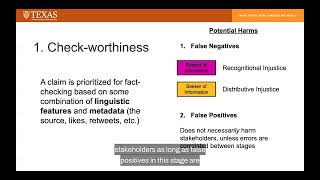
Justice in Misinformation Detection Systems - An Analysis of Algorithms, Stakeholders, and Potential Harms
Explore the ethical implications and potential harms of misinformation detection algorithms, analyzing stakeholder impacts and justice considerations in AI-driven content moderation.