
RISC-V Week: 7 Days Using Only RISC-V Computers
Exploring a week of exclusive RISC-V computing: streaming, video production, gaming, and performance testing on Lichee Pi 4A and VisionFive 2 hardware, with insights on current capabilities and limitations.
Faster Code Feedback Loops With OpenTelemetry Using Digma Continuous Feedback
Explore continuous feedback using OpenTelemetry and Digma plugin to shorten development feedback loops, spot issues early, and make informed design decisions based on runtime data analysis.

5 Common Jenkins Pipeline Mistakes and How to Avoid Them
Discover five common Jenkins Pipeline mistakes and learn best practices for efficient pipeline development, including syntax validation, unit testing, and optimal resource utilization.
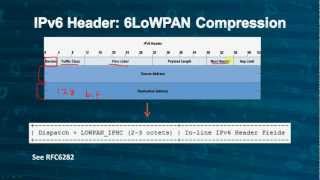
FlexibleIP - IPv6 Stack for Low-Power Devices Paper Presentation
Explore IPv6 stack optimization for low-power devices, covering cross-layer design, hardware acceleration, header compression, and implementation examples with performance analysis.
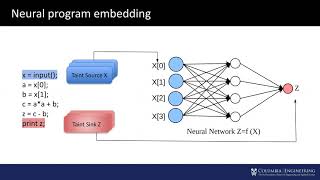
Neutaint- Efficient Dynamic Taint Analysis with Neural Networks
Explore efficient dynamic taint analysis using neural networks, overcoming limitations of traditional methods and improving performance in exploit analysis and fuzzing.
Grammatical Inference and Language Frameworks for LANGSEC
Explore grammatical inference and language frameworks for enhancing security protocols and parsers. Learn about pattern languages, formal systems, and their applications in HTTP session analysis.

Introduction to Litmus Chaos - Getting Started with Cloud-Native Chaos Engineering
Comprehensive introduction to Litmus Chaos, covering its fundamentals, installation, and practical demonstrations of chaos experiments on Kubernetes, including a Kafka scenario.
Monitoring and Scaling Laravel on Kubernetes
Explore auto-scaling Laravel on Kubernetes using metrics, including HPA setup, Metric Server deployment, and Linkerd sidecar integration for enhanced monitoring and performance optimization.

Automate Image Performance Using ASTs - Learn With Jason
Optimize website performance by automating image optimization, generating multiple sizes, and implementing lazyloading using AST transformations for improved user experience and faster load times.
Experiment Management for Machine Learning
Explore best practices for managing machine learning experiments, addressing reproducibility, documentation, and code dependency issues to improve workflow efficiency and results.

On the Measure of Intelligence by François Chollet - The ARC Challenge - Paper Explained
Explores the ARC challenge for testing machine intelligence, focusing on rapid generalization tasks based on human core knowledge priors like object-ness and symmetry. Discusses goals, examples, and potential solutions.

A Bio-Inspired Bistable Recurrent Cell Allows for Long-Lasting Memory
Explore a bio-inspired recurrent cell design that enhances long-term memory in neural networks, inspired by neuronal bistability and offering improved performance on time-series tasks requiring extended recall.
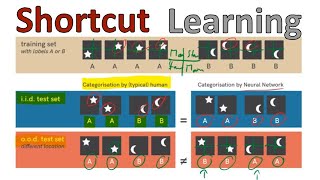
Shortcut Learning in Deep Neural Networks
Explore deep neural networks' shortcut learning, its impact on AI generalization, and strategies to improve model robustness and real-world applicability.
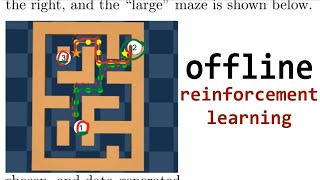
Datasets for Data-Driven Reinforcement Learning
Explore offline reinforcement learning benchmarks and datasets for evaluating algorithms in various settings, including safety-critical tasks and learning from expert demonstrations.

What Public Interest AI Auditors Can Learn from Security Testing - Legislative and Practical Wins
Exploring legal and practical strategies for AI auditors to overcome barriers in testing algorithmic bias, drawing lessons from security testing practices and advocating for policy changes.

Systems and Security - Advanced
Explore advanced system architectures, performance optimization, and security concerns in layered systems. Learn debugging techniques and architectural strategies for addressing bottlenecks and vulnerabilities.
ALBERT - A Lite BERT for Self-Supervised Learning of Language Representations
Explore ALBERT, a streamlined BERT variant for efficient language representation learning, covering key innovations and performance benchmarks.

Tradeoffs in the Software Workflow
Explore tradeoffs in software workflows, balancing fast releases with best practices. Learn strategies for reducing work-in-progress, optimizing value delivery, and managing technical debt in modern software engineering.
The Joys and Frustrations of Software Engineering with Mark Harman
Explore software engineering's joys and frustrations through research, deployment, and personal insights. Gain valuable perspectives on code analysis, testing, and SBSE from an industry expert.

Quantum Supremacy Using a Programmable Superconducting Processor II
Explore quantum supremacy using superconducting processors, focusing on Google's hardware path, benchmarking methods, and calibration challenges in quantum computing.
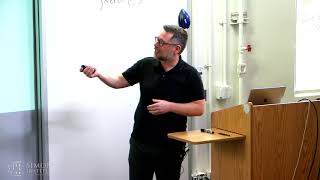
Quantum Machine Learning- Prospects and Challenges
Explore prospects and challenges in quantum machine learning, covering classification techniques, dimensionality reduction, data loading, and benchmarking for both optimistic and cautious perspectives.