
Tales of Program Crashes and Vulnerabilities - Software Security Research and Mitigation
Explore software security through vulnerability discovery, exploitation prevention, and compartmentalization strategies to enhance system protection and mitigate potential threats.

Source-Based Code Coverage of Linux Kernel
Explore source-based code coverage techniques for the Linux kernel, enhancing testing and development practices for improved kernel reliability.
Agni: Fast Formal Verification of the Verifier's Range Analysis
Explore fast formal verification techniques for range analysis in the Linux kernel's eBPF verifier, enhancing security and performance.
The State of eBPF Fuzzing
Explore the current landscape of eBPF fuzzing techniques and their impact on Linux kernel security and performance optimization.
Installing and Using Jackalope Fuzzer on MacOS - Finding Vulnerabilities in Simple Programs
Install and use jackalope fuzzer on MacOS to find vulnerabilities in binary programs. Learn cloning, compilation, command options, and practical fuzzing techniques.

Wisening Assertions: A Live Bayesian Reasoning System for Probabilistic Correctness
Explore a novel approach to run-time assertions that balances robustness and scalability, gradually transitioning from "on" to "off" as confidence in code correctness increases over time.
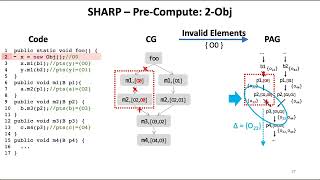
SHARP: Fast Incremental Context-Sensitive Pointer Analysis for Java
Explore SHARP, a groundbreaking incremental context-sensitive pointer analysis algorithm for Java, offering improved performance and scalability for large-scale programs.
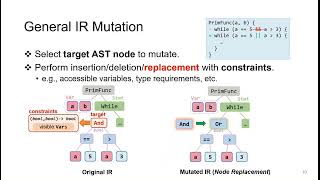
Coverage-Guided Tensor Compiler Fuzzing with Joint IR-Pass Mutation
Explore coverage-guided fuzzing for tensor compilers using joint IR-pass mutation, enhancing reliability and detecting bugs in deep learning systems.
Towards Mailbox Typing for Erlang - Lightning Talk
Explore mailbox typing for Erlang: a new technique to detect concurrency errors in actor-based languages, complementing existing tools like Concuerror model checker.
How to Add Dialyzer to an Existing Elixir Project - Lightning Talk
Learn strategies for integrating Dialyzer into existing Elixir projects smoothly, minimizing team friction and maximizing code quality benefits.

Historia: Refuting Callback Reachability with Message-History Logics
Explore a novel approach to callback reachability in event-driven frameworks using message-history logics. Learn about targeted specification and goal-directed verification for improved app analysis.

Hardware-Aware Static Optimization of Hyperdimensional Computations
Explore hardware-aware static optimization for hyperdimensional computing, focusing on minimizing resource usage while meeting accuracy targets in error-prone hardware platforms.

Adventure of a Lifetime: Extract Method Refactoring for Rust
Explore automated 'Extract Method' refactoring for Rust, addressing ownership and lifetime challenges through program transformations and repair procedures. Gain insights into advanced code refactoring techniques.

A Grounded Conceptual Model for Ownership Types in Rust
Explore a systematic approach to teaching Rust's ownership types, featuring a new assessment tool, conceptual model, and visualizations to improve learner understanding of memory safety concepts.

Static Analysis of Memory Models for SMT Encodings
Improve efficiency of bounded model checkers with static analysis and SMT encoding optimizations for memory models, reducing verification time by up to 40% in challenging benchmarks.

A Container-Usage-Pattern-Based Context Debloating Approach for Object-Sensitive Pointer Analysis
Explore DebloaterX, a novel approach for efficient object-sensitive pointer analysis. Learn how container-usage patterns improve context debloating, enhancing performance with minimal precision loss.

Graph IRs for Impure Higher-Order Languages: Making Aggressive Optimizations Affordable - OOPSLA 2023
Explore a novel graph IR for aggressive global optimizations in impure higher-order languages, combining reachability types and effect systems for precise dependency tracking and efficient code optimization.

A Cocktail Approach to Practical Call Graph Construction
Explore a novel cocktail approach for efficient call graph construction in C-based software, improving precision and scalability for vulnerability detection and code understanding.

Optimization-Aware Compiler-Level Event Profiling
Explore a novel technique for quantifying compiler-internal events in optimized code, reducing profiling perturbation and enhancing dynamic analysis accuracy.

Accelerating Fuzzing through Prefix-Guided Execution
Explore prefix-guided execution for accelerating coverage-guided fuzzing, improving bug detection and code coverage in software testing through early termination of unlikely tests.

Evaluating YJIT's Performance in a Production Context - A Pragmatic Approach
Explore YJIT's performance in Ruby, comparing benchmarks and real-world deployment. Analyze speed, memory usage, and warm-up time against other JIT compilers for pragmatic evaluation.