PentestGPT: Evaluating and Harnessing Large Language Models for Automated Penetration Testing
Explore how PentestGPT leverages LLMs to automate penetration testing, addressing challenges in context maintenance and demonstrating significant improvements in task completion for security testing.
Formalizing and Benchmarking Prompt Injection Attacks and Defenses
Explore a systematic framework for understanding and evaluating prompt injection attacks on LLM applications, including analysis of 5 attack types and 10 defense mechanisms across multiple models.
Vulnerability-oriented Testing for RESTful APIs
Discover a novel framework for detecting security vulnerabilities in RESTful APIs through functionality-based testing, featuring practical demonstrations and real-world applications in API security testing.

VulSim: Leveraging Similarity of Multi-Dimensional Neighbor Embeddings for Vulnerability Detection
Explore advanced vulnerability detection techniques using multi-dimensional neighbor embeddings and deep learning models to enhance software security through improved pattern recognition and data analysis.
FIRE: Combining Multi-Stage Filtering with Taint Analysis for Scalable Recurring Vulnerability Detection
Discover how FIRE combines multi-stage filtering and taint analysis to efficiently detect recurring vulnerabilities in open-source software, achieving 90% precision and superior performance over existing tools.
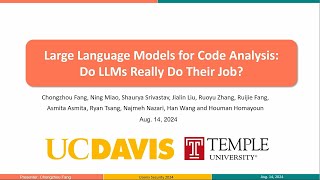
Large Language Models for Code Analysis - Evaluating LLM Performance and Limitations
Explore the capabilities and limitations of Large Language Models in code analysis, focusing on their effectiveness with obfuscated code and real-world applications through systematic evaluation.
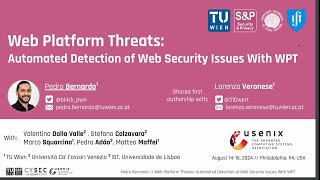
Web Platform Threats: Automated Detection of Web Security Issues with WPT
Discover how automated detection frameworks identify security flaws in web browser mechanisms, exploring practical approaches to validate web invariants and detect vulnerabilities across major browsers.
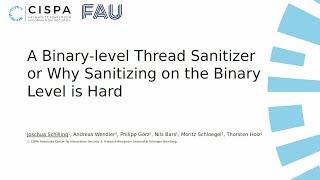
A Binary-level Thread Sanitizer - Why Sanitizing on the Binary Level is Hard
Explore the challenges and solutions of binary-level thread sanitization through BINTSAN, a novel approach for detecting data races in Linux x86-64 targets without source code access.
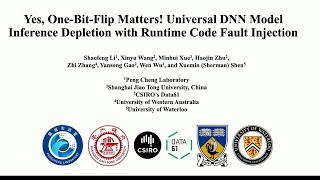
Yes, One-Bit-Flip Matters! Universal DNN Model Inference Depletion with Runtime Code Fault Injection
Explore FrameFlip, a groundbreaking attack method that depletes DNN model inference through single-bit fault injections, demonstrating universal effectiveness across major machine learning frameworks.
A Taxonomy of C Decompiler Fidelity Issues
Explore a comprehensive analysis of C decompiler output fidelity issues, examining defects beyond missing names and types to improve reverse engineering effectiveness in security analysis.
HYPERPILL: Fuzzing for Hypervisor Bugs by Leveraging the Hardware Virtualization Interface
Discover a groundbreaking approach to hypervisor security testing through HYPERPILL - a universal fuzzing framework that identifies vulnerabilities across major hypervisors using hardware virtualization interfaces.

What IF Is Not Enough? Fixing Null Pointer Dereference with Contextual Check
Discover how CONCH improves null pointer dereference fixes by incorporating contextual checks, achieving 85%+ patch accuracy through innovative intraprocedural and interprocedural analysis techniques.

Professional TouchDesigner Tips and Workflow Habits - Part 2
Master essential intermediate TouchDesigner techniques and workflow habits to enhance efficiency and professionalism in interactive media development projects.

Getting Started with Rust Programming - Installation and Basic Concepts
Learn to set up Rust development environment, write your first program, and understand basic mathematical operations while mastering fundamental programming concepts in Rust.
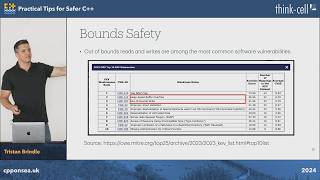
Practical Tips for Safer C++ - Writing Bug-Free and Efficient Code
Discover practical strategies for writing safer, more reliable C++ code without compromising performance, featuring expert techniques for bug detection and prevention in everyday programming.
Case Study: Managing a Complex Engineering Project - Unlocking Team Potential and Delivery Success
Discover practical leadership strategies and real-world insights from Atlassian Micros team's successful project delivery, focusing on empowering engineering teams and overcoming complex execution challenges.

Ultimate Web Scraping Tutorial - From HTML Collection to Advanced Libraries
Master essential web scraping techniques using Python libraries like BeautifulSoup, Selenium, and Scrapy to efficiently collect and process data from websites while following best practices and security guidelines.
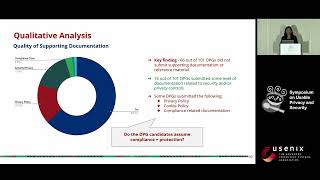
Privacy Requirements and Realities of Digital Public Goods
Explore the effectiveness of privacy standards in Digital Public Goods (DPGs), examining current evaluation methods and real-world implementation challenges in government service delivery systems.
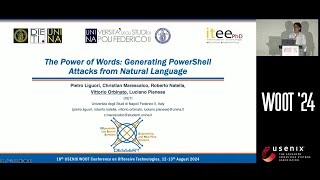
The Power of Words: Generating PowerShell Attacks from Natural Language
Explore how AI and Neural Machine Translation can automatically generate offensive PowerShell code from natural language, with insights into dataset creation and model performance evaluation.
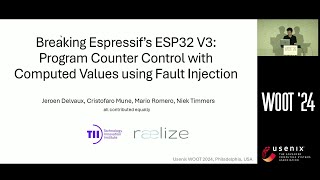
Breaking Espressif's ESP32 V3: Program Counter Control with Computed Values Using Fault Injection
Discover how researchers bypassed ESP32 V3's security features through fault injection attacks, exposing vulnerabilities in Secure Boot and Flash Encryption systems with electromagnetic glitching techniques.

C++'s Next Decade - The Future of Programming Language Evolution
Explore C++'s future trajectory with insights into compile-time reflection, memory safety improvements, and language simplification efforts that promise to revolutionize development practices over the next decade.