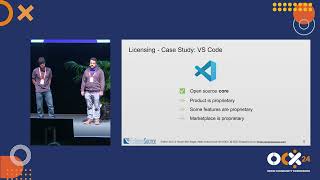
Web-Based Tools and IDEs: Pitfalls and Best Practices - 2024
Gain insights into building web-based tools and IDEs, exploring architectural patterns, technology choices, and lessons learned from migrating Eclipse desktop tools to modern web stacks.
Collaborative Approaches to License Compliance: OpenHarmony and Eclipse Oniro Compliance Toolchain
Explore license compliance solutions for OpenHarmony IoT operating system, focusing on third-party component management and integration with Eclipse Oniro Compliance Toolchain.
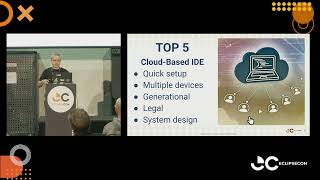
Navigating the Evolution from Desktop to Cloud IDEs - A Strategic Evaluation
Explore the strategic comparison between desktop and cloud-based development environments, focusing on Eclipse IDE and Theia while evaluating setup, extensibility, compliance, and collaboration features.
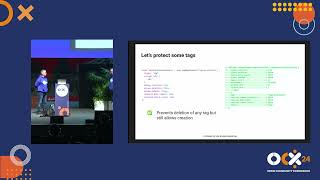
GitHub for Fun, Profit, and Security
Master GitHub's advanced features for enhanced productivity, security, and efficient organization management through configuration-as-code solutions and best practices for access control.
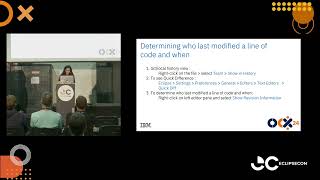
Mastering Eclipse IDE - Java Tooling Tips and Tricks
Master Eclipse IDE's advanced features, shortcuts, and productivity tools for Java development, from workspace customization to debugging tricks and modern Java module system integration.

Enhancing Custom IDEs with AI: Strategies, Use Cases, and Pitfalls - OCX 2024
Discover strategies for integrating AI into custom IDEs, from selecting use cases and models to implementing natural language workflows and context-aware features for enhanced development productivity.
Sustaining Git Performance Under Heavy Workloads - An AI-Driven Approach
Discover how AI-driven maintenance strategies optimize Git repository performance under heavy workloads, focusing on efficient solutions beyond traditional GC and geometric repacking methods.
From Local Roots to Global Impact: Building an Inclusive Open Source Community in Africa
Discover how Open Source Community Africa was built, exploring challenges, successes, and strategies for fostering inclusive global tech communities with focus on African regional growth.
Crafting Domain Specific Languages - A Practical Guide - OCX 2024
Discover practical insights into creating and implementing Domain-Specific Languages (DSLs), from abstraction levels to IDE integration, based on real industrial applications and modern web technologies.
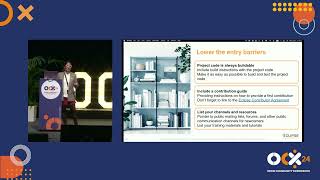
Open Source Development Best Practices for Eclipse Foundation Projects
Discover essential open source development strategies and best practices for maximizing project success within the Eclipse Foundation's development framework.
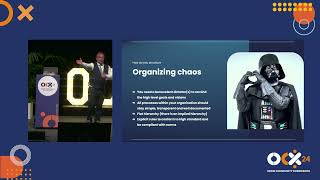
Unleashing Organizational Potential: Embracing Open Source Principles and InnerSource
Discover how to transform organizational management by implementing open source principles, focusing on InnerSource methodology to enhance collaboration, innovation, and operational efficiency.
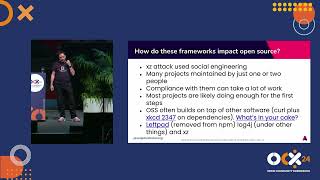
Secure Development in Open Source - The Road to SLSA Level 3 Compliance for Eclipse Temurin
Discover how Eclipse Temurin achieves SLSA Level 3 compliance through secure development practices, cloud-based Jenkins implementations, and open-source distribution methods across multiple platforms.
Nurturing the Next Generation of Open Source Contributors
Discover effective strategies for engaging students in open source development, from breaking down mental barriers to building sustainable mentorship programs and fostering long-term community growth.
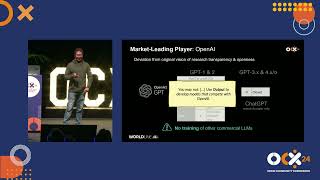
Navigating Between Commercial and Open Source AI - Understanding Large Language Models
Explore the landscape of Generative AI, examining LLM openness levels, intellectual property challenges, and the balance between commercial interests and open collaboration in AI development.

Introducing Typir - Type Checking for the Web
Discover how Typir framework enables web-based type checking for programming languages, offering validation hints and semantic constraints for both textual and graphical language development.

Optimized Resource Allocation for CXL Tiered-Memory Systems
Explore advanced techniques for optimizing CXL tiered-memory systems, focusing on efficient resource allocation, workload profiling, and performance enhancement in data center environments.

QWEN 2.5 Coder - Local AI Development with Ollama, Open WebUI and Continue
Master local AI coding with QWEN-2.5 Coder through Ollama, OpenWebUI, and Continue. Set up a powerful development environment and explore coding capabilities across Python, JavaScript, React, and Rust.
Incrementally Extending WASI from Version 0.2 to 0.3 and Beyond
Discover the evolution of WASI from version 0.2 to 0.3, exploring key developments, backwards compatibility, and the roadmap toward a full 1.0 release for outside-the-browser ecosystem applications.
Introducing WasmScore - A Novel Benchmarking Tool Targeting Wasm Efficiency and Performance
Discover WasmScore, a groundbreaking benchmarking tool that measures and optimizes WebAssembly performance, helping developers enhance efficiency in their Wasm applications.
WebAssembly and the Future of NGINX
Discover how WebAssembly integration enhances NGINX's programmability, extending its capabilities for developers while improving cross-proxy plugin compatibility and future development potential.
Unleash the Power of Open Source WASM on a Hyper-Distributed Cloud
Discover how Adobe leverages WebAssembly and edge computing with wasmCloud and Akamai to create secure, efficient, and integrated distributed applications across multiple data centers.