Understanding the Successes and Pain Points of Different Testing Strategies
Explore diverse testing strategies, their successes, and challenges. Gain insights from developers across skill levels to enhance your approach to code testing and improve overall development practices.
Go and Redis - More Than a Love Story
Explore Redis integration in Go applications, comparing GoRedis and Redigo modules. Learn implementation techniques, performance benchmarks, and best practices for efficient data storage and retrieval.
Boosting Test Coverage for Microservices
Enhance microservice test coverage using integration tests with actual counterparties. Learn to measure and monitor code coverage for improved deployment pipelines and quality assurance.
Generating Code in Go - Best Practices and Tools
Explore code generation in Go for improved patterns and developer experience. Learn to automate telemetry, decorators, ORMs, and schema-first approaches without increasing complexity or runtime errors.
The Feeling of Fast Code - Strategies for Optimizing Performance
Explore strategies for optimizing code performance, from management to assembly level. Learn to design scalable systems and stay current with efficient coding practices.
From Zero to Func Main: Initializing Packages - Optimizing Go Program Startup
Explore techniques to measure and optimize Go program initialization, focusing on improving startup time for CLIs and short-lived processes.
Visually Programming Go - Mixing Blockly and Go
Explore visual Go programming using Blockly, creating programs without writing code. Learn about lowering entry barriers, real-life examples, and the future of this innovative approach.
Level Up Your RDBMS Productivity in Go - Streamlining Database Management
Enhance RDBMS productivity in Go using SQL-first approach. Learn to integrate dbmate, sqlc, and testcontainers for efficient database management, type safety, and automated testing.
Life, the Universe, and Everything GO
Embark on an interactive journey exploring Go's applications from microscopic to cosmic scales, challenging conventional thinking and expanding programming horizons.
The Job of Go Maintainer - Professional Open-Source Maintenance
Explore the role of an independent Go maintainer, including sustainable funding models, aligning incentives, and making open-source maintenance a viable career path.
Safe by Construction - Writing Secure Code Without Thinking About Security
Learn robust coding techniques to create secure software without actively focusing on security. Explore key concepts, address complexity, and discover real-world applications for writing safer code.

Key Takeaways from 5 Years of Developing and Maintaining Open Source Projects for iOS Device Automation
Explore reverse engineering, open-source development, and iOS automation using Go. Learn about community building, motivation, and overcoming technical challenges in long-term projects.

Level Up Your Backend with Cucumber Feature Tests
Upgrade backend testing with Cucumber feature tests. Write human-readable tests, improve communication, get free documentation, achieve 100% API coverage, and deploy confidently to production.

Eliminating C++ Undefined Behavior, Plug-in Contract Violations, and Intel Assumptions in Legacy Codebase
Eliminate C++ undefined behavior, plug-in contract violations, and Intel assumptions in legacy codebases. Learn strategies for supporting new platforms and improving code quality in audio plugins.
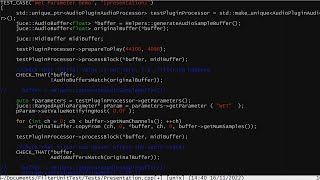
Unit Testing Audio Processors - Lecture
Learn to set up and implement unit testing for JUCE audio plugins, covering practical examples from basic checks to verifying processor output.
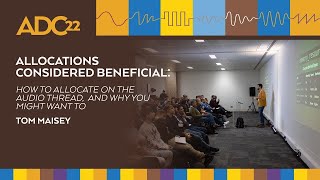
How to Allocate on the Audio Thread and Why You Might Want To - Allocations Considered Beneficial
Explore memory allocation on audio threads using C++'s std::pmr namespace. Learn techniques for low-latency audio processing and improve product features through efficient memory management.
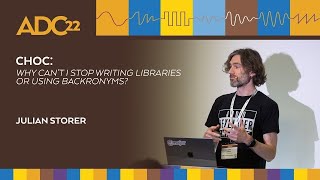
CHOC: Why Can't I Stop Writing C++ Libraries or Using Backronyms? - Lecture
Explore CHOC, a free header-only C++ library for audio developers. Learn about its design, functionality, and the thought processes behind creating effective generic code.
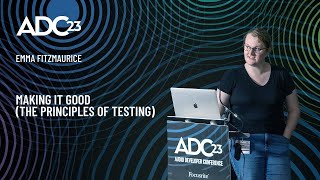
Making It Good: Principles of Testing Hardware and Software
Explore principles and techniques for effective hardware and software testing, from coverage to automation, ensuring high-quality products through vigilant quality assurance practices.

Writing Elegant DSP Code in Rust
Leverage Rust's type system for elegant, concise, and safe DSP code. Explore advanced features, zero-cost abstractions, and various implementation styles for audio processing graphs.
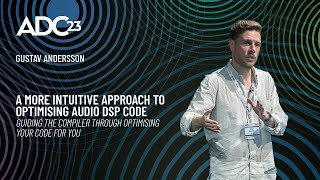
A More Intuitive Approach to Optimizing Audio DSP Code - Guiding the Compiler
Discover intuitive techniques for optimizing audio DSP code, focusing on compiler-friendly patterns and efficient benchmarking methods to enhance performance without sacrificing readability.
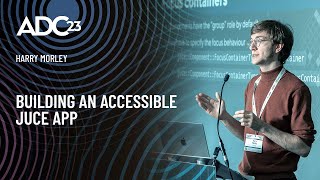
Building an Accessible JUCE App
Learn to create accessible JUCE apps with screen reader support, component grouping, keyboard focus, and real-world examples. Gain insights for developing inclusive audio software.