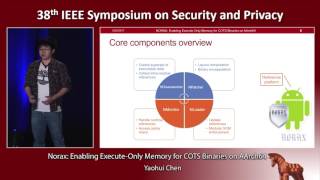
Norax - Enabling Execute-Only Memory for COTS Binaries on AArch64
Explore execute-only memory implementation for AArch64 binaries, enhancing security against code reuse attacks without source code or debugging symbols. Learn about NORAX's design, components, and real-world performance.
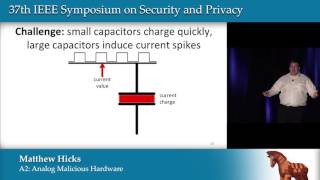
Analog Malicious Hardware
Explore stealthy hardware attacks using analog circuits to bypass security measures. Learn techniques for creating small, undetectable malicious modifications during chip fabrication.
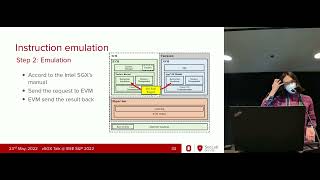
vSGX: Virtualizing SGX Enclaves on AMD SEV
Explore virtualizing Intel SGX enclaves on AMD SEV, addressing vendor lock-in and enabling software-defined trusted execution environments. Learn design goals, challenges, and performance implications.
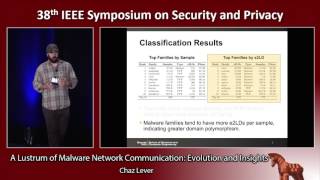
A Lustrum of Malware Network Communication: Evolution and Insights
Explore the evolution of malware network communication over five years, examining trends, insights, and implications for cybersecurity through analysis of 26.8 million samples.
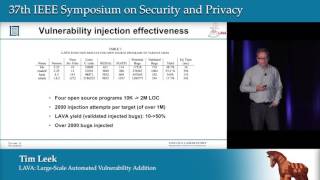
LAVA - Large-Scale Automated Vulnerability Addition
Explore LAVA, an automated technique for injecting realistic vulnerabilities into source code, enabling rigorous evaluation of vulnerability discovery tools and providing high-quality targets for tool developers.
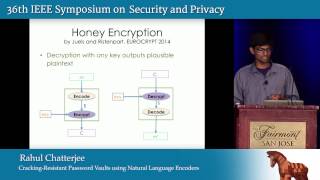
Cracking-Resistant Password Vaults Using Natural Language Encoders
Innovative password vault security using natural language encoders to generate plausible decoys, resisting offline cracking and forcing online attacks. Implements NoCrack system for enhanced protection.
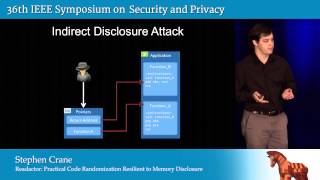
Readactor: Practical Code Randomization Resilient to Memory Disclosure
Explore practical code randomization techniques resilient to memory disclosure attacks, enhancing software security against return-oriented programming and other code-reuse threats.
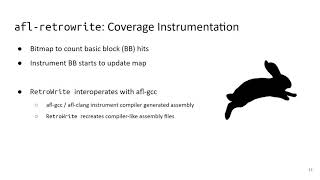
RetroWrite- Statically Instrumenting COTS Binaries for Fuzzing and Sanitization
Explore static instrumentation of COTS binaries for enhanced fuzzing and sanitization using RetroWrite, a framework for rewriting position-independent code.
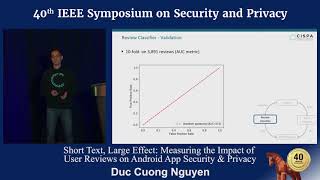
Short Text, Large Effect - Measuring the Impact of User Reviews on Android App Security & Privacy
Exploring the impact of user reviews on Android app security and privacy, analyzing 4.5M reviews to identify concerns and measure developers' responses through code changes.
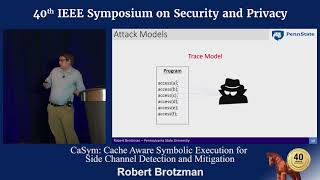
CaSym: Cache Aware Symbolic Execution for Side Channel Detection and Mitigation
Explores cache-aware symbolic execution for detecting and mitigating side-channel vulnerabilities, offering novel abstract cache models and guidance for effective countermeasures.
Iodine - Fast Dynamic Taint Tracking Using Rollback Free Optimistic Hybrid Analysis
Explores fast dynamic taint tracking using optimistic hybrid analysis, reducing overhead while maintaining soundness. Introduces Iodine tool for efficient security policy enforcement without rollbacks.
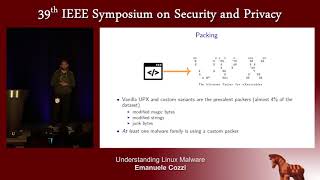
Understanding Linux Malware
Explore Linux malware analysis challenges, infrastructure design, and insights from a large-scale study of 10,548 samples, addressing the growing threat in embedded devices and IoT.
Revealer- Detecting and Exploiting Regular Expression Denial-of-Service Vulnerabilities
Explore techniques for detecting and exploiting ReDoS vulnerabilities, including static analysis, pattern identification, and automated exploit generation.
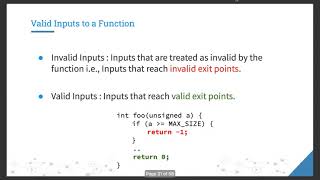
SPIDER - Enabling Fast Patch Propagation in Related Software Repositories
Explore fast patch propagation in software repositories, focusing on security patches, solution requirements, and implementation techniques for efficient and safe updates.
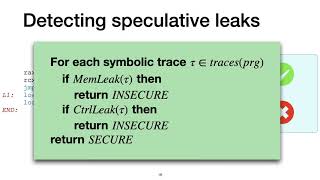
SPECTECTOR - Principled Detection of Speculative Information Flows
Principled detection of speculative information flows in computer systems, focusing on security against Spectre-like attacks through speculative non-interference and symbolic execution techniques.
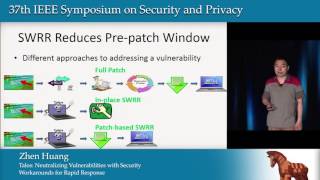
Talos - Neutralizing Vulnerabilities with Security Workarounds for Rapid Response
Neutralizing vulnerabilities using error-handling code for rapid response, minimizing patch delays while maintaining functionality. Explores automated security workarounds to mitigate risks in popular Linux server applications.
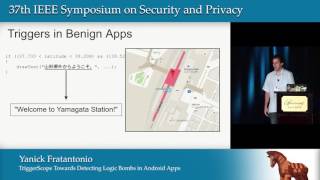
TriggerScope - Towards Detecting Logic Bombs in Android Applications
Explore techniques for detecting logic bombs in Android apps using symbolic execution and path predicate analysis. Learn about TriggerScope, a tool for identifying time-, location-, and SMS-related triggers in mobile applications.
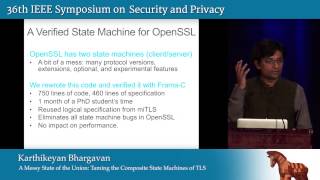
A Messy State of the Union - Taming the Composite State Machines of TLS
Explore critical security vulnerabilities in TLS implementations, including the FREAK flaw, and learn about a verified composite state machine for OpenSSL that addresses these issues.
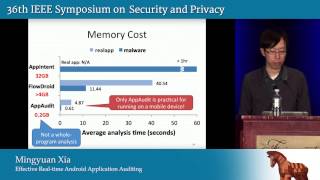
Effective Real-Time Android Application Auditing
Innovative approach combining static and dynamic analysis for efficient, real-time Android app auditing to detect data leaks, offering improved speed and accuracy over existing methods.
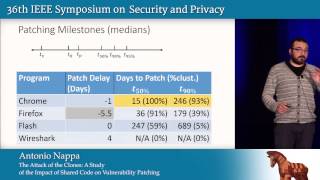
The Attack of the Clones - A Study of the Impact of Shared Code on Vulnerability Patching
Explores impact of shared code on vulnerability patching, revealing delays between patch releases and novel exploitation techniques. Analyzes patch deployment data from millions of hosts to improve cybersecurity strategies.

Unleashing Mayhem on Binary Code
Explore automated exploit generation for binary programs using hybrid symbolic execution and index-based memory modeling. Learn techniques to find and demonstrate exploitable vulnerabilities efficiently.