Eating Our Words: What the Language of Food Reveals About History and Culture
Explore how language in food reveals insights on history, economics, and culture. From ketchup's origins to menu linguistics, uncover surprising connections between words and cuisine.
Why We Kill - Violence as Socialization
Explores the "violentization" model of criminologist Lonnie Athens, examining how individuals can be socialized into committing violent acts through a four-stage process, challenging common assumptions about violence.
Maya Archaeology and Its Relevance to the Modern World
Explore ancient Maya civilization's sustainability lessons and societal resilience, gleaned from new evidence on the decline of major cities, and their relevance to contemporary global challenges.
How Insights from Archaeology Might Help Shape Our Future
Exploring how archaeological approaches provide new perspectives on modern problems, offering insights to shape our future beyond traditional data interpretation.
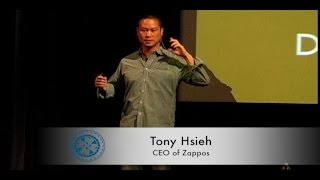
City as a Startup - Transforming Downtown Las Vegas
Tony Hsieh's ambitious $350 million Downtown Project aims to transform Las Vegas' urban core into a vibrant, connected community. Explore the project's successes, challenges, and potential lessons for urban revitalization.
The Fabric of our Lives - Cities, Slums, Neighborhoods, People
Explore how cities are defined by connections, examining urban fabric through neighborhood data and individual interactions, with insights on slums as gateways to urban life.
Is Free Will an Illusion? What Can Cognitive Science Tell Us?
Explore the philosophical debate on free will, determinism, and moral responsibility with Daniel Dennett. Examine cognitive science insights and their implications for our understanding of human agency and ethics.
From Scaling to Practice: Real World Applications of Cities Research - 2014
Explore real-world applications of urban scaling research, examining how theoretical insights translate into practical solutions for city planning and development.
The Conceptual Framework of Urban Scaling - 2014
Explore the theoretical foundations of urban scaling, examining how cities grow and evolve over time through complex systems analysis and mathematical modeling.
Why the Internet Won't Get You Any More Friends
Explore the biological limits of human social networks and why digital connections don't expand our meaningful relationships beyond our brain's cognitive capacity.
A Wild Solution for Climate Change
Explore the intricate link between climate and biodiversity, and discover innovative biological solutions to mitigate long-term climate change impacts with conservation pioneer Thomas Lovejoy.
On Moral Progress - Is the Human Conscience Led by the Head or the Heart?
Explore the role of reason and emotion in moral progress with Steven Pinker and Rebecca Newberger Goldstein, examining historical advancements in human rights and societal ethics.
Cultural Contingency and Gene-Culture Coevolution - 2013
Explore gene-culture coevolution and its impact on human evolution, examining how cultural practices interact with genetic inheritance to shape populations over time.
The Brain and the Law - How Neuroscience Will Shift Blameworthiness
Explore how neuroscience challenges criminal justice assumptions, examining brain equality, incarceration effectiveness, and rehabilitation technologies. Insights into unconscious behavior drivers and future-focused legal approaches.
The Minds of Children - Understanding Infant Intelligence and Consciousness
Explore how children's prolonged dependency fosters unique human consciousness, learning abilities, and moral understanding, challenging traditional views on infant cognition and development.
Keystone Individuals in Animal Societies - Pros and Cons
Explore the impact of influential individuals in animal societies, focusing on social spiders in African deserts. Learn about their effects on group dynamics and adaptability.
Complex Adaptive Systems and the Depopulation of Mesa Verde
Explore how complex adaptive systems reveal factors behind Mesa Verde's depopulation, including resource overuse, high population density, and environmental vulnerabilities in the face of prolonged droughts.
The Leverage Cycle and Debt Forgiveness - Ulam Lectures 2017 Part 2
Explore debt's role in economic cycles, crises, and recovery. Geanakoplos examines leverage, forgiveness, and systemic risks, using recent financial crises as case studies.
Trust and Panic: The History and Impact of Debt - Lecture 1
Explore the historical, literary, and economic significance of debt, default, and financial crises through John Geanakoplos' analysis of the leverage cycle and its impact on major economic events.
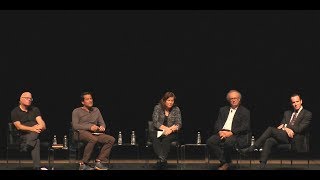
The Complexity of Economics - Exploring Markets as Complex Adaptive Systems
Explore the intersection of complexity science and economics with experts discussing agent-based modeling, behavioral economics, and machine learning to gain insights into real-world economic systems.
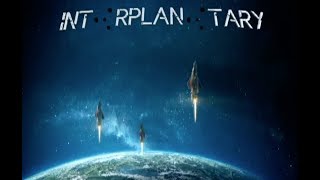
InterPlanetary Project - Challenges and Opportunities for Human Space Civilization
Experts explore challenges and requirements for becoming an interplanetary civilization, addressing Earth's problems, and overcoming barriers to achieve global cooperation and technological advancement.