
Esomeprazole - Drug Testing, Usage, and Clinical Trials
Explore the clinical trials, FDA approval, and marketing of esomeprazole, with insights on drug testing, efficacy evaluation, and pharmaceutical industry practices from chemical and clinical perspectives.
Preparing Single Enantiomers and the Mechanism of Optical Rotation
Explore optical rotation in chiral molecules, from enantiomer synthesis to the mechanism of polarized light interaction, with insights on its relevance in biological systems and drug development.
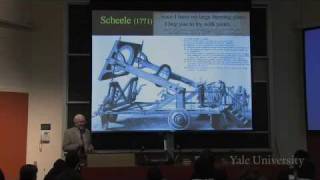
Oxygen and the Chemical Revolution - From Alchemy to Lavoisier (1789)
Explore the origins of modern chemistry, from alchemy to Lavoisier's revolutionary ideas on oxidation, elements, and scientific language in this historical journey through early chemical discoveries.

Preparing Single Enantiomers and Conformational Energy - Freshman Organic Chemistry
Explore chirality, single enantiomer production, and conformational isomerism in organic chemistry. Learn about legal implications, isolation methods, and energy considerations in molecular structures.
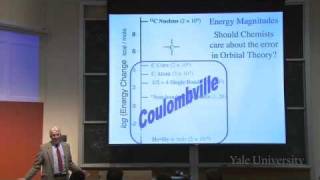
Orbital Correction and Plum-Pudding Molecules in Organic Chemistry - Lecture 11
Explore advanced orbital theory, electron repulsion corrections, and molecular structure using the Plum-Pudding model. Gain insights into atomic orbitals and their relation to molecules like methane and ammonia.
Reality and the Orbital Approximation in Freshman Organic Chemistry - Lecture 10
Explore quantum mechanics in organic chemistry, from probability density to hybrid orbitals, and the challenges of describing multi-electron systems using one-electron models.
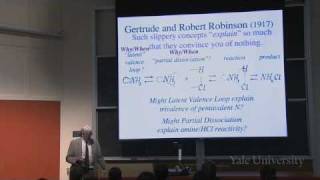
Force Laws, Lewis Structures and Resonance in Organic Chemistry
Explore chemical bonding through force laws, Lewis structures, and resonance. Understand valence electrons' role in molecular structure and reactivity. Gain insights into fundamental organic chemistry concepts.

One-Dimensional Wave Functions in Quantum Chemistry - Lecture 8
Explore wave functions, their relationship to kinetic energy and probability density, and how they apply to various potentials. Learn about the isotope effect on bond properties in organic chemistry.
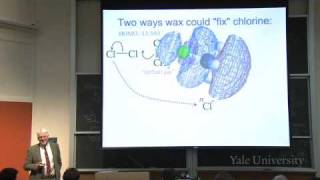
Radical and Type Theories in Organic Chemistry (1832-1850) - Lecture 22
Explores radical and type theories in organic chemistry, covering historical developments, key figures, and fundamental concepts like HOMO-LUMO mechanism and free-radical chain reactions.

Biomedical Engineers and Artificial Organs - Frontiers of Biomedical Engineering
Explore biomedical engineering's role in artificial organs, focusing on synthetic biomaterials, body responses, and the design of various implants and devices for medical applications.

Biomechanics and Locomotion in Biomedical Engineering - Lecture 19
Explore biomechanics of various modes of motion, from flight to walking, and their applications in biomedical engineering, including artificial hip design and efficient locomotion.

Biomedical Engineering Applications in Cancer Diagnosis and Treatment - Lecture 24
Explore biomedical engineering's role in cancer diagnosis and treatment, from tumor biology to drug development, highlighting challenges and opportunities for innovation in the field.

Genetic Engineering: DNA Technology and Gene Expression Control - Lecture 4
Explore advanced DNA technologies: RNA silencing, molecular cloning, PCR, and mutation detection. Learn about controlling gene expression and applications in genetic engineering and biomedical research.

Genetic Engineering - From DNA Structure to Protein Synthesis
Explore DNA structure, synthesis, transcription, and translation. Learn about genetic code, protein synthesis, and RNA interference as potential disease treatments.

Introduction to Biomedical Engineering - Lecture 2
Explore biomedical engineering's foundations, from homeostasis to cell membranes. Gain insights into human physiology and innovative approaches for improving health through this interdisciplinary field.

Cardiovascular Physiology - Electrical Conductivity in the Heart - Lecture 15
Explore heart electrical conductivity, ion channels, action potentials, and ECG interpretation. Understand the cardiac conduction system and its role in heartbeat regulation.

Cell Culture Engineering - Gene Therapy and Cell Physiology
Explore gene therapy, DNA delivery methods, and cell physiology. Learn about tissue types, cell development, and the extracellular matrix in this comprehensive biomedical engineering lecture.

Cell Communication and Immunology in Biomedical Engineering - Lecture 8
Explore cell communication in nervous and immune systems, covering neural signal transmission, innate and adaptive immunity, and immune responses to foreign antigens.

Cell Culture Engineering: Fertilization, Embryogenesis, and Stem Cells - Lecture 6
Explore stem cell biology, from fertilization to potential therapeutic applications, covering cell types, growth patterns, and challenges in biomedical engineering.

Cell Communication and Immunology - Frontiers of Biomedical Engineering
Explore cell communication mechanisms, receptor-ligand interactions, and signal transduction pathways. Learn about drug development applications and different types of cellular signaling.

Biomechanics and Orthopedics - Material Properties of Elasticity and Viscosity
Explore material properties, elasticity, and viscosity in biomedical engineering. Learn experimental setups, stress-strain relationships, and modeling techniques for biomaterials using springs and dashpots.