Meteorology
Comprehensive overview of meteorology for pilots, covering weather patterns, hazards, and safety considerations essential for private pilot ground training.
Machine Learning in Extreme Weather Forecasting with William Drew Collins
Explore innovative ML techniques for extreme weather forecasting, leveraging FourCastNet algorithm to generate massive ensembles with high accuracy and efficiency, revolutionizing atmospheric dynamics modeling.

Predicting and Adapting to Increased Hurricane Risk
Explore the latest research on tropical cyclones, their increasing destructiveness, and strategies for mitigating risks associated with these powerful natural phenomena.
Keeping Up With the Weather - The Future of Data and Forecasting
Explore weather forecasting innovations, data-driven insights, and technological advancements with The Weather Company's CTO. Learn about big data's impact on meteorology and industry transformation.

El Niño and La Niña - Understanding the ENSO Phenomenon
Explore El Niño/Southern Oscillation: its impact on climate, ocean temperatures, and global weather patterns. Learn about ENSO indices, current data, and the role of ice in climate systems.
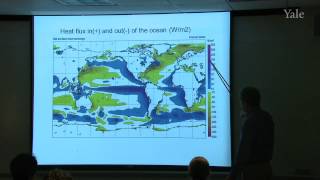
Ocean Water Density and Atmospheric Forcing - The Atmosphere, the Ocean and Environmental Change
Explore ocean density, stability, and atmospheric influences on temperature, salinity, and surface winds. Learn how these factors shape oceanic conditions and dynamics.
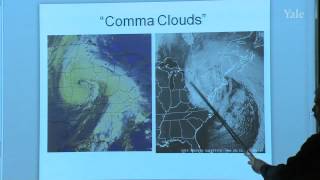
Mid-latitude Frontal Cyclones - Formation, Development, and Forecasting
Explore mid-latitude frontal cyclones, their formation, energy sources, and movement patterns. Learn about nor'easters and weather forecasting in this atmospheric science lecture.
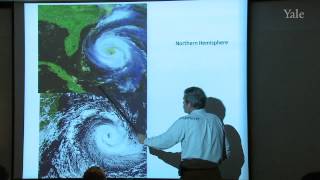
Coriolis Force and Storms - Atmospheric Dynamics and Weather Patterns
Explore atmospheric dynamics, pressure systems, and storm formation. Learn about geostrophic balance, Coriolis effects on hurricanes, and various types of storms including convective and severe thunderstorms.
Convective Storms: Types, Formation, and Characteristics - Lecture 15
Explore types of convective storms, their formation, and characteristics. Learn about airmass thunderstorms, severe storms, tornados, and hurricanes, including their energy sources and geographical limitations.

Water in the Atmosphere - Lapse Rates and Atmospheric Stability - Lecture 9
Explore atmospheric stability, lapse rates, inversions, and moisture. Learn how these factors influence weather patterns, pollution trapping, and air saturation processes.

Water in the Atmosphere - Cloud Formation and Types - Lecture 2
Explore atmospheric water vapor, cloud formation, types, and phenomena like vortices and haze. Learn about saturation vapor pressure, condensation, and cloud characteristics from space.

Global Climate and the Coriolis Force - Lecture 13
Explore Earth's atmospheric circulation, Coriolis force, and geostrophic balance. Understand climate dynamics, cloud patterns, and the impact of Earth's rotation on global weather systems.

Introduction to Atmospheres - Earth's Climate System
Explore Earth's climate system through atmospheric and oceanic studies, with a focus on Hurricane Irene's impact and the fundamental nature of our atmosphere.
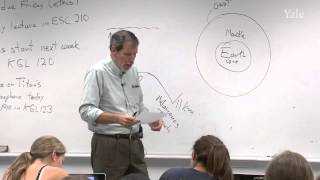
Vertical Structure of the Atmosphere and Residence Time - Lecture 4
Explore atmospheric layers, their properties, and interactions with solar radiation. Learn about ocean and Earth layers, systems analysis, and the hydrologic cycle's residence time.

Climate and the Distribution of Life on Earth - Principles of Evolution, Ecology and Behavior
Explore how climate shapes life on Earth, from biomes to weather patterns, and learn about the impact of phenomena like El Niño on global ecosystems and biodiversity.

Seasons and Climate - Factors Affecting Earth's Climate Systems
Explore factors influencing Earth's climate: latitude, terrain, continentality, and seasonality. Learn about precipitation patterns, ocean currents, biomes, and the impact of Earth's rotation on climate variations.
Clouds and Precipitation - Cloud Formation and Precipitation Mechanisms
Explore cloud formation, precipitation mechanisms, and detection methods through experiments and real-world applications. Gain insights into atmospheric processes and their environmental impact.
Horizontal Transport in Atmospheric Mixing - Lecture 8
Explore atmospheric pollutant mixing through confined, unconfined, and wind-influenced scenarios. Learn about diffusion, wind effects, and temperature changes with altitude in this comprehensive lecture.
Hydrostatic Balance in Atmosphere and Ocean - Lecture 7
Explore hydrostatic balance in the atmosphere and ocean, including calculations, experiments, and real-world applications of the hydrostatic law.
Water Security: Recent Changes in Victorian Rainfall and Runoff
Explore recent changes in Victorian rainfall and runoff patterns, examining climate models, weather systems, and their impacts on water resources and stream flows.
Advanced Metallurgical Thermodynamics
In this course, you will learn, First, second and third laws of thermodynamics, Maxwell's relations, Clausius-Clapeyron equation, Equilibrium Concepts, Thermodynamics of Phase Transformations etc.