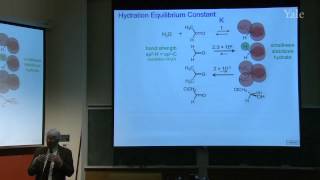
Mechanism and Equilibrium of Carbonyl Reactions - Lecture 28
Explore carbonyl reactions, mechanisms, and equilibrium in organic chemistry. Learn about esterification, hydration, protecting groups, and imine formation. Gain insights into substituent effects and reaction pathways.
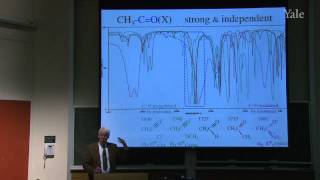
Functional Groups and Fingerprints in IR Spectroscopy - Precession of Magnetic Nuclei
Explore infrared spectroscopy for molecular analysis, focusing on functional groups, fingerprints, and magnetic nuclei precession. Learn about IR frequencies, carbonyl groups, and pharmaceutical characterization.
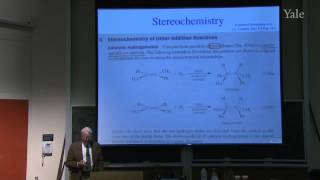
Metals and Catalysis in Alkene Reactions - Oxidation, Hydrogenation, Metathesis, and Polymerization
Explore metal-catalyzed reactions of alkenes, including oxidation, hydrogenation, metathesis, and polymerization. Learn about reaction mechanisms, stereochemistry, and applications in organic synthesis and polymer chemistry.
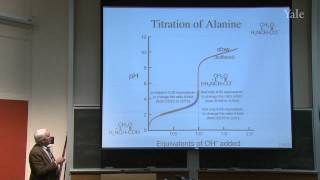
Brønsted Acidity and the Generality of Nucleophilic Substitution
Explore Brønsted acidity, pKa values, and nucleophilic substitution in organic chemistry. Learn about ionic dissociation, titration, and factors influencing acidity across various solvents and reactions.

Introduction to Instruments and Musical Genres - Lecture 2
Explore classical music terminology, instruments, and acoustics. Learn about motives, themes, and genres while experiencing live demonstrations of French horn, bassoon, and viola.

Global Warming - Understanding Climate Change and the Carbon Cycle
Explore the carbon cycle, atmospheric CO2 trends, and their impact on global warming. Learn about carbon reservoirs, greenhouse gas emissions, and climate change over geological time.
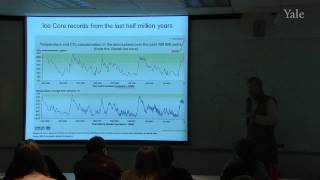
Isotope Evidence for Climate Change - Lecture 26
Explore how isotopes in ice cores and sediments reveal past climate changes, including temperature fluctuations and ice ages, through fractionation processes and the Milankovitch theory.
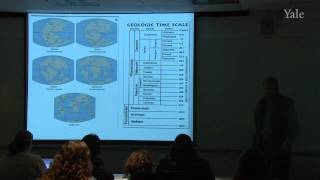
Ice and Climate Change - The Atmosphere, the Ocean and Environmental Change
Explore ice's role in climate change, recent Greenland trends, and Earth's climate history over 5 million years, including paleoclimate periods and geomorphological evidence of past ice extent.

El Niño and La Niña - Understanding the ENSO Phenomenon
Explore El Niño/Southern Oscillation: its impact on climate, ocean temperatures, and global weather patterns. Learn about ENSO indices, current data, and the role of ice in climate systems.
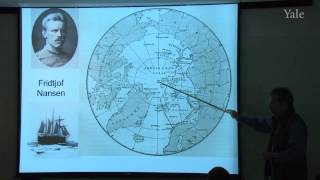
Ocean Currents and Productivity - The Atmosphere, the Ocean and Environmental Change
Explore ocean currents, their types, and impacts on global circulation patterns. Learn how wind-driven and thermohaline currents affect biological productivity in different ocean regions.
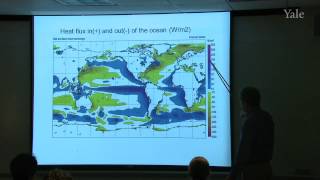
Ocean Water Density and Atmospheric Forcing - The Atmosphere, the Ocean and Environmental Change
Explore ocean density, stability, and atmospheric influences on temperature, salinity, and surface winds. Learn how these factors shape oceanic conditions and dynamics.
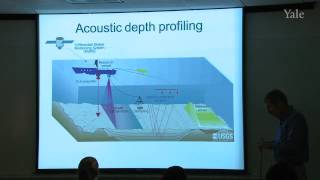
Ocean Bathymetry and Water Properties - The Atmosphere, the Ocean and Environmental Change
Explore ocean depths, plate tectonics, and water properties. Learn about mid-ocean ridges, seamounts, and methods for measuring ocean characteristics. Gain insights into the bathymetry of major ocean basins.
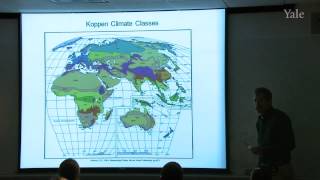
Seasons and Climate Classification - Lecture 18
Explore Earth's seasonal cycles, climate zones, and weather patterns. Learn about precipitation shifts, polar fronts, and climate classification systems in this comprehensive lecture.
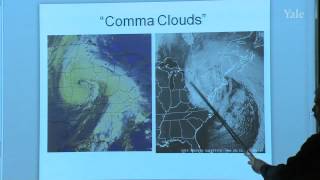
Mid-latitude Frontal Cyclones - Formation, Development, and Forecasting
Explore mid-latitude frontal cyclones, their formation, energy sources, and movement patterns. Learn about nor'easters and weather forecasting in this atmospheric science lecture.
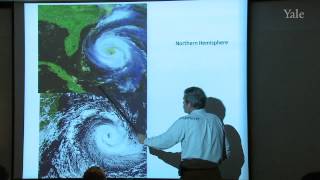
Coriolis Force and Storms - Atmospheric Dynamics and Weather Patterns
Explore atmospheric dynamics, pressure systems, and storm formation. Learn about geostrophic balance, Coriolis effects on hurricanes, and various types of storms including convective and severe thunderstorms.
Convective Storms: Types, Formation, and Characteristics - Lecture 15
Explore types of convective storms, their formation, and characteristics. Learn about airmass thunderstorms, severe storms, tornados, and hurricanes, including their energy sources and geographical limitations.

Water in the Atmosphere - Lapse Rates and Atmospheric Stability - Lecture 9
Explore atmospheric stability, lapse rates, inversions, and moisture. Learn how these factors influence weather patterns, pollution trapping, and air saturation processes.

Water in the Atmosphere - Cloud Formation and Types - Lecture 2
Explore atmospheric water vapor, cloud formation, types, and phenomena like vortices and haze. Learn about saturation vapor pressure, condensation, and cloud characteristics from space.
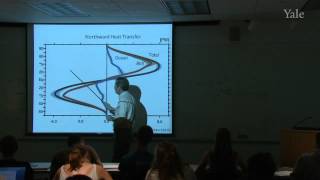
Circulation of the Atmosphere - Exam I Review
Explore Earth's atmospheric circulation, heat distribution, and energy balance. Learn about differential heating, poleward heat transport, and the effects of Earth's rotation on global air movement patterns.

Global Climate and the Coriolis Force - Lecture 13
Explore Earth's atmospheric circulation, Coriolis force, and geostrophic balance. Understand climate dynamics, cloud patterns, and the impact of Earth's rotation on global weather systems.

Introduction to Atmospheres - Earth's Climate System
Explore Earth's climate system through atmospheric and oceanic studies, with a focus on Hurricane Irene's impact and the fundamental nature of our atmosphere.