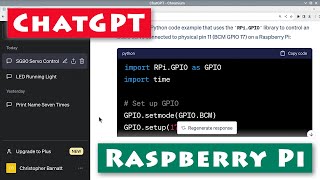
Using ChatGPT to Write Raspberry Pi Python Code
Explore using ChatGPT to generate and edit Python code for controlling LEDs, servos, and cameras on Raspberry Pi, demonstrating AI's potential in programming and hardware interaction.
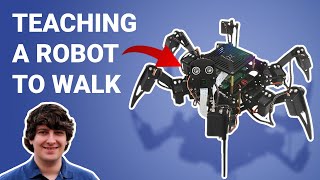
Machine Learning Explained - Teaching a Robot to Walk Tutorial
Comprehensive tutorial on machine learning concepts, from handwriting recognition to reinforcement learning, with practical demonstrations using neural networks and robot simulations.

Robotics - Self-Driving Cars
Explore the evolution of self-driving cars, from early automatic features to modern autonomous systems. Learn about key developments, challenges, and potential benefits of this revolutionary technology.
AI - What's Working, What's Not
Explore the current state of AI, its applications, and future potential. Gain insights into what's working, what's not, and how businesses can leverage AI technologies effectively.
Introducing GPT Auto Coder V.4
Explore the latest Auto Coder V.4, featuring autonomous and controlled modes, error mitigation, and practical applications like generating a Flappy Bird game and GPT chatbot web app.

Crafting Your Dockerfile for Robotics Projects - Docker Tutorial Part 3
Learn to craft effective Dockerfiles for robotics projects, covering user management, networking, GUI programs, and best practices for creating robust Docker images.
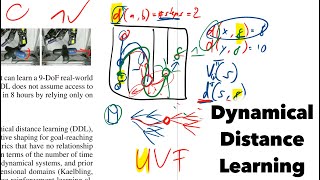
Dynamical Distance Learning for Semi-Supervised and Unsupervised Skill Discovery
Explore dynamical distance learning for reinforcement agents, enhancing policy learning through state distance estimation. Discover applications in semi-supervised and unsupervised skill acquisition.

Making Machines That See - Geometry, Uncertainty and Deep Learning
Explore computer vision advancements, from 3D object reconstruction to real-time deep learning systems incorporating geometry and uncertainty, with applications in robotics and mobile technology.
OpenAI Environments - Mike Rudd
Explore OpenAI environments, including robotics and retro games. Learn to build custom environments and understand reinforcement learning concepts like reward functions.
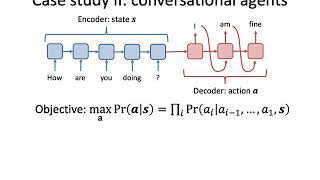
Imitation Learning
Explore imitation learning techniques, from behavioral cloning to generative adversarial methods, with applications in autonomous driving and conversational agents.

Safe and Ethical Priorities for AI
Exploring UK's role in responsible AI innovation, covering safety, ethics, governance, and practical applications like tactile robotics. Insights from experts on fostering trust and creating impactful AI solutions.
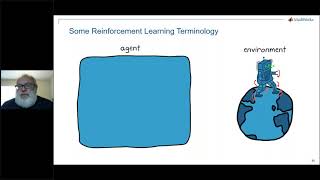
How to Train Your Robot - An Introduction to Reinforcement Learning
Explore reinforcement learning for robotics, covering key concepts, workflow, and practical applications. Learn to define environments, create agents, and deploy policies to hardware platforms.

Decoding Nonhuman Communication - Polylogues
Explore cutting-edge research on decoding nonhuman communication, from sperm whale vocalizations to plant acoustic responses, using machine learning and natural language processing techniques.
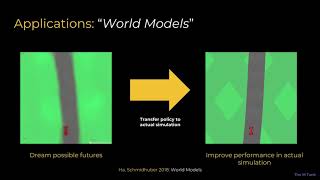
Introduction to Reinforcement Learning
Explore reinforcement learning's evolution, breakthroughs, and applications in AI, from board games to robotics. Gain insights into key concepts, formulations, and future directions in this rapidly advancing field.
This Embodied LLM is...
Explore Google's PaLM-E, an embodied multimodal LLM showing positive transfer across robotics tasks. Learn its workings, applications, results, and implications for AI advancement.
Generalization and Robustness in Offline Reinforcement Learning
Explore offline reinforcement learning for safety-critical applications, covering generalization, robustness, and imitation learning in large-scale settings with rich function approximation.
From Network Dissection to Policy Dissection - Emergent Concepts in Deep Representations
Explore emergent concepts in deep neural networks, from image classification to reinforcement learning, revealing inner workings and enabling meaningful human-AI interactions for content creation and robotics control.
The Role of Conventions in Adaptive Human-AI Interaction
Explores partner modeling in multi-agent coordination, focusing on representation learning, conventions, and strategies for reducing non-stationarity in decentralized systems.
2019 ADSI Summer Workshop- Algorithmic Foundations of Learning and Control, Vikash Kumar
Explore algorithmic foundations of learning and control in robotics, covering model-based approaches, skill dynamics, and real-world applications with Google Brain researcher Vikash Kumar.
Reinforcement Learning - Emma Brunskill - Stanford University
Explore reinforcement learning fundamentals, applications, and challenges with Stanford's Emma Brunskill, covering AI planning, machine learning, and decision-making processes.
Electron and Node.js to Think Differently About IoT
Explore IoT device integration using Electron and Node.js. Learn about security, UI offloading, and simplification techniques for creating effective and user-friendly connected devices.