
Glacial Mars and Its Morphological Mysteries
Explore Mars' glacial landscapes, recent ice history, and morphological mysteries. Dr. Frances Butcher discusses glaciation, meltwater, and intriguing features like eskers and inverted channels on the Red Planet.
Science on Tap: Secrets of Seagrass Part 2
Explore seagrass ecosystems, their importance, and challenges they face. Learn about different species, habitat restoration, and cutting-edge research techniques in marine conservation.
Carl Sagan Lecture Series - Introduction to Planetary and Earth Science
Explore planetary science through Carl Sagan's vision, covering NASA missions, Earth's atmosphere, climate change, and space exploration. Gain insights from a NASA scientist on Sagan's enduring influence.
AI Tools for Flood Assessment and Modeling
Explore cutting-edge AI tools for flood assessment and modeling, including rapid analysis of dam breaches, satellite imagery interpretation, and GIS plugins for efficient flood mapping and impact prediction.
Mapping the Flow of Ice Around the Globe - New Database for Tracking Global Ice Velocity
Scientists discuss a new database tracking global ice velocity using NASA/USGS Landsat satellites, providing insights into glacier melting, sea level rise, and seasonal changes in ice movement due to climate change.
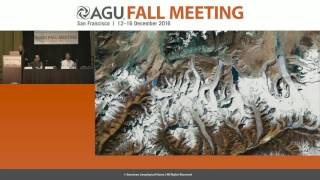
Attributing Mountain Glacier Retreat to Climate Change
New method for assessing glacier retreat and its link to climate change. Researchers present findings on individual glacier changes and their implications for freshwater sources and climate indicators.
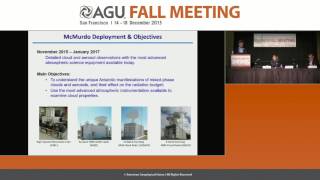
Comprehensive Meteorological Study of Antarctica - AWARE Project Overview
Comprehensive meteorological study of West Antarctica using advanced equipment to collect crucial data on climate change trends, cloud properties, and atmospheric conditions in this rapidly warming region.
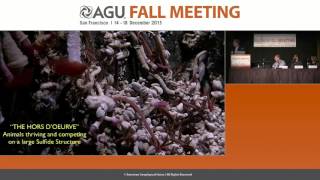
Real-Time Tracking of Underwater Volcanic Eruption at Axial Seamount - Discoveries and Insights
Scientists discuss real-time tracking of an underwater volcanic eruption, providing insights into submarine volcano-hydrothermal systems and showcasing the potential of remote monitoring in extreme deep-sea environments.
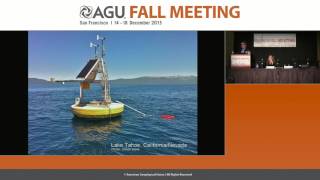
Changing Lake Temperatures on Six Continents - Global Study Findings
Global study reveals changing lake temperatures worldwide, discussing implications for freshwater supplies and ecosystems. Scientists present findings on warming rates, measurement methods, and impacts on wildlife and specific lakes.
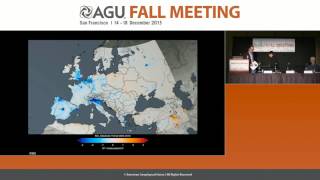
Global Air Quality - The Impacts of People and Cities
NASA scientists discuss a high-resolution global map of air quality, revealing how industrialization, economic activity, and civil unrest impact air pollution levels and their effects on human health and the environment from 2005 to 2014.
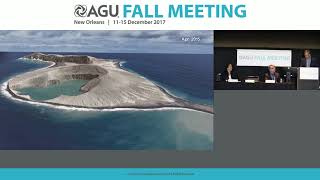
Evolution of a New Pacific Island - Satellite Observations and Insights
Satellite observations of a new Tongan island offer insights into island formation, longevity, and potential analogues for Mars features, providing unprecedented views of early island evolution.
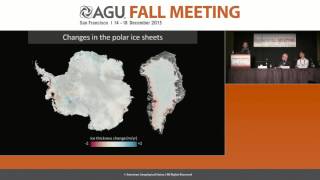
Measuring Polar Ice Sheets and Sea Level Rise - Latest Efforts
Experts discuss latest efforts to measure polar ice sheets, their impact on sea level rise, and challenges in providing accurate estimates using satellite and airborne surveys.
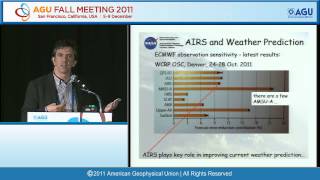
Earth Science Advances Following 10 Years of Aqua Observations - Part 2
Explore Earth science advancements from a decade of Aqua satellite observations, covering atmospheric, oceanic, and terrestrial discoveries at AGU's Fall Meeting 2011.
Surveillance of Volcanic Unrest - New Developments in Multidisciplinary Monitoring Methods
Explore cutting-edge multidisciplinary monitoring methods for detecting volcanic unrest, enhancing our ability to predict and mitigate potential eruptions.
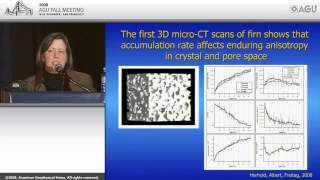
Polar Science in a Time of Rapid Change - Nye Lecture
Explore polar science advancements, ice sheet dynamics, and climate change impacts. Discover new technologies and research methods shaping our understanding of Earth's polar regions.
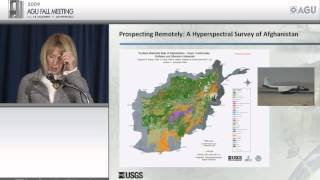
Frontiers of Geophysics - Advances in Earth Science Technologies
Explore cutting-edge geophysical technologies and their applications in earth sciences, from LiDAR to atmospheric rivers, with insights from USGS Director Marcia McNutt.
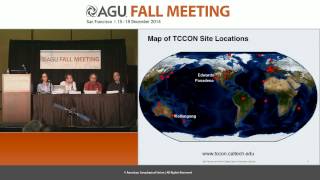
NASA's Orbiting Carbon Observatory Results - Fall Meeting 2014
Discover groundbreaking findings from NASA's Orbiting Carbon Observatory, revealing new insights into global carbon dioxide patterns and their impact on Earth's climate system.
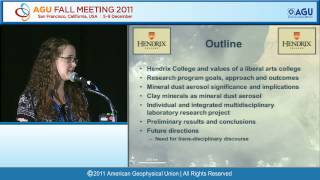
Atmospheric Dust - Interdisciplinary Studies II
Explore interdisciplinary studies on atmospheric dust, covering its impacts, sources, and interactions across various scientific domains. Gain insights into this crucial environmental factor.
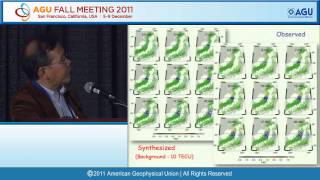
GPS Array as a Sensor of Lithosphere, Troposphere and Ionosphere
Explore how GPS arrays serve as powerful sensors for studying Earth's lithosphere, troposphere, and ionosphere in this insightful lecture by Kosuke Heki from Hokkaido University.
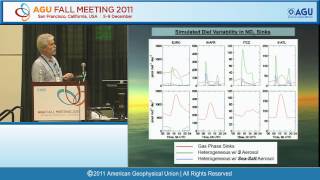
Atmospheric Sciences New Fellows Presentations - Part II
Explore cutting-edge atmospheric science research presented by newly elected AGU Fellows. Gain insights into the latest advancements and discoveries in the field.
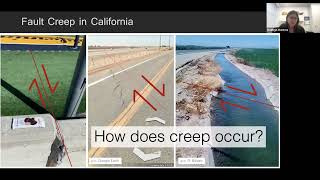
Along-strike Propagation of Shallow Creep Events from High-Resolution Space Geodetic Observations
Explore high-resolution space geodetic observations to understand the along-strike propagation of shallow creep events in fault systems, enhancing earthquake prediction capabilities.