The Sky Isn't the Limit - It's Just the Beginning
Explore space from your phone, capture stunning photos, and conduct experiments. Discover how accessible space technology can ignite new ideas and innovations for everyone.
Interpretation from Space: Salt Tectonics and Deposition in Iran Using Remote-Sensing Imagery
Explore salt tectonics and deposition in Iran through remote-sensing imagery, revealing unique geological structures and modern depositional systems as analogs for ancient formations.
Insights from GRACE Satellites on Global Water Resources
Explore GRACE satellite data's impact on global hydrology, revealing water storage changes, groundwater depletion, and climate-human interactions. Learn how this technology influences water policy worldwide.
La Ciencia del Cielo para Principiantes - ISS y Artemis
Explora los fundamentos científicos del regreso a la Luna, los avances del programa Artemis y las oportunidades para profundizar nuestra comprensión lunar con el Dr. José Hurtado, experto en geología y ciencias planetarias.
Reliable Object Detection and Identification in Adverse Conditions
Explore radar-based perception systems for autonomous vehicles, focusing on reliable object detection in adverse weather conditions and multi-sensor fusion techniques for enhanced safety.
Advance Deep Learning Workshop for Satellite Imagery - Model Export & Production
Hands-on workshop on advanced deep learning techniques for satellite imagery, covering remote debugging, model deployment, activation heatmaps, and custom predictions using TensorFlow and Keras.
Questions About Self Driving Cars
Comprehensive overview of autonomous vehicles, addressing 16 key questions on technology, business, insurance, and social implications. Explores future developments and potential impacts.
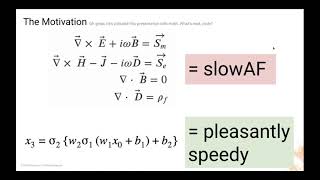
Inversion of 2D Remote Sensing Data to 3D Volumetric Models Using Deep Dimensionality Exchange
Innovative deep learning approach for inverting 2D remote sensing data to 3D models, reducing computation time from months to milliseconds. Explores unique embedding strategies and model architectures for efficient volumetric space reconstruction.
Driving with Attention
Explore innovative sensor fusion techniques for autonomous driving, focusing on TransFuser and NEAT models that leverage attention mechanisms to improve perception and decision-making in complex traffic scenarios.
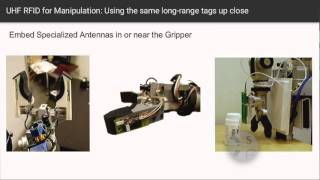
RFID-Enhanced Robots Enable New Applications
RFID-enhanced robots enable innovative applications in healthcare, asset tracking, and remote sensing, offering new possibilities for inventory management, object retrieval, and environmental monitoring.
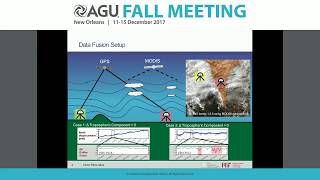
Recent Advances in Deep Learning and Data Analytics in Earth Sciences - 2017
Explore cutting-edge deep learning applications in geosciences, featuring talks from NASA, MIT, and other leading institutions on solving complex Earth and planetary challenges.
Targeting Humanitarian Aid with Machine Learning and Digital Data
Explore how machine learning and digital data can enhance humanitarian aid targeting in low-income countries, improving accuracy and addressing challenges in poverty assessment.

Autonomous Driving: Technology, Benefits, and Challenges
Explore self-driving car technology, including autonomy levels, sensors, AI systems, and their impact on transportation. Gain insights into cutting-edge research projects in autonomous driving.
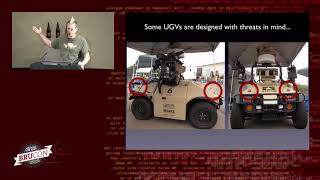
Hacking Driverless Vehicles
Exploring vulnerabilities in autonomous vehicles: sensors, decision profiles, and potential exploits. Insights into connected vehicle programs and their security implications for future transportation systems.
Empathy-Enabled Extended Reality
Explore empathy in Extended Reality: learn to incorporate contextualized empathy data into XR applications, improving user experience in healthcare and education domains through adaptive, two-way empathetic interactions.
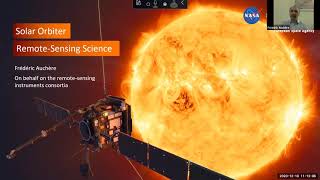
Solar Orbiter Science Begins
Solar Orbiter mission's initial findings: closest-ever Sun images, polar observations, 'campfires' discovery, and upcoming Venus flyby. Scientists discuss data collected and future plans for understanding solar activity.
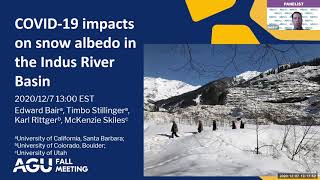
Impacts of COVID-19 on People and the Environment
Remote sensing data reveals covid-19's impacts on deforestation, pollution, inequality, urban light, and snow albedo. Scientists discuss emerging trends and nuanced effects on people and the environment.
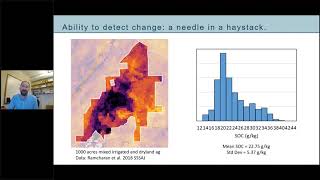
Measuring Soil C - Emerging Approaches
Explore emerging approaches for measuring soil carbon with experts from the Soil Health Institute and Woodwell Climate Research Center, focusing on widespread quantification and monitoring techniques.
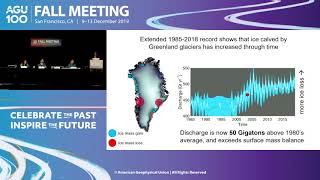
Ice in Motion - Decades of Satellite Images Illuminate Change
Satellite imagery reveals decades of ice changes, showcasing glacier retreat, Greenland melt, and Antarctic subsurface lakes. Experts discuss climate impacts on Earth's cryosphere using long-term observations.
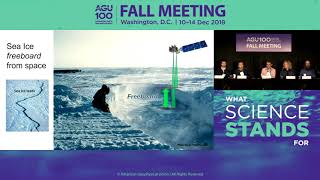
First Results from NASA’s New Ice-Measuring Space Laser
NASA scientists present groundbreaking data from ICESat-2, revealing detailed Earth surface features and ice measurements. This innovative space laser provides crucial insights for climate research and sea level predictions.
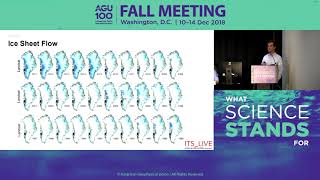
Changes in East Antarctic Glaciers
New findings reveal acceleration of East Antarctic glaciers near Totten Glacier over the past decade, challenging long-held stability assumptions and potentially impacting global sea levels. Causes and implications discussed.