Open Quantum Computing - One Atom at a Time
Explore ion-trap quantum computing: build qubits from atoms, simulate complex systems, and discover open-access hardware advancing research in this cutting-edge field.
Quantum Simulation of Lattice Gauge Theories with Qudit Systems
Explore quantum simulation of lattice gauge theories using qudit systems, focusing on advanced techniques and applications in quantum computing.

Simple Factorization and Other Properties of D-Dimensional Unitaries
Explore d-dimensional unitaries, their factorization properties, and average characteristics in quantum computing. Gain insights into constructing and analyzing higher-dimensional quantum transformations.
Kittens, Cats, Combs and Compasses - Superposing Coherent States
Explore superpositions of coherent states in quantum computing, communication, and sensing. Discover nuclear cat states on nuclear qudits.
Quantum Computation and Simulation with Qudits
Explore multilevel quantum systems using trapped Ca40 ions for enhanced quantum computation and efficient simulation of high-dimensional problems like spin systems and lattice gauge theories.
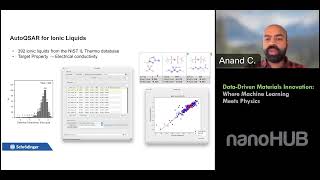
Data-Driven Materials Innovation: Where Machine Learning Meets Physics
Explore how machine learning and physics-based methods synergize to revolutionize materials science, addressing challenges in data-driven design across various technology fields with Schrödinger's innovative tools.
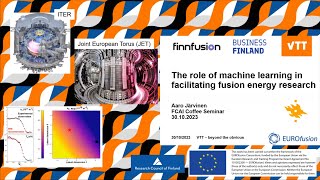
The Role of Machine Learning in Facilitating Fusion Energy Research
Explore machine learning applications in fusion energy research, including turbulence simulation speed-ups and predicting rare events. Gain insights into ML's potential to accelerate progress towards clean, abundant fusion energy.
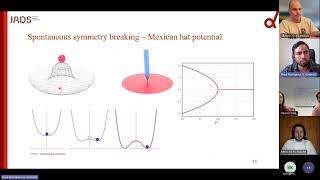
Spontaneous Symmetry Breaking in Generative Diffusion Models
Explore symmetry breaking in generative diffusion models, uncovering insights into their behavior and potential applications in AI and machine learning.

Physics-Informed Neural Networks in Medicine
Explore physics-informed neural networks' applications in medicine, focusing on innovative technologies combining data assimilation and machine learning.
Computational Physics in the Classroom
Explore three approaches to integrating computational physics in education, using modeling techniques to illustrate key principles and functions.
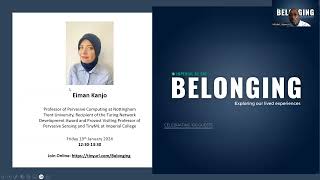
Beyond Limits: Making the Connection - Perspective, Resilience, and Personal Renewal
Explore personal growth, resilience, and overcoming challenges through Professor Kanjo's journey of self-discovery and professional development in engineering and computing.
Abdus Salam and the Fundamental Forces of Nature
Explore the legacy of Abdus Salam and his contributions to understanding fundamental forces, featuring insights from renowned physicists Prof. Dabholkar and Prof. Cox.
Measurement-Prepared Quantum Phases and Phase Transitions - From Ising Model to Gauge Theory
Explore measurement-prepared quantum phases, from Ising models to gauge theories. Discover symmetry breaking, long-range entanglement, and critical states in 2D and 3D systems.
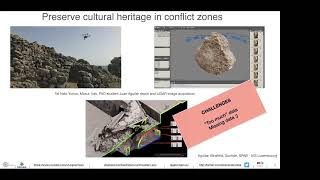
Digital Twins in Mechanics and Medicine - Data-Centric Engineering Webinar
Professor Stéphane Bordas explores digital twins in mechanics and medicine, highlighting data science applications for improving engineered systems' reliability, safety, and efficiency.
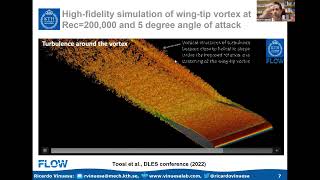
Modelling and Controlling Turbulent Flows through Deep Learning
Explore deep learning applications in modeling and controlling turbulent flows, from flow reconstruction to reinforcement learning for flow control, with insights on CNN architectures and transfer learning.
Time Integration of Tree Tensor Networks
Explore numerical methods for time-dependent quantum dynamics using tree tensor networks, focusing on efficient algorithms and error analysis for high-dimensional problems.
Open Source Industrial Control: Turning 2,800 Tons of Metal with Python and Flask
Discover how Python and Flask revolutionize hydropower generator maintenance, enhancing safety and efficiency in turning massive rotors with precision for the Bureau of Reclamation's operations.
Using a Photoresistor in Arduino Projects - Lesson 33
Learn to incorporate a light sensor into Arduino projects using a photoresistor. Explore the physics behind photoresistors and build practical circuits for light-sensitive applications.
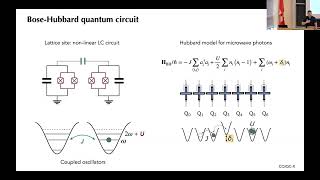
Assembling and Controlling Photonic Quantum Matter - Solids, Fluids and Cats
Explore cutting-edge research on photonic quantum matter, including solids, fluids, and cat states, with insights into assembly and control techniques.
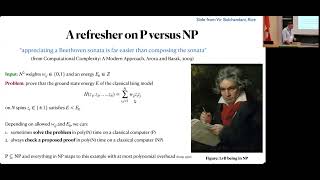
Complex Quantum Matter and the Boundaries Between Classical and Quantum Computers
Explore quantum matter complexities and the evolving interface between classical and quantum computing paradigms in this cutting-edge Fields Institute presentation.
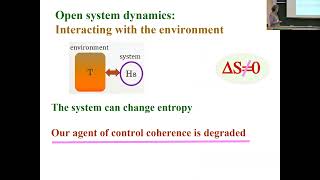
Quantum Control of Open Systems - Entropy Changing and Entropy Preserving Maps
Explore entropy-changing and entropy-preserving maps in quantum control of open systems, advancing understanding of quantum information and control techniques.