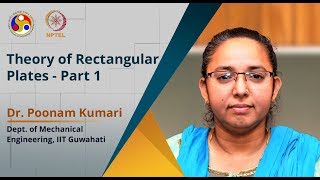
Theory of Rectangular Plates - Part 1
Explore solid mechanics, energy principles, and plate theories. Learn governing equations, solution methods, and practical applications using MATLAB and ABAQUS.
Thermodynamics - Classical to Statistical
Comprehensive exploration of thermodynamics, from classical concepts to statistical mechanics, covering fundamental principles, applications, and advanced problem-solving techniques.
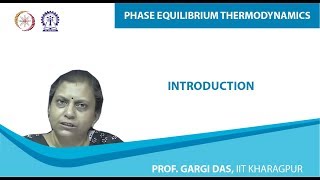
Phase Equilibrium Thermodynamics
Explore thermodynamic principles, phase equilibria, and solution behavior. Learn about laws, entropy, Gibbs energy, P-v-T relationships, chemical potential, fugacity, and ideal/non-ideal solutions.
Computational Fluid Dynamics for Incompressible Flows
Explore incompressible flow dynamics through finite difference and volume methods. Master equations, boundary conditions, and numerical techniques for solving fluid dynamics problems.
Introduction to Statistical Mechanics
This is an introductory course in classical and quantum statistical mechanics which deals with the principle of ensembles, Classical, Fermi and Bose ideal gases, Pauli paramagnestim, Debye and Einstein’s theory of specific heat and the 1D Ising model.
Experimental Physics - II
Comprehensive exploration of advanced experimental physics concepts, including optics, interference, diffraction, polarization, and quantum phenomena, with practical applications and hands-on experiments.
Phase Equilibrium Thermodynamics
Explore phase equilibrium thermodynamics, covering laws, entropy, spontaneity, Gibbs free energy, P-v-T behavior, chemical potential, and fugacity in various systems.
Introduction to Classical Mechanics
This introductory course on Classical Mechanics covers the following topics: Euler Lagrange Equations, Small Oscillations, Central Force Problem, Rigid Body Motion.
Electronic Theory of Solids
Comprehensive exploration of solid-state physics, covering electron behavior, quantum mechanics, band theory, magnetism, and superconductivity, with applications in modern technology.
Nuclear Reactors and Safety - An Introduction
This course is expected to provide information to the graduate and post-graduate students undergoing courses in nuclear engineering in IITs and other Universities on all aspects of nuclear safety.
High Speed Aero Dynamics
Comprehensive exploration of high-speed aerodynamics, covering thermodynamics, gas dynamics, waves, supersonic flow, shock theory, and advanced topics like linearized problems and similarity rules.
Thermodynamics
Explore fundamental concepts, laws, and applications of thermodynamics, including system properties, energy conservation, and practical devices like heat exchangers and turbines.
Fashion, Faith, and Fantasy - Roger Penrose
Renowned physicist Roger Penrose explores how fashion, faith, and fantasy influence modern physics, examining string theory, quantum mechanics, and cosmology while reflecting on their role in his own work.

What We Cannot Know - Marcus du Sautoy
Explore the limits of scientific knowledge with Marcus du Sautoy as he delves into fundamental questions about the universe, consciousness, and the boundaries of human understanding.
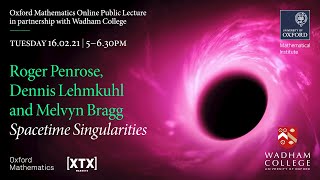
Spacetime Singularities - Roger Penrose, Dennis Lehmkuhl and Melvyn Bragg
Explore black holes with Nobel Laureate Roger Penrose, discussing their discovery, mathematical foundations, and impact on physics. Delve into relativity, spacetime, and the groundbreaking 1965 theorem.
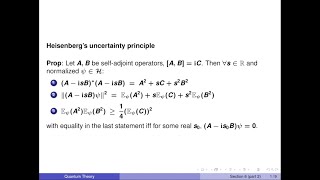
Quantum Theory - The Heisenberg Uncertainty Principle: Oxford Mathematics 2nd Year Student Lecture
Explore the Heisenberg Uncertainty Principle in quantum theory, its mathematical proof, and physical implications for measuring particle position and momentum.
Waves and Resonance
Explore waves and resonance through musical instruments, vacuum cleaners, and invisibility cloaks. Discover the fascinating mathematics behind sound and light manipulation.

The Universe Speaks in Numbers
Explore the 350-year relationship between Mathematics and Physics, its historical significance, and future prospects in this engaging Oxford Mathematics Public Lecture.
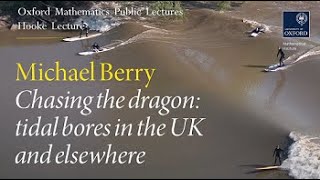
Chasing the Dragon - Tidal Bores in the UK and Elsewhere
Explore tidal bores through physics, mathematics, and cultural perspectives. Discover analogies with tsunamis, rainbows, and quantum concepts in this insightful lecture by Michael Berry.
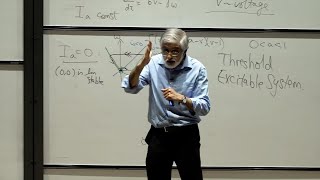
Mathematical Modelling in Biology - Neuronal Signalling
Explore Nobel Prize-winning neuronal signalling models, including Hodgkin-Huxley and Fitzhugh-Nagumo, to understand how neurons generate and propagate electrical signals vital for bodily communication.
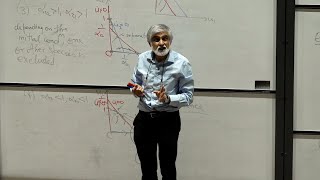
Mathematical Modelling in Biology - Enzyme Kinetics and Perturbation Theory - Lecture 2
Explore enzyme-substrate reactions using separation of timescales and perturbation analysis to derive solutions and simplify complex biological systems.