Engineering Mechanics
This is a basic first-level course to learn rigid body mechanics covering both statics and dynamics. Statics covers free body diagrams, equilibrium of rigid bodies, analysis of trusses and beams, discussion on friction, virtual work and stability.

Electromagnetic Theory
Comprehensive exploration of electromagnetic theory, covering fields, potentials, Maxwell's equations, waves, and applications in waveguides and radiation. Ideal for advanced physics students.
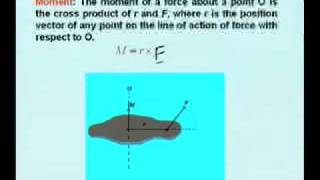
Engineering Mechanics
Comprehensive exploration of engineering mechanics, covering equilibrium, forces, friction, kinematics, kinetics, and vibrations. Develops analytical skills for solving complex mechanical systems.
Classical Mechanics - From Newtonian to Lagrangian Formulation
This course deals with the fundamentals of classical mechanics. Mechanics is one of the core subjects for physics and engineering disciplines. This course starts from the basics of Newtonian mechanics.

Advanced Metallurgical Thermodynamics
In this course, you will learn, First, second and third laws of thermodynamics, Maxwell's relations, Clausius-Clapeyron equation, Equilibrium Concepts, Thermodynamics of Phase Transformations etc.

Fundamentals of Semiconductor Devices
Explore semiconductor physics, device structures, and operational principles. Covers energy bands, carrier dynamics, p-n junctions, transistors, and advanced topics like heterojunctions and compound semiconductors.
Advanced Gas Dynamics
The course concentrates primarily on the understanding of the physical concepts of compressible flow and keeps a reference to various numerical methods for solving the governing equations to a minimum.
Concepts of Thermodynamics
Comprehensive exploration of thermodynamic principles, covering properties, laws, processes, and cycles. Includes problem-solving techniques and computer-aided analysis for practical applications.
Mechanics, Heat, Oscillations and Waves
Comprehensive exploration of fundamental physics concepts, covering mechanics, thermodynamics, and wave phenomena. Gain a solid foundation in essential principles and their applications.
Mechanics, Heat, Oscillations and Waves
Comprehensive exploration of fundamental physics concepts, covering mechanics, thermodynamics, and wave phenomena. Gain a solid foundation in essential principles and their applications.
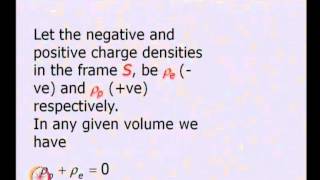
Special Theory of Relativity
Explore Einstein's Special Theory of Relativity, covering key concepts like Lorentz transformations, time dilation, length contraction, and relativistic mechanics, with applications in electromagnetism and particle physics.
Materials Characterization
Comprehensive exploration of materials characterization techniques, covering optical and electron microscopy, X-ray diffraction, and transmission electron microscopy, with hands-on demonstrations and practical applications.

Computational Fluid Dynamics
Comprehensive exploration of computational fluid dynamics, covering mathematical foundations, discretization methods, and numerical techniques for solving fluid flow problems.

Special Theory of Relativity
In this course we will explore and explain many of the (often) counter-intuitive but fundamental principles of the Special Theory.

Probability and Stochastics for Finance
This course provides the minimum mathematical requirements to study mathematical finance or more precisely the pricing of financial derivatives.

Engineering Mechanics
In this course, we would be studying mechanical interaction between different bodies when they interact through the forces applied on each other. This would consist of 2 parts: statics and dynamics.
Engineering Mechanics
In this course, we would be studying mechanical interaction between different bodies when they interact through the forces applied on each other. This would consist of 2 parts: statics and dynamics.

Computational Fluid Dynamics
This course looks at all the aspects theoretical, numerical, and application aspects of computational fluid dynamics. Computational fluid dynamics (CFD) has become an essential tool in the analysis and design of thermal and fluid flow systems in a wide r…
Laws of Thermodynamics
Explore fundamental thermodynamic principles, including system properties, heat, work, and the laws governing energy transfer and transformation in closed and open systems.
Atomic and Molecular Physics
This course will enlighten the knowledge of atoms and molecules and build up the pre-requisite knowledge for all science and engineering fields. Atom and molecule are the fundamental units for all matters in universe. Matter, whatever the states, is made…

Computational Fluid Dynamics
The course deals with the numerical solution of equations governing fluid flow and would be of interest to engineers and scientists. The course deals with the basic techniques that enable the numerical solution of these equations.