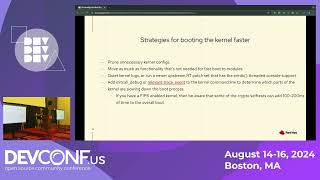
Accelerating Linux Boot Time: Techniques and Strategies for Optimal Performance - Lecture
Explore strategies to accelerate Linux boot time, from measuring performance to optimizing systemd, kernel, and filesystem configurations. Gain comprehensive understanding of achieving faster boot times.
MDSPAN - A Deep Dive Spanning C++, Kokkos and SYCL - Lecture 2022
Explore MDSPAN's evolution, C++ standardization, and future in SYCL. Gain insights into multidimensional array references and their impact on distributed and high-performance computing.
Fast C++ Using SIMD Types with Generic Lambdas and Filters - Lecture
Optimize C++ performance using SIMD types, generic lambdas, and filters. Learn to generate high-performance code competitive with standard libraries, exploring vectorization techniques and branching strategies.
Architecting Multithreaded Robotics Applications in C++ - CppCon 2022
Explore multithreaded robotics application architecture in C++. Learn to design, implement, and evaluate solutions for efficient parallel execution in robotics engineering.
Thinking Functionally in C++ - Applying Functional Programming Concepts
Explore functional programming techniques in C++, enhancing code performance, reusability, and security. Learn to apply functional thinking to existing codebases using views, lambdas, and ranges.
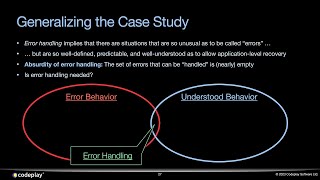
The Absurdity of Error Handling: Finding a Purpose for Errors in Safety-Critical SYCL
Explore error handling challenges in safety-critical SYCL, examining the concept of safety and rethinking error scenarios in C++ software development for critical systems.
Optimizing Code on Arm: VectorCamp's Approach to SVE and SVE2 Intrinsics
Explore VectorCamp's optimization techniques for SVE and SVE2 intrinsics, enhancing code performance on Arm architecture.

Hardware and its Concurrency Habits - Kernel Recipes 2023
Explore hardware structure, physics limitations, and synchronization mechanisms in modern computer systems for improved concurrent software design.

Very Few Parameter Fine-Tuning with ReFT and LoRA
Explore advanced fine-tuning techniques ReFT and LoRA for efficient parameter optimization in transformer models. Learn implementation, comparison, and practical tips for improved model performance.
Hugging Face and Ray AIR Integration for Scalable Machine Learning
Explore Hugging Face and Ray AIR integration for scalable model training and data loading. Learn to create end-to-end workflows from data ingest to inference and serving.
Enabling End-to-End LLMOps on Michelangelo with Ray
Explore Uber's extension of Michelangelo for end-to-end LLMOps, leveraging Ray for scalable development with hundreds of A100 GPUs and integrating open-source techniques for efficient custom LLM creation.
FastIce.jl: A Massively Parallel Ice Flow Model Running on GPUs
Explore FastIce.jl, a Julia-based ice flow model for GPUs. Learn about its modular architecture, performance on supercomputers, and applications in efficient large-scale ice sheet modeling.
Scalable and Flexible Distributed Reinforcement Learning Systems
Explore scalable distributed reinforcement learning systems, focusing on flexible training loops, statement management, and GPU allocation. Gain insights into building efficient RLHF systems for large-scale applications.
Automating Distributed Heterogeneous Computing for Domain Experts
Explore new approaches for enabling domain experts to program future HPC systems efficiently, focusing on compiler and runtime techniques for distributed heterogeneous computing.
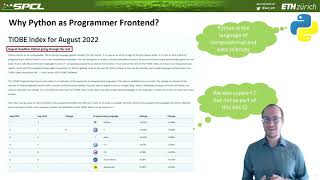
Portable High-Performance Python on CPUs, GPUs, and FPGAs
Optimize Python for high performance on CPUs, GPUs, and FPGAs. Learn HPC-oriented extensions, automatic optimizations, and portable performance techniques across architectures.
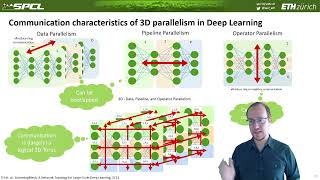
Post-Moore Spatial Computing: From Chips to Clusters
Explore spatial computing strategies for post-Moore's Law era, addressing challenges in scaling compute power from chips to clusters for AI and high-performance computing.
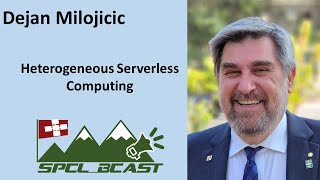
Heterogeneous Serverless Computing for High-Performance Computing and AI Workloads
Explore heterogeneous serverless computing for efficient HPC, HPDA, and AI workloads. Learn about innovative accelerator uses and flexible deployment models from edge to exascale.
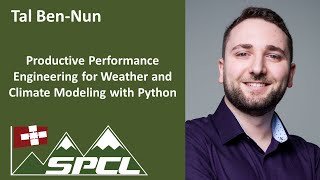
Productive Performance Engineering for Weather and Climate Modeling with Python
Optimize weather and climate models using Python-embedded DSL and data-centric techniques. Improve productivity and performance through abstraction, semi-automated workflows, and transfer tuning for efficient scaling on supercomputers.
Efficient AI: From Supercomputers to Smartphones
Explore techniques for efficient AI training and inference, from data ingestion to model compression, enabling powerful models on supercomputers and smartphones.
HPC and AI/ML: A Synergistic Relationship
Explore synergies between HPC and AI/ML, focusing on scalable algorithms, efficient resource use, and data-driven models for performance optimization in large-scale computing environments.
Deinsum: Practically I/O Optimal Multi-Linear Algebra for Distributed Systems
Optimize distributed multilinear algebra computations with Deinsum framework. Automate data movement-optimal tiling and scheduling for enhanced performance in high-dimensional tensor operations.