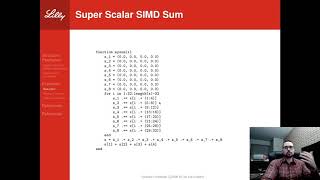
Loop Analysis and Vectorization in Julia - JuliaCon 2020
Explore LoopVectorization.jl for efficient loop representation, cost modeling, and vectorization strategies in Julia, enhancing performance through intra-core parallelism and SIMD operations.
Multi-threading in Julia with PARTR - JuliaCon 2019
Explore multi-threading in Julia with PARTR, covering old and new features, future developments, and practical examples. Includes performance comparisons and Q&A on threading models and implementation details.
Shared Memory Parallelism in Julia with Multi-Threading - Parallel Depth-First Scheduling
Explore efficient shared memory parallelism in Julia using multi-threading, focusing on nested parallelism and the parallel depth-first scheduling approach for improved performance.
How Does Enterprise Accelerate Test and Release Velocity - LambdaTest Webinar
Discover strategies to accelerate test execution and release velocity in enterprise environments. Learn about automation testing best practices, DevOps tools, and actionable techniques to improve software delivery speed.

JavaScript Test Automation Complete Tutorial - Selenium WebDriver With JavaScript
Comprehensive tutorial on JavaScript test automation with Selenium WebDriver, covering setup, assertions, parallel testing, reporting, cloud execution, headless testing, and parameterization.
K-Means Clustering - Theory, Algorithm, Implementation, Scaling
Comprehensive exploration of k-means clustering, covering theory, implementation, and scaling techniques. Includes hands-on demonstrations and practical applications using cloud computing resources.
Distributed TensorFlow Training - Google I/O 2018
Learn to scale TensorFlow training across multiple GPUs and machines efficiently. Explore distribution strategies, performance optimization techniques, and practical implementation using Google Cloud.
Evolving Ray Core - Scalability, Reliability, and Compiled Graphs
Discover the latest advancements in Ray Core's architecture, including streaming generators, weekly releases, and the new Compiled Graphs backend for enhanced performance in accelerator-driven computing environments.
The Evolution of Multi-GPU Inference in vLLM
Dive into advanced parallelism strategies for distributed LLM inference, exploring tensor, pipeline, and expert parallelism techniques through vLLM's architecture and optimization approaches.
SeismicWaves.jl - Wave Simulation Package for Full Waveform Inversion on Multi-xPUs
Discover how SeismicWaves.jl enables efficient wave equation solving through finite-difference methods, offering high-performance computing capabilities for both small-scale prototyping and large-scale simulations.
Improving the Life-Cycle of Tensor Algorithm Development with ITensors
Explore advanced tensor algorithm development in Julia, focusing on generic programming strategies for efficient computation across CPU, GPU, and QPU architectures using the ITensors framework.
Seamless Transition from Single-core Python to Julia Multi-GPU
Discover how to transform single-core Python code into scalable Julia applications for GPU supercomputers, with focus on automatic verification and parallel computing optimization.
爬虫基础教学 Python Scraping 教程
从网页结构到高效爬虫库,全面学习Python网络爬虫技术。掌握BeautifulSoup、Requests、多进程、异步加载、Selenium和Scrapy等工具,实现高效数据采集。

CUDA Explained Five Minutes
Comprehensive overview of CUDA architecture, parallel computing, and programming model, covering key concepts and applications in an accessible Hindi-language format.
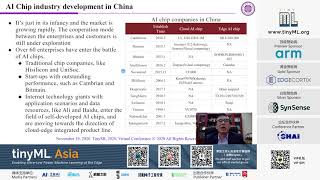
The Road to Innovation for AI Chips in China
Explore China's AI chip innovation landscape, including market growth, startups, academic advancements, and emerging technologies like reconfigurable computing and neuromorphic chips.
ML Training Acceleration with Heterogeneous Resources in ByteDance
探讨如何利用字节跳动的异构计算资源加速机器学习模型训练,包括GPU共享机制、NUMA亲和性资源分配和RDMA网络通信等技术。
Practice of Building AI Training Clusters Based on Kubernetes and RoCEv2
探讨基于Kubernetes和RoCEv2构建AI训练集群的实践,包括网络集成、资源调度和任务优化等方面的挑战与解决方案,助力提升AI训练效率。
Boost ML on Heterogeneous AI Accelerators with Ray on Kubernetes
探讨如何在Kubernetes上利用Ray和图编译器自动提升异构AI加速器的机器学习性能,无需修改用户代码,实现透明的后端加速。
Unlocking Heterogeneous AI Infrastructure K8s Cluster: Leveraging the Power of HAMi
Explore HAMi project for managing diverse AI devices in K8s clusters. Learn unified scheduling, GPU sharing, flexible policies, and real-world case studies to optimize heterogeneous AI infrastructure.
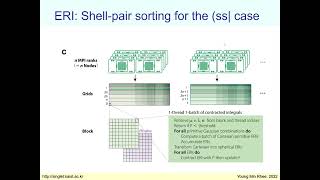
DFT on Expensive GPU-based Supercomputer
Explore advanced density functional theory computations using high-performance GPU supercomputers for cutting-edge quantum chemistry research.
VeScale - A PyTorch Native LLM Training Framework for Automatic Parallelism
探索PyTorch原生框架veScale,实现大规模语言模型的自动并行训练。结合易用性和性能,助力开发者高效扩展LLM训练,无需复杂并行编程。