From Idea to Production: AI Infrastructure for Scaling LLM Applications
Explore strategies for scaling LLM applications from beta to production, addressing challenges and building adaptable AI infrastructure for evolving models and workflows.
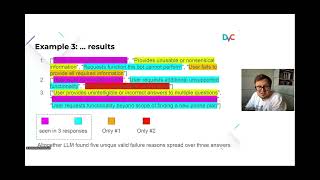
Data Versioning in Generative AI - A Pathway to Cost-effective Machine Learning
Explore data versioning strategies for generative AI, focusing on cost-effective techniques to minimize processing time and API calls while enhancing collaboration and efficient versioning of annotations and embeddings.
Running ML Inference Services in Shared Hosting Environments
Optimize ML inference in shared hosting: Learn to boost latency, throughput, and resource utilization through queue management and OpenMP tuning.
Scale and Accelerate Distributed Model Training in Kubernetes Clusters
Orchestrate and accelerate distributed deep learning workloads across multiple GPUs and nodes using Kubernetes, Kubeflow PytorchJob, RDMA, RoCE, and SRIOV for near-linear performance scaling.
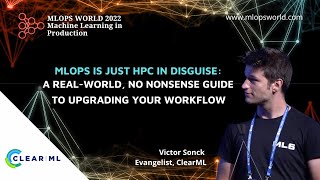
MLOps is Just HPC in Disguise - A Real-World, No-Nonsense Guide to Upgrading Your Workflow
Upgrade your ML workflow with efficient tools and techniques for automating tasks, managing resources, and streamlining production deployment in this practical guide to MLOps.
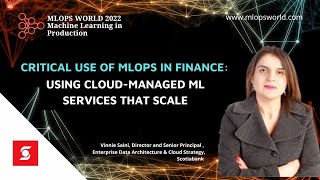
Critical Use of MLOps in Finance Using Cloud-Managed ML Services That Scale
Leverage MLOps to improve quality and consistency of machine learning solutions in finance. Accelerate model experimentation, deployment, and tracking using cloud-managed services for efficient scaling.
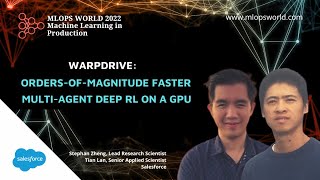
WarpDrive: Orders of Magnitude Faster Multi-Agent Deep Reinforcement Learning on a GPU
Accelerate multi-agent deep reinforcement learning with WarpDrive, an open-source framework enabling end-to-end GPU execution. Explore features like automatic GPU tuning and distributed training for improved efficiency and scalability.
Best Practices in HPC and HTC Environments
Discover best practices for optimizing performance in High Performance and High Throughput Computing environments.
Faster Model Serving with Ray and Anyscale - Ray Summit 2024
Explore Ray Serve's capabilities for distributed model serving and deployment, focusing on Anyscale's solutions for large-scale AI models and the challenges of building AI applications in the era of generative AI.

Unlock the Power of Parallel Computing With SWAR (SIMD Within A Register)
Unlock parallel computing power with SWAR technique. Explore SIMD-like operations using conventional CPU registers, boosting performance for hash tables, string functions, and more. Dive into benchmarks and real-world applications.
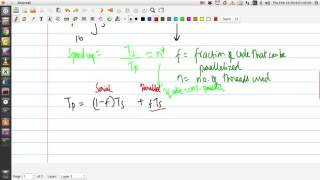
Fortran with OpenMP
Learn parallel programming in Fortran using OpenMP. Master threads, clauses, work sharing, and optimization techniques for high-performance computing applications.

CUDA
Comprehensive introduction to CUDA programming, covering architecture, memory, terminologies, and practical implementations for vector and matrix operations on GPUs.

CUDA Tutorials
Learn to program NVIDIA GPUs with CUDA, covering basics, kernels, memory, parallel algorithms, shared memory, and the Thrust library for efficient GPU computing.
Multiprocessing
Learn Python multiprocessing concepts including locks, logging, pools, and process communication for efficient parallel programming.

Computer Vision and OpenCV Tutorial in C++
Learn computer vision and OpenCV in C++, covering installation, image processing, object detection, depth estimation, and GPU acceleration. Gain practical skills for real-world applications.
OpenCV DNN
Learn to deploy neural networks for object detection, depth estimation, and point cloud creation using OpenCV DNN module with Python and C++. Explore GPU acceleration and custom YOLOv5 models.

Pytorch Tutorial
Learn PyTorch fundamentals, from installation to advanced applications. Master tensors, backpropagation, and deep learning techniques for real-world data science projects.

Julia for High-Performance Computing - JuliaCon 2022
Explore Julia's capabilities for high-performance computing through expert talks on scalability, GPU support, MPI integration, and real-world applications in scientific and engineering domains.

Easy and Featureful Parallelism with Dagger.jl - JuliaCon 2021
Explore advanced parallelism in Julia with Dagger.jl, offering GPU execution, fault tolerance, and efficient resource utilization. Learn through practical examples and discover its powerful features.

Julia: Great Language or the Greatest Language - Keynote by Jan Vitek
Keynote explores Julia's design, implementation, and performance, covering subtyping algorithms, type stability, and JIT compilation. Insights into language evolution and scientific programming revolution.
GPU Programming in Julia - Workshop
Comprehensive workshop on GPU programming in Julia, covering CUDA, AMDGPU, and oneAPI packages. Explores array operations, kernel programming, profiling, and real-world applications across different GPU architectures.