GPU-Accelerated Data Analytics in Python
Explore GPU-accelerated data analytics using RAPIDS libraries in Python. Learn ETL, machine learning, graph analytics, and more with familiar APIs for faster computation and model iteration.
Practical Deep Learning for Data Scientists
Hands-on PyTorch and GPU Deep Learning tutorial for data scientists. Build common architectures, evaluate performance, and leverage compute resources effectively. Ideal for those with ML basics seeking practical DL experience.

Python Meets Heterogeneous Computing - An Exploration of Distributed Computations
Exploring distributed computations in Python across diverse hardware, addressing challenges and strategies for optimal performance in heterogeneous computing environments.

Exploit Your GPU Power with PyCUDA and Friends
Harness GPU capabilities using PyCUDA for high-performance computing in Python, exploring techniques to accelerate data processing and scientific calculations.
Sfrutta la potenza della GPU con PyCUDA (e compagni)
Scopri come sfruttare la potenza delle GPU per l'elaborazione parallela utilizzando PyCUDA e altre librerie Python, accelerando significativamente le prestazioni computazionali.

Exploit Your GPU Power with PyCUDA - and Friends
Harness GPU power for scientific computing using PyCUDA. Learn CUDA programming model, memory spaces, and practical applications in Python for high-performance computing tasks.

Writing a Parallel and Distributed Tool for Backing Up a Multi Terabyte Data
Learn to create a parallel and distributed backup tool for handling multi-terabyte datasets, exploring efficient strategies for large-scale data management and protection.
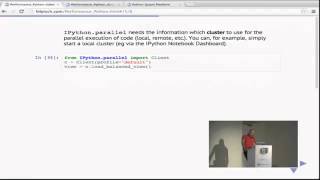
Performance Python for Numerical Algorithms
Explore techniques for optimizing numerical algorithms in Python, including vectorization, multi-threading, parallelization, and dynamic compiling. Practical examples using NumPy, Numba, and other libraries.
Parallelism Shootout - Threads vs Asyncio vs Multiple Processes
Explore threading, multiprocessing, and asyncio for efficient parallel data downloading. Compare mechanics and performance of each approach for handling numerous URLs.

Python Multithreading and Multiprocessing - Concurrency and Parallelism
Explore Python's threading and multiprocessing packages for concurrent and parallel programming. Learn best practices, overcome common issues, and master key concepts for efficient development.

Asynchronous Network Requests in a Web Application
Explore techniques for implementing asynchronous network requests in web applications, including Twisted event loops, coroutines, and asyncio, and their compatibility with WSGI server parallelization models.

Implementing Parallel Programming Design Patterns Using EFL for Python
Explore parallel programming in Python using EFL, a deterministic tool for multi-core CPUs. Learn design patterns, compare code translations, and discover efficient parallelization techniques.

Deep Learning with Python & TensorFlow
Explore deep learning with TensorFlow: compare Python ML libraries, create data flow graphs, and learn deployment strategies for production systems.
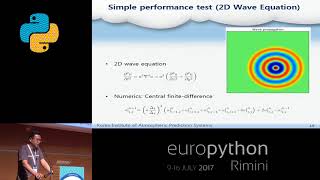
GPU Acceleration of a Global Atmospheric Model Using Python Based Multi-Platform
Explore GPU acceleration for global atmospheric models using PyMIP, a Python module integrating C, Fortran, CUDA, and OpenCL. Learn about performance improvements and multi-platform compatibility for weather forecasting and climate prediction.
Scripting Across Hosts with Chopsticks
Explore Chopsticks, a Python tool for remote code execution over SSH, enabling parallel processing across hosts without deployment. Learn its API, clever tricks, and versatile applications.
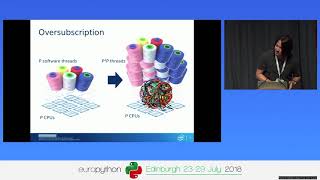
Addressing Multithreading and Multiprocessing in Transparent and Pythonic Ways
Explore advanced Python techniques for efficient multithreading and multiprocessing, including GIL management, static multiprocessing, and thread pool control for optimal performance on multi-core systems.
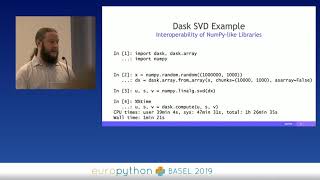
Distributed Multi-GPU Computing with Dask, CuPy and RAPIDS
Explore distributed multi-GPU computing using Dask, CuPy, and RAPIDS. Learn to leverage GPU acceleration and distributed systems for faster, more efficient data processing and analysis.
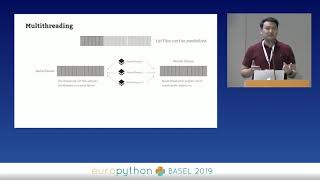
Downloading a Billion Files in Python
Explore efficient techniques for downloading massive file sets using Python, comparing multithreading, multiprocessing, and asyncio approaches with best practices and performance insights.
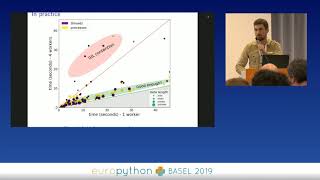
Parallel Computing in Python - Current State and Recent Advances
Explore Python's parallel computing landscape, from low-level interfaces to high-level libraries, and learn about recent advances in shared memory management and object serialization.
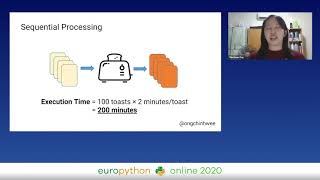
Speed Up Your Data Processing
Explore parallel and asynchronous programming techniques to optimize data processing pipelines, enhancing efficiency in data science workflows and overcoming common bottlenecks.
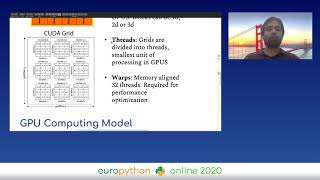
Writing Extensions and Bindings for GPU Made Easy
Learn to optimize deep learning computations by writing custom C and CUDA extensions for GPU, with a focus on image search across billions of items and seamless integration with Python codebases.