GPU Ray Tracing Techniques and Optimization - SIGGRAPH 2011
Explore cutting-edge GPU ray tracing techniques, including OptiX engine, iray, and custom renderers. Learn optimal hardware configurations and programming approaches for fastest results.
Lessons and Outlook for ML Parameterization of Sub Grid Atmospheric Physics From the Vantage of Emulating Cloud Superparameterization - Mike Pritchard
Exploring machine learning for atmospheric physics parameterization, focusing on cloud superparameterization emulation. Discusses challenges, strategies, and lessons learned in applying ML to climate modeling.
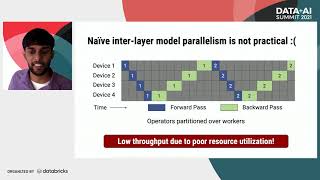
Efficient Large-Scale Language Model Training on GPU Clusters
Explores advanced techniques for efficient large-scale language model training on GPU clusters, discussing parallelism methods, novel scheduling, and performance optimization to achieve unprecedented model sizes and training speeds.
Kubernetes as a Substrate for ATLAS Compute
Exploring Kubernetes' potential for ATLAS experiment computing, including batch processing, GPU resource management, and interactive analysis clusters for high-energy physics research.
Kubernetes Batch Processing at Scale - A Scheduling Perspective
Explore Kubernetes batch processing challenges and solutions, including custom scheduling for large-scale operations, Gang Scheduling, DRF, and workload colocation for improved resource utilization.
Kubernetes for GPU-Powered Machine Learning Workloads in Academia - Lecture
Optimizing Kubernetes for GPU-powered machine learning in academia: architecture, challenges, and successes with NVIDIA DGX A100 machines, open-source integration, and research applications.
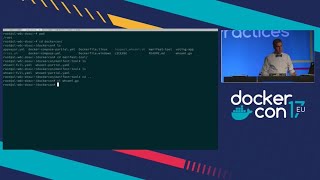
Docker Multi-arch: Extending to Windows, ARM, and IBM Platforms
Explore Docker's extension to Windows, ARM, and IBM platforms, covering multi-architecture images, heterogeneous swarms, and cross-platform deployment strategies.
Introducing Chapel: A Programming Language for Productive Parallel Computing from Laptops to Supercomputers
Explore Chapel, a programming language for efficient parallel computing across devices. Learn key features and applications in aerodynamics, data science, and atmospheric research.
Dynamic Graphs on the GPU
Explore GPU-accelerated techniques for dynamic graph algorithms, focusing on efficient data structures and parallel processing for real-time graph updates and analysis.
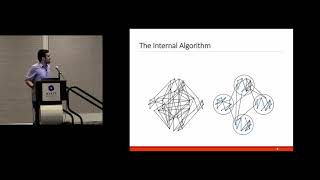
Exponentially Faster Massively Parallel Maximal Matching
Discover advanced techniques for optimizing parallel maximal matching algorithms, enhancing efficiency and scalability in large-scale data processing.
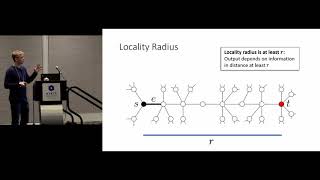
Conditional Hardness Results for Massively Parallel Computation from Distributed Lower Bounds
Explore conditional hardness results in massively parallel computation, derived from distributed lower bounds. Gain insights into theoretical computer science and parallel algorithms.
Docker Containers for Machine Learning on Specialized AI Hardware
Explore Docker's role in scaling machine learning across heterogeneous systems with multiple processors, including GPUs and AI accelerators. Learn about container benefits and future trends in multi-processor ML workloads.
Serving Machine Learning Models at Scale Using KServe
Explore KServe's Multi-Model Serving solution for scalable machine learning deployment. Learn design, implementation, and benchmarks for efficient model serving across frameworks.

Trends in Deep Learning Hardware
Explore deep learning hardware advancements, including GPU efficiency improvements and data representation innovations, with NVIDIA's chief scientist Bill Dally.
Building a Multi-Cluster Privately Hosted LLM Serving Platform on Kubernetes
Explore the architecture and challenges of building a cloud-agnostic LLM serving platform on Kubernetes, including control plane, dataplane, and serverless inference using KEDA for auto-scaling.
How We Power the Largest AI Deployments on the Planet - Running Virtual Clusters at Scale
Explore challenges and solutions for managing large-scale Kubernetes clusters on bare metal, focusing on security, GPU provisioning, and scalability for AI workloads at CoreWeave and Loft Labs.
Training Foundation Model Workloads on Kubernetes at Scale with MCAD
Explore how IBM's Vela supercomputer uses MCAD to queue custom resources for large-scale AI training on Kubernetes, enabling flexible frameworks and fault tolerance across hundreds of GPUs.
Keep HPC Running - SRE's Guide to Supporting GPUs on Kubernetes
Learn best practices for SRE teams supporting GPU-enabled Kubernetes clusters for HPC and AI workloads, including key metrics, monitoring tools, and operational strategies.
Training Large Language Models on Kubernetes
Explore challenges and best practices for training Large Language Models on Kubernetes, including optimization techniques, resource management, and benchmarks comparing K8s to bare metal environments.
Middleware for Quantum - Enabling Advanced Quantum Computing Workflows
Explore open-source Middleware for Quantum, integrating quantum computing with Kubernetes for complex tasks. Learn how it manages heterogeneous resources and enables advanced quantum-classical workflows.
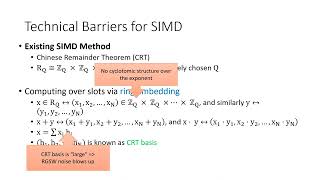
Fully Homomorphic Encryption: Advanced Techniques and Optimizations - Session 2
Explore advanced concepts in fully homomorphic encryption, including noise management, bootstrapping techniques, and optimizations for improved performance and efficiency in secure computations.