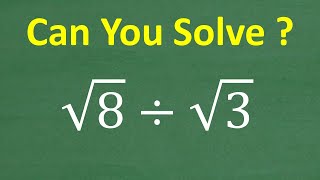
Dividing Square Roots - Rules and Examples with √8 ÷ √3
Master the process of dividing square roots using essential algebraic rules and techniques, with a clear example of dividing √8 by √3.
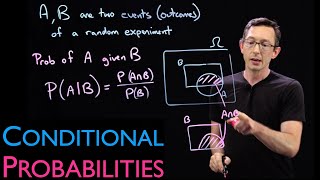
Conditional Probabilities in Data Analysis and Statistics
Master conditional probability concepts through clear examples and practical applications, exploring fundamental principles and calculations for statistical analysis.

An Optimal Space Lower Bound for Approximating MAX-CUT
Delve into advanced Fourier analysis techniques for boolean cube applications and discover how they reveal optimal space complexity bounds for MAX-CUT approximation algorithms.

Scattered Forest Search: A New Algorithm for Code Generation with LLMs
Explore the innovative Scattered Forest Search algorithm for optimizing code generation with LLMs, covering implementation techniques, theoretical foundations, and benchmark performance.

Model Stealing for Low-Rank Language Models Through Reverse Engineering
Discover groundbreaking mathematical techniques for reverse-engineering language models through conditional queries and barycentric spanners, exploring MIT's innovative approach to model extraction.
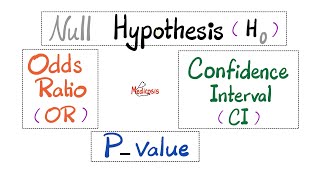
Statistics Introduction - Null Hypothesis, Odds Ratio, Confidence Interval, and P-value
Master essential statistical concepts including hypothesis testing, odds ratios, confidence intervals, and p-values for medical research and data analysis. Learn key terms and methods for interpreting clinical study results.
Stochastic Pattern Formation in Space and Time: From the Brain to the Biosphere - Class 1
Explore stochastic pattern formation principles across biological systems, from neural networks to ecosystem dynamics, with insights into spatial-temporal mathematical modeling.
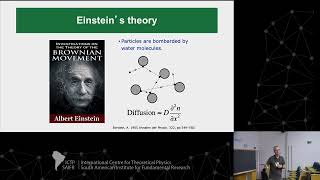
The Physics of Spatial Ecology - Class 2
Delve into spatial ecology principles, exploring pattern formation in biological systems and the physical mechanisms driving ecosystem organization and dynamics in marine environments.

Stochastic Pattern Formation in Space and Time: From the Brain to the Biosphere - Class 2
Explore stochastic pattern formation principles across biological systems, from neural networks to ecosystem dynamics, with insights into spatial-temporal mathematical modeling.
Advection-Diffusion Problems on Polygonal Meshes
Explore advanced mathematical techniques for solving advection-diffusion PDEs on polygonal meshes, covering high-order finite elements, WENO methods, and practical applications in geosciences.
The Study of the Prandtl System and Zero Viscosity Limit in Navier-Stokes Equations
Delve into advanced mathematical analysis of the Prandtl system, boundary layer evolution, and zero viscosity limits in Navier-Stokes equations with expert insights from NYU researcher Nader Masmoudi.

Message Handling with Boolean Algebra
Discover how Boolean algebra principles can optimize message handling in embedded systems, focusing on compile-time constraint simplification and runtime performance enhancement through practical C++ implementations.
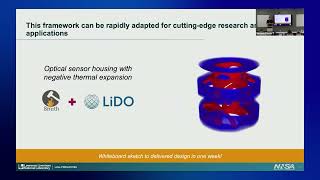
Automatic Parameter Sensitivities in Serac for Engineering Applications
Discover how to leverage automatic parameter sensitivities in Serac for engineering applications, featuring robust nonlinear solvers, coupled thermal-mechanics, and differentiable material models for optimization workflows.
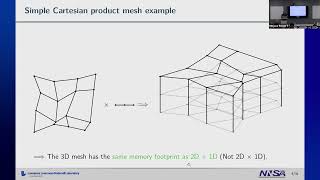
Mitigating Rays-Effect in Phase-Space Advection with Matrix-Free High-Dimensional DG Methods
Discover a novel matrix-free discontinuous Galerkin approach for mitigating rays-effect in phase-space advection, optimizing deterministic transport simulations through advanced coordinate transformations and efficient computation.
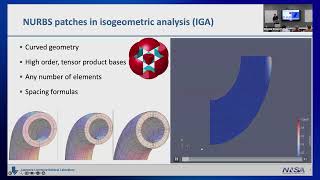
Sparse, Approximate Quadrature for Acceleration of Isogeometric Analysis and ROMs
Explore advanced numerical integration techniques for accelerating isogeometric analysis and reduced order models through sparse quadrature methods in finite element computations.
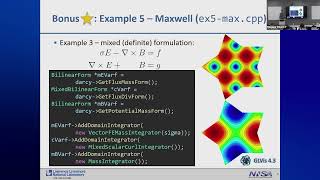
Hybridization of Convection-Diffusion Systems in MFEM
Explore advanced hybridization techniques for convection-diffusion systems using MFEM's framework, focusing on efficient computational solutions and practical implementation methods.
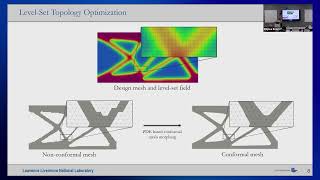
Level-Set Topology Optimization with PDE Generated Conformal Meshes
Explore advanced level-set topology optimization techniques using PDE-based approaches for multi-material design problems, featuring MFEM's high-order mathematical framework for efficient scientific simulations.
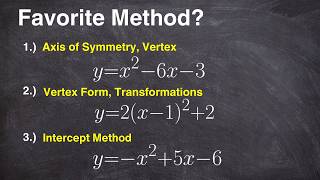
All the Ways to Graph a Quadratic Function
Master essential techniques for graphing quadratic equations through multiple methods, including vertex form, factored form, and transformations, to visualize parabolic functions effectively.
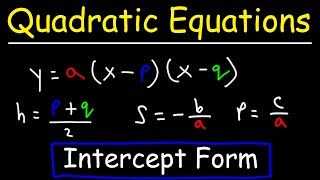
Introduction to Quadratic Equations - Intercept Form
Master the intercept form of quadratic equations through a concise introduction covering essential concepts, formulas, and problem-solving techniques for algebraic understanding.
Less is More: Revisiting the Gaussian Mechanism for Differential Privacy
Explore groundbreaking improvements to differential privacy through a novel Rank-1 Singular Multivariate Gaussian mechanism that enhances data protection while minimizing accuracy loss in high-dimensional queries.
Measuring Structural Limitations of Deepfake Media Datasets - A Systematic Review
Explore structural limitations in deepfake media datasets, examining metrics, generation techniques, and class distributions to understand their impact on detection systems and research reproducibility.