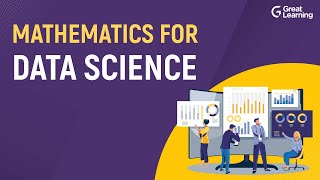
Mathematics for Data Science - Essential Math for Machine Learning
Explore essential math for data science, including probability, statistics, machine learning, and deep learning. Learn through real-world case studies and gain insights into the crucial role of mathematics in data analysis.
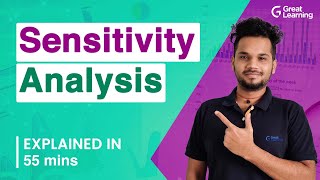
Sensitivity Analysis - Types of Sensitivity Analysis
Explore sensitivity analysis techniques, applications, and practical demonstrations to enhance data-driven decision-making and assess variable impacts on outcomes in various domains.
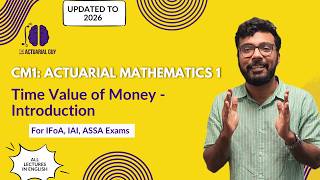
Actuarial Science Subject CM1- Actuarial Mathematics 1
Comprehensive actuarial mathematics course covering time value of money, interest rates, life tables, assurance contracts, and complex conditions with practical Excel applications.
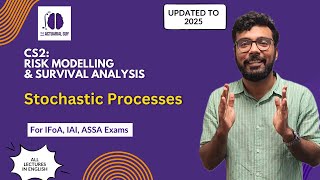
Risk Modelling and Survival Analysis - Actuarial Science
Explore stochastic processes, Markov chains, risk modeling, and survival analysis in actuarial science. Learn key concepts and tackle past exam questions using R for practical applications.
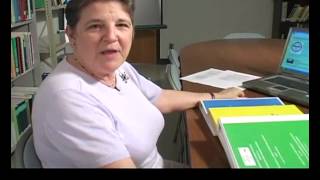
Nemeth Braille Code for Math and Science by Susan Osterhaus
Learn the Nemeth Braille Code for mathematics and scientific notation, including introductory concepts, reference materials, and computerized tutoring tools.
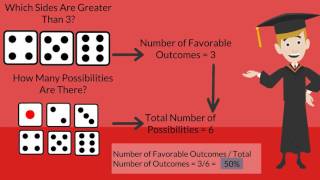
Statistics in One Minute
Concise explanations of key statistical concepts, from probabilities to financial metrics, offering quick insights for learners and professionals in data analysis and finance.
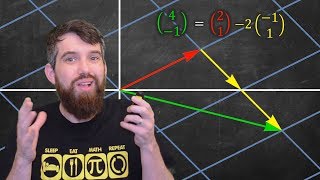
Linear Algebra
Explore fundamental concepts and techniques of linear algebra, from solving systems to eigenvalues, with emphasis on both theory and practical applications.

Math in Real Life
Explore real-world applications of mathematics through engaging riddles, puzzles, and thought experiments. Discover how math shapes our world, from art and nature to technology and everyday life.
The Nature of Code
Explore simulations of natural systems using JavaScript and p5.js, covering physics, trigonometry, self-organization, genetic algorithms, and neural networks.
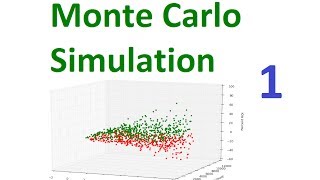
Monte Carlo Simulation with Python
Learn to implement Monte Carlo simulations in Python, exploring various betting strategies and analyzing results through statistical methods and data visualization.
Control Systems
Comprehensive exploration of control systems, covering theory, analysis techniques, and practical problem-solving. Ideal for engineering students and professionals seeking in-depth understanding.
Real Numbers CBSE Class 10
Comprehensive exploration of real numbers for 10th grade, covering number systems, Euclid's lemma, HCF, fundamental theorem of arithmetic, and irrational numbers.

Permutations and Combinations
You will learn about counting, forming numbers, arranging people, arranging letters, selection, anagrams, formulae, applying formulae, circular arrangement, and shortest paths.
Digital Electronic Circuits
Digital systems represent and manipulate digital signals. Such signals represent only finite number of discreet values. A signal can be discreet by nature whereas, a continuous signal can be discretized for digital processing and then converted back.
Biostatistics Using R Course
Learn biostatistics with R: from basics to advanced topics like probability, inferential statistics, mixed modeling, and regression analysis. Gain practical skills for data analysis in biological sciences.
A Brief History of Logic - Stoics and Other Thinkers
Explore Stoic logic, its key figures, and its comparison to Aristotle's system. Delve into fundamental logical concepts and their historical development in ancient Greek thought.
Classical Spherical Trigonometry - Universal Hyperbolic Geometry
Comprehensive overview of classical spherical trigonometry, covering key concepts, laws, and theorems. Introduces a new algebraic approach to simplify and enhance the traditional framework.
Geometric Deep Learning for Drug Discovery
Explore geometric deep learning techniques for drug discovery, covering graph neural networks, molecule generation, and retrosynthetic prediction. Gain insights into cutting-edge research and applications in pharmaceutical development.

Deep Generative Modeling
Explore deep generative modeling, including autoencoders, variational autoencoders, and GANs. Learn about latent variable models, reparameterization tricks, and recent advances in generative AI techniques.
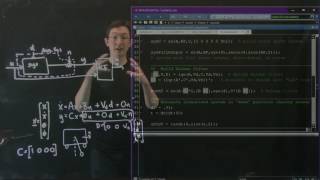
Control Bootcamp - Kalman Filter Example in Matlab
Explore Kalman Filter implementation on inverted pendulum using Matlab, covering theory and practical application in dynamical systems and control engineering.
Counterfactual Prediction in Transport Modelling - Ricardo Silva & Charisma Choudhury
Explore counterfactual prediction in transport modeling, enhancing decision-making capabilities through causal inference and machine learning for 'what if' scenarios and fairness considerations.