Kolmogorov Music
Explore Kolmogorov complexity in music, algorithmic composition, and program transformations. Discover implications for creation, copyright, and performance through demonstrations and examples.

From Cancer to Covid-19 - Tackling Today's Medical Issues
Nobel laureate Harold Varmus and Brian Greene discuss the COVID-19 pandemic, scientific literacy, cancer research advancements, and the role of scientists in today's political climate.

Fundamental Lessons from String Theory
Explore string theory's groundbreaking insights with Cumrun Vafa, covering fundamental concepts, duality frames, space basics, quantum geometry, and entropy in this enlightening lecture.
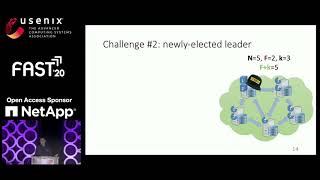
CRaft - An Erasure-coding-supported Version of Raft for Reducing Storage Cost
Explores CRaft, an erasure-coding-supported version of Raft consensus protocol, reducing storage and network costs while maintaining fault tolerance and liveness. Presents design, challenges, and performance improvements.

Rebooting the Cosmos - Is the Universe the Ultimate Computer?
Explore the fascinating concept of the universe as a computer simulation with leading experts in digital physics, discussing implications for consciousness, free will, and reality itself.
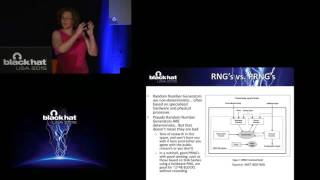
Understanding and Managing Entropy Usage
Explore cryptographic entropy usage, sources, and management across systems. Learn to analyze and improve random number generation for enhanced security in modern IT infrastructures.
Surprise-Inspired Networking
Explore the future of networking with a focus on edge computing and the value of new information. Insights on synthesizing data at the network edge for innovative system designs.
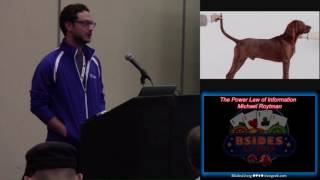
The Power Law of Information
Explore the concept of power law in information systems and its implications for cybersecurity with insights from Michael Roytman's expert analysis.
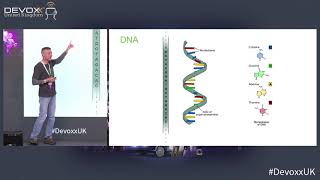
Information Storage in DNA
Explore DNA as a revolutionary digital storage medium, its potential for long-term archiving, and recent advances in genome science for preserving vast amounts of information.
How Work Works
Explore the principles behind modern software engineering practices, drawing insights from information theory and complexity science to understand value creation and flow in software development.

How We Can Protect Truth in the Age of Misinformation
Strategies to combat misinformation: data scientist explores its rapid spread, impact on society, and offers five practical approaches to safeguard truth in our digital age.
HashTag - Hash-based Integrity Protection for Tagged Architectures
Innovative hash-based error detection and correction technique for DRAM, enabling efficient implementation of tagged memory architectures while maintaining strong data integrity protection.
How Work Works
Explore software engineering defaults, value flow, and team structures through Information Theory and Complexity Science. Gain insights to improve development practices and reduce batch sizes.
Modern Times Passwords
Explore modern password security, including entropy, brute force attacks, passphrases, and best practices for creating strong, memorable passwords in today's digital landscape.
Analyzing the Entropy of Document Hidden Code
Explore techniques for analyzing document hidden code entropy, including methodology, entropy calculation, and strategies to detect and decode malicious VBA in documents.
The Entropy of Obfuscated Code
Explore code obfuscation techniques, entropy analysis, and malware detection methods. Learn about information theory and its applications in cybersecurity and malware analysis.
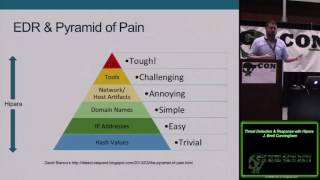
Threat Detection Response with Hipara
Explore threat detection and response using Hipara, covering signatures, repositories, endpoints, and ransomware. Learn about deployment, logging, and the user interface for effective cybersecurity.
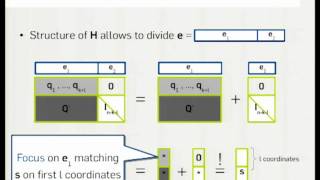
Decoding Random Binary Linear Codes in 2 n/20 - How 1 + 1
Explore cutting-edge techniques for decoding random binary linear codes, presented by experts at Eurocrypt 2012. Learn about innovative approaches that push the boundaries of cryptography.
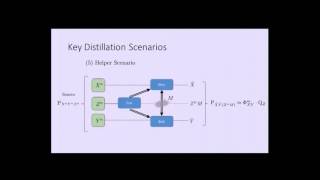
Distributions Attaining Secret Key at a Rate of the Conditional Mutual Information
Explore key concepts in cryptography, including common information, conditional distributions, and uniform block independence, to understand secret key rates and distributions.
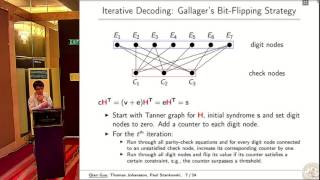
A Key Recovery Attack on MDPC with CCA Security Using Decoding Errors
Explore key recovery attacks on MDPC codes with CCA security, focusing on decoding errors and their implications for cryptographic systems.

Cryptography, Local Decoding, and Distributed Storage
Explore cryptography's role in distributed storage, focusing on error correction, local decoding, and private information retrieval. Learn about Reed-Solomon codes and their applications.