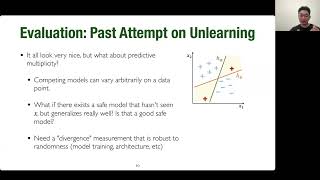
Evaluating Unlearning and Memorization via Compression
Explore cutting-edge research on machine learning compression techniques, focusing on model unlearning and memorization evaluation methods presented by CMU researcher Zhili Feng.
Defending Against Data Reconstruction Attacks in Federated Learning: An Information Theory Approach
Explore advanced defense strategies against data reconstruction attacks in federated learning through information theory, focusing on privacy preservation and efficient training methods.
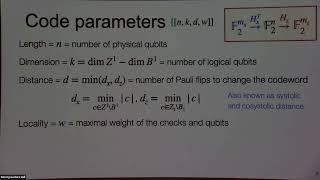
Quantum Locally Testable Codes and Codes with Transversal Gates
Delve into advanced quantum error correction concepts, focusing on qLDPC codes, local testability, and transversal gates through higher-dimensional construction methods and cup product structures.
Constant-Cost Communication in Randomized Computing
Explore the fascinating role of randomness in communication complexity, focusing on efficient protocols for solving equality problems and their broader implications in computing theory.
How Can Large Language Models Learn From Humans? - Understanding Psycholinguistic Predictions and Sheaf Theory
Explore how combining lexical predictions from LLMs with syntactic structures can improve language understanding, using sheaf theory to better match human reading patterns and comprehension.
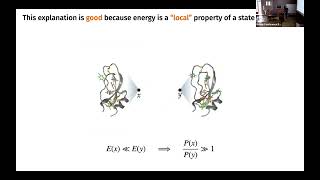
A Markov Chain Theory of Self-Organization in Nonequilibrium Systems
Explore the groundbreaking theory of 'rattling' in nonequilibrium systems and its role in predicting ordered states across scientific domains, from living systems to statistical mechanics.
Symmetrization Resistance in Random Variables and Entropy
Delve into advanced probability theory exploring symmetrization resistance in random variables, focusing on Bernoulli distributions and entropy-based extensions of classical results.
A Shannon-Kneser-Poulsen Theorem for Geometric Information Theory
Explore geometric principles and information theory through the lens of the Kneser-Poulsen conjecture, examining volume changes in ball unions and their implications for noise channel communication.
Minimum Entropy of a Log-Concave Random Variable with Fixed Variance
Delve into the mathematical analysis of log-concave random variables, exploring entropy minimization, channel capacities, and improved entropy power inequalities with practical applications.
Combinatorial Applications of the Shearer and Han Inequalities in Graph Theory and Boolean Functions
Explore the powerful applications of Shearer's and Han's inequalities in information theory, focusing on their role in solving complex problems in graph theory and Boolean functions.
Some Conjectures Relating the Optimality of Dictator Functions and Connections to Discrete Isoperimetric Inequalities
Delve into advanced mathematical concepts exploring dictator functions, entropy, and discrete isoperimetric inequalities in relation to the Hamming cube and Talagrand-Bobkov studies.
How Transformers Learn Causal Structure with Gradient Descent
Delve into the mathematical foundations of how transformer models learn and encode causal relationships through self-attention mechanisms and gradient-based training algorithms.

Phase Transitions and the Ising Model: Understanding Critical Points at 770°C
Explore the fascinating physics of phase transitions at 770°C through the Ising Model, discovering critical points, scale invariance, and universal patterns in nature's transformative processes.
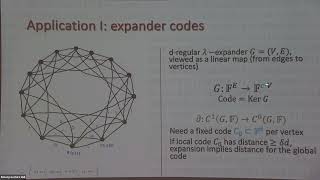
Local-to-Global Theorems on High Dimensional Expanders
Explore high dimensional expansion theory, from graph fundamentals to complex applications in error-correcting codes and PCPs, focusing on how local properties influence global behaviors in mathematical structures.
Discovering Emergent Dynamical Structure in Wakefulness, Sleep and Anaesthesia
Explore how brain activity patterns emerge during different states of consciousness through EEG analysis, focusing on Dynamical Independence measures in sleep, wakefulness, and anesthetic conditions.
Anticipation and Collective Surprise in Information Theory and Consciousness
Explore the intersection of consciousness theories, information processing, and surprise mechanisms in the brain, examining integrated approaches to understanding predictive cognition and sensory anticipation.